

FREE WHITE PAPER
The term open source refers to any solution that has its source code widely accessible to the public for modification and sharing.
Europe’s digital landscape is undergoing a structural transformation. What was once a purely technical decision — selecting a productivity suite — has become a strategic governance choice tied to compliance, jurisdiction, and long-term digital autonomy.
European organizations are reassessing their dependence on U.S.-based cloud ecosystems such as Microsoft 365. Regulatory enforcement has intensified, geopolitical tensions have reshaped digital policy, and board-level conversations increasingly focus on one critical question:
Who ultimately controls our data — and under which jurisdiction?
Microsoft 365 remains the global market leader in enterprise productivity. It delivers integrated email, document creation, collaboration, cloud storage, and AI-driven automation within a unified ecosystem. For many organizations, it has become deeply embedded in daily workflows.
However, European companies now operate in one of the world’s most complex regulatory environments. Frameworks such as the GDPR, NIS2, DORA, and the Data Act have elevated data governance from an IT concern to a board-level risk issue. Even when data is stored within EU data centers, providers headquartered outside Europe may remain subject to foreign legislation, creating jurisdictional ambiguity.
As a result, digital sovereignty has shifted from political rhetoric to operational strategy.
The good news: Europe’s cloud and productivity ecosystem has matured. Today, organizations can choose from a growing range of European-built platforms offering:
This guide provides a structured, in-depth comparison of the top 15 European alternatives to Microsoft 365, helping organizations evaluate solutions based on sovereignty, compliance, functionality, cost, and long-term strategic alignment.
European alternatives to Microsoft 365 is an essential topic to understand. On September 10, 2024, Microsoft 365 became subject to antitrust proceedings by the European Commission—a seismic regulatory event that crystallized years of mounting tension between Big Tech dominance and European digital sovereignty. The investigation focuses on Microsoft’s bundling practices and alleged anticompetitive behavior, marking a watershed moment for organizations questioning their dependency on Redmond’s ecosystem.
This isn’t merely a legal skirmish. It’s a fundamental reckoning with data jurisdiction, regulatory compliance, and strategic autonomy. European businesses now face a stark reality: relying on a U.S.-based productivity suite means navigating GDPR complexities, Cloud Act tensions, and potential service disruptions tied to geopolitical disputes.
The timing couldn’t be more consequential. GDPR enforcement has intensified, with regulators scrutinizing transatlantic data flows with unprecedented rigor. Organizations in healthcare, finance, and government sectors particularly feel the squeeze—where data residency isn’t a preference but a mandate. Meanwhile, European alternatives to Microsoft 365 have matured dramatically, offering feature parity without the jurisdictional complications.
This convergence—regulatory pressure, technological maturity, and strategic imperative—has created the perfect storm for exploring sovereignty-conscious alternatives. The monopoly’s cracks are showing, and European organizations are taking notice.
The Microsoft 365 antitrust case exposes a fundamental tension in digital sovereignty: cloud services don’t recognize borders, but data protection laws do.
European organizations face a paradox where their productivity tools operate under one legal framework (U.S. jurisdiction) while their data obligations fall under another (GDPR and national regulations).
Even when Microsoft processes European enterprise data through EU-based infrastructure, the company remains subject to the CLOUD Act, which grants American law enforcement extraterritorial access to data.
For sectors handling sensitive information—healthcare records, financial data, government communications—this creates an irreconcilable conflict between operational necessity and legal obligation.
The question is no longer “Why leave Microsoft 365?” but “What is our sovereignty‑aligned alternative?”
European organizations are entering a sovereignty-first era of cloud computing. For more than a decade, Microsoft 365 dominated enterprise productivity, offering powerful, familiar tools for email, document editing, collaboration, file storage, and identity management. Globally, it serves over 450 million paid users, deeply embedded in business workflows.
But now, the conversation in European boardrooms has shifted from “Is Microsoft 365 efficient?” to “Who ultimately controls our data — and under which jurisdiction?”.
The European Union enforces one of the strictest regulatory landscapes in the world. Under the General Data Protection Regulation (GDPR), organizations can face fines of up to €20 million or 4% of global annual turnover for non-compliance. For multinational enterprises, this can translate into penalties reaching hundreds of millions of euros (EU GDPR Portal).
Beyond fines, non-compliance introduces a web of operational risks:
Geopolitical risk is also a major factor: 61% of Western European CIOs now report that geopolitical considerations influence cloud provider decisions (Gartner, 2026). Nearly half of European enterprises are actively seeking greater architectural flexibility to mitigate such risks.
For years, Microsoft 365 offered convenience: integrated email, collaboration, file storage, and workflow automation in one environment. But this integration creates structural dependency — organizations are tied to a single provider’s roadmap, pricing, updates, and jurisdiction.
Reducing vendor lock-in has become part of broader digital resilience planning. European CIOs are prioritizing:
The central question is no longer efficiency but strategic autonomy: ensuring that an organization’s digital infrastructure is under its control, not a foreign provider’s.

Benefits of Open Source Software
for the Enterprise
The term open source refers to any solution that has its source code widely accessible to the public for modification and sharing.
The term open source refers to any solution that has its source code widely accessible to the public for modification and sharing.
Microsoft 365 (formerly Office 365) occupies a dominant position in the global productivity software market, commanding approximately 60% market share and serving over 345 million paid subscribers as of 2024 (Microsoft Annual Report, 2024).
Its influence extends far beyond individual applications—Microsoft 365 functions as a comprehensive ecosystem integrating productivity, communication, collaboration, and cloud infrastructure under a single subscription model. This unified structure simplifies procurement, deployment, and IT management for enterprises worldwide.
At its foundation, Microsoft 365 integrates:
The platform’s architecture is designed around interoperability. Files move seamlessly between applications, collaboration occurs in real time, and administrative control is centralized. Tight integration with Windows and Azure further strengthens this ecosystem.
This breadth creates strong network effects: organizations often adopt Microsoft 365 not solely for features, but because partners, suppliers, and clients already rely on compatible file formats such as .docx, .xlsx, and .pptx. Compatibility becomes a strategic advantage.
Several structural factors reinforce Microsoft 365’s leadership:
The suite is tightly coupled with Windows operating systems and Azure cloud services, enabling unified identity management (Active Directory), security controls, and workflow automation.
Standardized Microsoft file formats dominate enterprise communication, reducing friction across organizations and industries.
Enterprises have invested heavily in Microsoft-centric workflows—ranging from SharePoint-based document systems to custom automation and training programs. Switching costs extend beyond licensing to include:
Microsoft’s cloud infrastructure provides high uptime, enterprise-grade security, and global redundancy (Microsoft Annual Report, 2024). Few competitors can match this operational scale.
Together, these factors have entrenched Microsoft 365 as the default enterprise productivity environment.
Despite its strengths, Microsoft 365’s dominance introduces structural challenges—particularly for European organizations.
 Vendor Lock-In
 Organizations become dependent on Microsoft’s pricing structures, roadmap decisions, and update cycles. Licensing adjustments can directly impact operational budgets.
Cost Inflation Subscription pricing has steadily increased, and bundled services may compel organizations to pay for tools they do not actively use (TechRadar, 2024).
Regulatory Scrutiny European regulators increasingly examine bundling practices that tie collaboration tools to operating systems and infrastructure services. Complaints such as those raised by the Cloud Infrastructure Services Providers in Europe (CISPE) highlight concerns that licensing terms may restrict competition and inflate infrastructure costs.
Data Sovereignty & Jurisdictional Exposure For EU-based entities, storing and processing data through non-European infrastructure raises questions under GDPR and the EU Data Act. Even when data resides in European data centers, governance frameworks may still fall under foreign jurisdictional influence.
For European enterprises, the evaluation of Microsoft 365 is no longer purely functional—it is strategic.
European-developed alternatives increasingly emphasize:
Unlike Microsoft’s largely proprietary ecosystem, many European solutions adopt open standards for document formats, APIs, and infrastructure integration. This architectural difference—not simply feature comparison—defines the core strategic decision.
Beyond compliance and functionality, economic sovereignty plays a growing role in decision-making. Investment in European providers strengthens:
This perspective frames productivity software not merely as a tool, but as a component of long-term digital strategy.
Understanding Microsoft 365 requires acknowledging both its strengths and structural implications.
For organizations—particularly in Europe—the decision is not simply whether alternatives match Microsoft feature-for-feature. Rather, it concerns governance models, regulatory alignment, economic strategy, and long-term technological autonomy.
In that sense, Microsoft 365 represents both operational efficiency and strategic dependency. The evaluation of alternatives is therefore not only technical—it is institutional.
Types of Digital workplace solutions
Digital workplace is a buzzword these days. Actually different people use it to mean different things. So what is a digital workplace?
Digital workplace is a buzzword these days. Actually different people use it to mean different things. So what is a digital workplace?
Across Europe, organizations are reassessing their reliance on U.S.-based cloud productivity suites such as Microsoft 365. While the platform remains dominant in the enterprise landscape, concerns about jurisdiction, compliance exposure, and structural dependency have triggered a broader strategic review — particularly among public institutions, regulated industries, and privacy-conscious enterprises.
This shift is not driven by ideology. It is driven by governance, risk management, and long-term strategic positioning.
The movement toward European alternatives is guided by three interconnected priorities.
European providers operate fully under EU jurisdiction. That distinction matters.
Data hosted with EU-based companies is governed by European privacy frameworks such as the GDPR and the EU Data Act, without exposure to extraterritorial legislation like the U.S. CLOUD Act or FISA.
Unlike providers headquartered outside the EU, European companies are not structurally subject to foreign intelligence frameworks that could create legal ambiguity over data access. For organizations handling sensitive information, this clarity reduces jurisdictional uncertainty and simplifies compliance assessments.
Sovereignty is no longer theoretical — it is contractual and enforceable.
Many European platforms are built around open standards and open-source technologies.
This approach delivers several advantages:
Open ecosystems allow organizations to migrate or integrate tools without losing operational continuity. Interoperability becomes a structural feature, not an afterthought.
Security, in this context, is not just about protection — it is about visibility and control.
European providers frequently host data within EU-based infrastructure operators such as OVHcloud and T-Systems.
This brings operational advantages:
Additionally, several providers emphasize renewable energy usage and ESG alignment, helping organizations meet sustainability objectives while modernizing their digital infrastructure.
Organizations exploring alternatives typically focus on the following strategic drivers:
These motivations reflect governance priorities rather than product dissatisfaction alone.
European alternatives offer more than regulatory reassurance. They introduce structural advantages that influence long-term strategy.
Organizations retain direct oversight of:
This reduces dependency risk and strengthens internal compliance governance.
Tools built on open standards integrate more easily with:
This modularity prevents over-consolidation into a single ecosystem and preserves architectural agility.
Procurement decisions also shape economic ecosystems.
Revenue directed toward European software providers:
For public institutions and nationally mandated organizations, this economic dimension carries significant weight.
A notable illustration of sovereignty-first architecture is the partnership between Nextcloud and IONOS.
This collaboration delivers:
Such initiatives demonstrate that European alternatives can balance functionality, compliance, and sovereignty without compromising operational capability.
Operating within European regulatory architecture provides predictable compliance pathways.
When privacy alignment is native — rather than retrofitted — organizations reduce:
As enforcement intensifies and regulatory penalties escalate, this structural alignment becomes a competitive differentiator rather than a defensive measure.
The case for European alternatives extends well beyond privacy preference.
It encompasses:
For many organizations, European productivity platforms are no longer viewed as compliance workarounds.
They are recognized as foundational elements of digital autonomy — strategic infrastructure choices that align governance, technology, and economic priorities under a single European framework.
In European boardrooms, the conversation has fundamentally changed.
A few years ago, the dominant question was:
“Is Microsoft 365 efficient and feature-rich?”
But now, the more pressing question is:
“Who ultimately controls our data — and under which jurisdiction?”
Nearly half of European organizations now report increased interest in sovereign digital solutions. This marks a clear transition from a convenience-driven cloud model to a deliberate, sovereignty-first digital strategy.
Three powerful forces have converged to create this acceleration: regulatory escalation, technological maturity, and geopolitical risk exposure.
European enforcement is no longer symbolic — it is financial and structural.
Since 2023, cumulative GDPR fines across major technology platforms have exceeded €4.5 billion, signaling a shift from warning shots to active deterrence. Regulators are intensifying scrutiny around:
Organizations are no longer preparing for hypothetical enforcement scenarios. They are responding to active regulatory pressure.
At the same time, additional frameworks have tightened governance requirements:
For regulated sectors such as finance, healthcare, energy, and public administration, compliance deadlines are immediate. The cost of non-alignment is measurable — not abstract.
Under the GDPR alone, fines can reach 4% of global annual turnover. That transforms infrastructure decisions into financial risk decisions.
Choosing a European alternative to Microsoft 365 is not simply a technical switch. It is a strategic infrastructure decision that affects compliance exposure, operational resilience, cost control, and long-term autonomy.
Before evaluating the top European options, organizations should assess platforms across several critical dimensions.
| Factor | Why It Matters |
| Data Sovereignty | Where is the data stored? Which jurisdiction applies? Can non-EU authorities legally request access? |
| GDPR Compliance | Is privacy built into the platform’s architecture (native), or added later (retrofitted)? |
| Vendor Lock-In | Can you export your data easily? Is there a clear exit strategy? |
| Feature Coverage | Does the solution fully replace the productivity suite — or only parts of it? |
| Integration Capabilities | Will it work with your existing ERP, CRM, identity systems, and workflows? |
| Total Cost of Ownership (TCO) | Includes migration costs, onboarding, training, customization, support, and long-term licensing. |
| User Adoption | Will employees actually use it effectively? Engagement determines ROI. |
The first and most decisive question is jurisdiction.
True sovereignty is not just about server location — it is about legal authority and enforceability.
Some platforms are built around European privacy standards from day one. Others adapt to them after the fact.
Organizations should assess:
Compliance should be structural — not cosmetic.
Large ecosystems can be convenient — but they often increase switching costs.
Ask:
Digital sovereignty includes the freedom to leave.
Not every organization needs a full-suite replacement. But clarity matters.
Evaluate whether the alternative:
A partial solution may reduce jurisdictional risk but increase operational fragmentation.
Subscription price alone is misleading.
True cost includes:
European providers often offer stronger pricing predictability, but due diligence is essential.
Even the most compliant platform fails if employees resist using it.
Organizations should assess:
Adoption drives productivity. Productivity drives ROI.
The shift away from Microsoft 365 is not driven by preference alone. It reflects structural pressures:
Europe no longer lacks alternatives. The ecosystem now includes:
For many organizations, the question is no longer if they will evaluate European alternatives —
It is how quickly they can assess them using the right criteria.
Strategic evaluation today determines governance resilience tomorrow.
The current regulatory scrutiny surrounding foreign cloud dependency coincides with something equally important: Europe’s cloud ecosystem has matured.
What was once seen as a fragmented landscape of regional providers has evolved into a layered, enterprise-ready infrastructure environment capable of supporting organizations at scale — from SMEs to multinational enterprises.
Actually, European alternatives are no longer experimental. They are operational.
Europe’s digital ecosystem has strengthened across three critical layers:
European cloud providers now deliver:
This foundation reduces legal ambiguity and simplifies compliance reporting for regulated sectors.
The middleware layer has matured significantly, particularly through:
These platforms now offer real-time collaboration, secure communication, and enterprise scalability — without embedding foreign jurisdictional exposure into the core architecture.
Perhaps most significantly, the application layer now includes:
Organizations can deploy alternatives within their own infrastructure footprint or through European-hosted environments, maintaining architectural control.
This eliminates the historical dependency on centralized, single-vendor ecosystems.
The numbers reflect this structural maturation.
European providers captured 23% of the enterprise productivity software market in 2025, up from 14% in 2022. That growth trajectory signals:
This is not symbolic growth — it is commercial validation.
In the past, European alternatives were sometimes viewed as compliance-driven compromises.
That perception has shifted.
Organizations now evaluate them as strategic architectures offering capabilities that centralized global platforms often cannot:
The decision landscape has fundamentally changed.
Companies are no longer choosing between “global scale” and “local compliance.” They are choosing between different architectural philosophies: centralized ecosystem dependency versus distributed sovereignty control.
Because the ecosystem has matured technically and commercially, organizations considering alternatives today face:
This is no longer about hypothetical possibility.
It is about selecting an architecture aligned with long-term governance strategy.
Europe’s cloud maturation reflects a broader transformation:
Digital infrastructure decisions are now governance decisions.
Productivity platforms are no longer just tools — they are jurisdictional anchors.
And in 2026, European organizations increasingly recognize that alternatives are not fallback options.
They are forward-looking, sovereignty-aligned strategic foundations.
| Feature | Microsoft 365 | European Alternatives |
| Data Sovereignty | ❌ | ✔ |
| GDPR Compliance | 👍 | ✔ Stronger/local compliance |
| Vendor Lock-In | High | Lower |
| Open-Source Options | Limited | Many |
| Cost Predictability | Moderate | Often lower |
| Ecosystem Size | Very large | Growing but smaller |
European solutions are designed for sovereignty-first operations, offering robust functionality without sacrificing compliance or privacy.
The push for European digital sovereignty has moved from IT departments into boardrooms. Geopolitical tensions and regulatory uncertainty are accelerating scrutiny of foreign cloud dependencies:
The critical issue: even when data is hosted in the EU, foreign providers may still be subject to external jurisdiction, creating exposure that European companies cannot ignore.
Europe’s digital ecosystem has matured significantly. Organizations can now access:
These providers offer EU-only data residency, contractual clarity, and governance models that align with European law, combining power with compliance.
In 2026, cloud decisions are no longer routine IT upgrades. They are strategic risk-management decisions.
This shift does not mean abandoning innovation; it means evaluating productivity tools through a broader lens, including jurisdictional exposure, compliance resilience, and long-term control.
 Best 15 European European Alternatives to Microsoft 365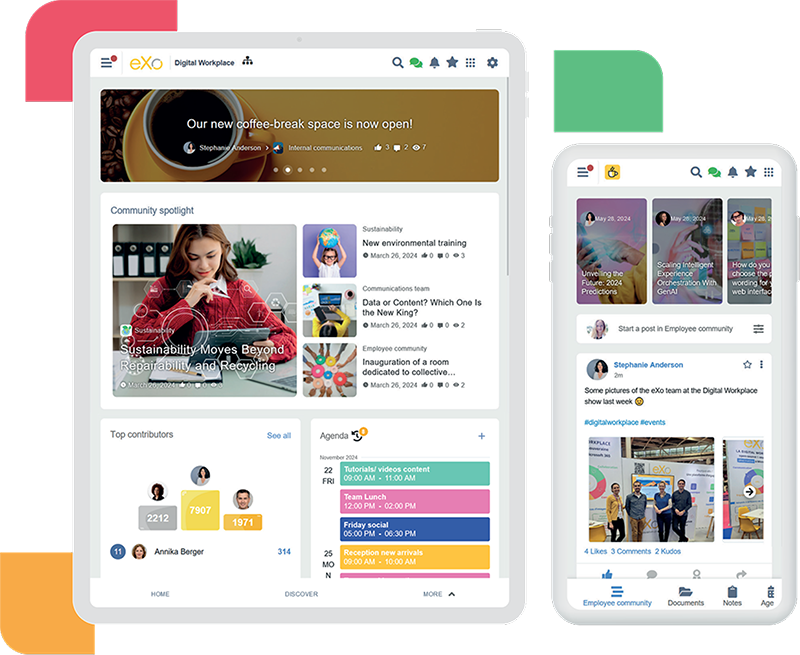
eXo Platform is the closest you’ll get to the Microsoft 365 experience from a European provider. It’s not just an office suite—it’s a complete digital workplace that combines social collaboration, knowledge management, and productivity tools into a single platform.
✅ True all-in-one platform: Replaces intranet, collaboration tools, and document management
✅ Open-source core: Transparent, customizable, no vendor lock-in
✅ Strong engagement features: Designed to get people actually using it
✅ Enterprise-grade security: Fine-grained permissions, SSO, audit logs
✅ Host anywhere: On-premise, private cloud, or their cloud
❌ Installing the open-source version requires advanced technical knowledge
Medium to large organizations that want to replace not just Office but the entire employee experience—intranet, collaboration, communication, and document management in one place.
Open-source (free to download) with enterprise subscriptions for support and advanced features.
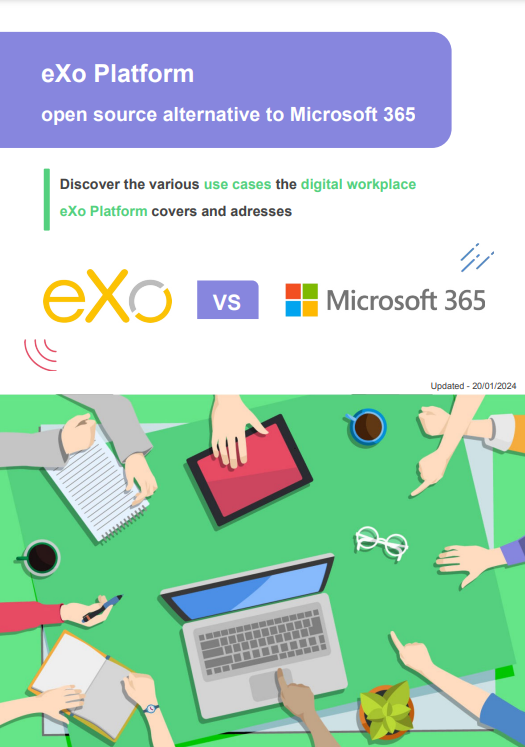

Open Source Alternative to Microsoft 365
Empower your organization with eXo Platform to break free from Microsoft dependencies and enhance collaboration with innovative solutions
Open Source Alternative to Microsoft 365
Empower your organization with eXo Platform to break free from Microsoft dependencies and enhance collaboration with innovative solutions
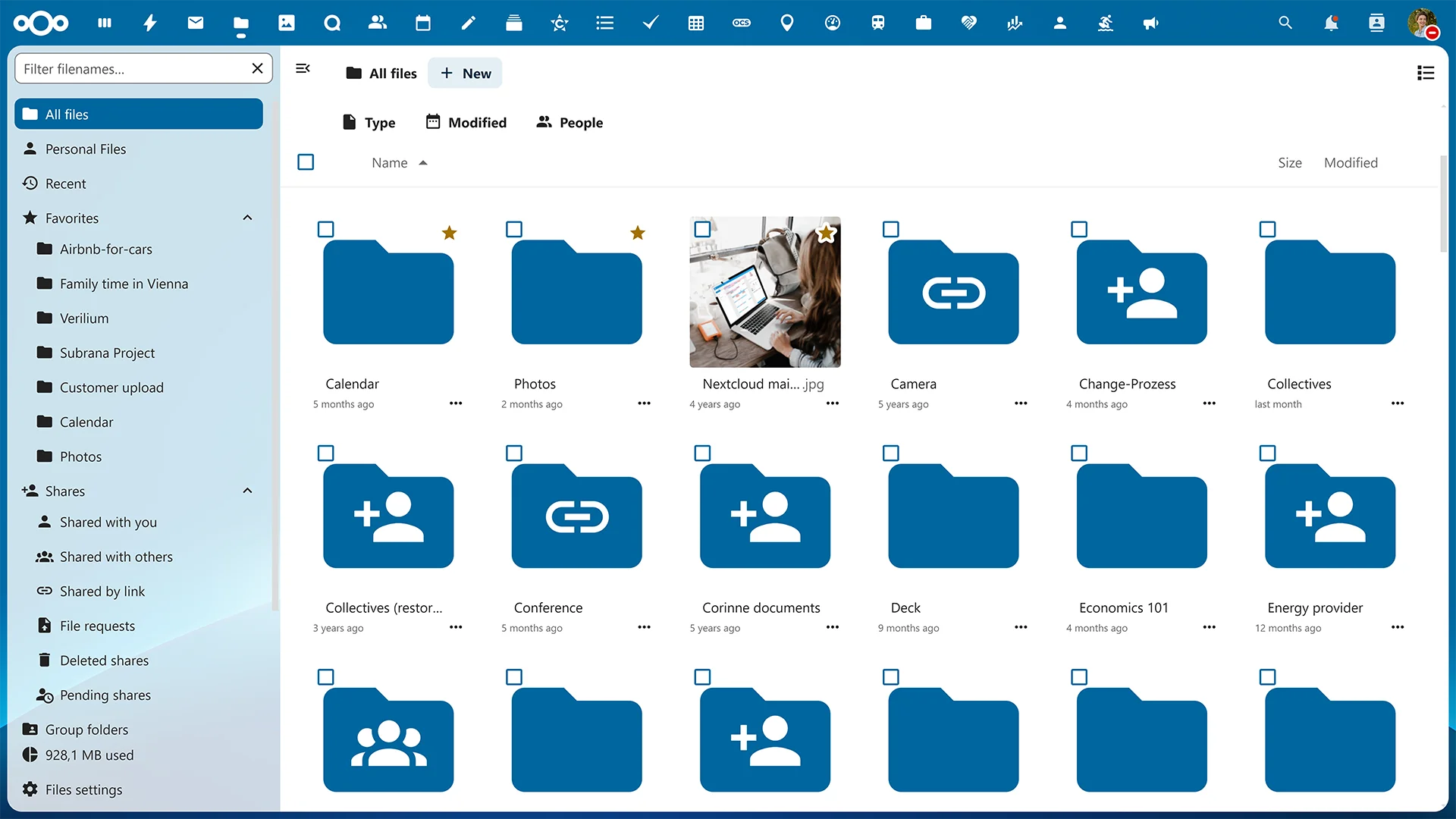
If data control is your absolute top priority, Nextcloud is probably your answer. It’s a self-hosted file sync and share platform that has evolved into a full collaboration suite with the addition of Nextcloud Office (powered by Collabora Online).
✅ Maximum sovereignty: No one accesses your data but you
✅ Extensible: Thousands of apps through their app store
✅ Strong privacy focus: Built by privacy advocates
✅ Active community: Regular updates, lots of support
✅ Works with existing infrastructure: Can integrate with your current storage
❌ Technical expertise required: Self-hosting isn’t for everyone
❌ Setup complexity: Getting it right takes time
❌ Interface polish: Not as refined as commercial alternatives
❌ Performance depends on your infrastructure: You’re responsible for scaling
Organizations with strong technical teams who prioritize absolute data control above all else. Government agencies, healthcare, finance—anywhere data sovereignty is non-negotiable.
Free open-source with paid enterprise subscriptions for support.
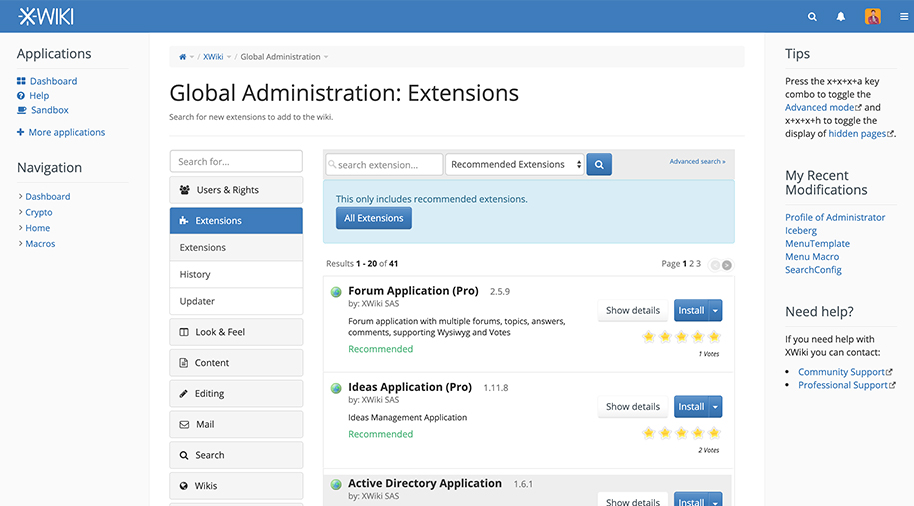
XWiki takes a different approach from traditional office suites. It’s a structured wiki platform that excels at knowledge management and building custom applications.
✅ Incredibly flexible: Can become whatever you need it to be
✅ Strong community: Active development, many contributors
✅ Open-source: Full control over your knowledge platform
✅ Enterprise features: LDAP, SSO, advanced permissions
❌ Text editing experience: Not as smooth as dedicated word processors
❌ Complexity: Can be overkill for simple documentation needs
❌ Learning curve: Users need training to use it effectively
❌ Not an office suite replacement: You’ll need separate tools for spreadsheets, presentations
Organizations with complex knowledge management needs—product documentation, internal wikis, structured content repositories. Research institutions, large enterprises with technical documentation, public sector organizations.
Free open-source; enterprise editions with support available.
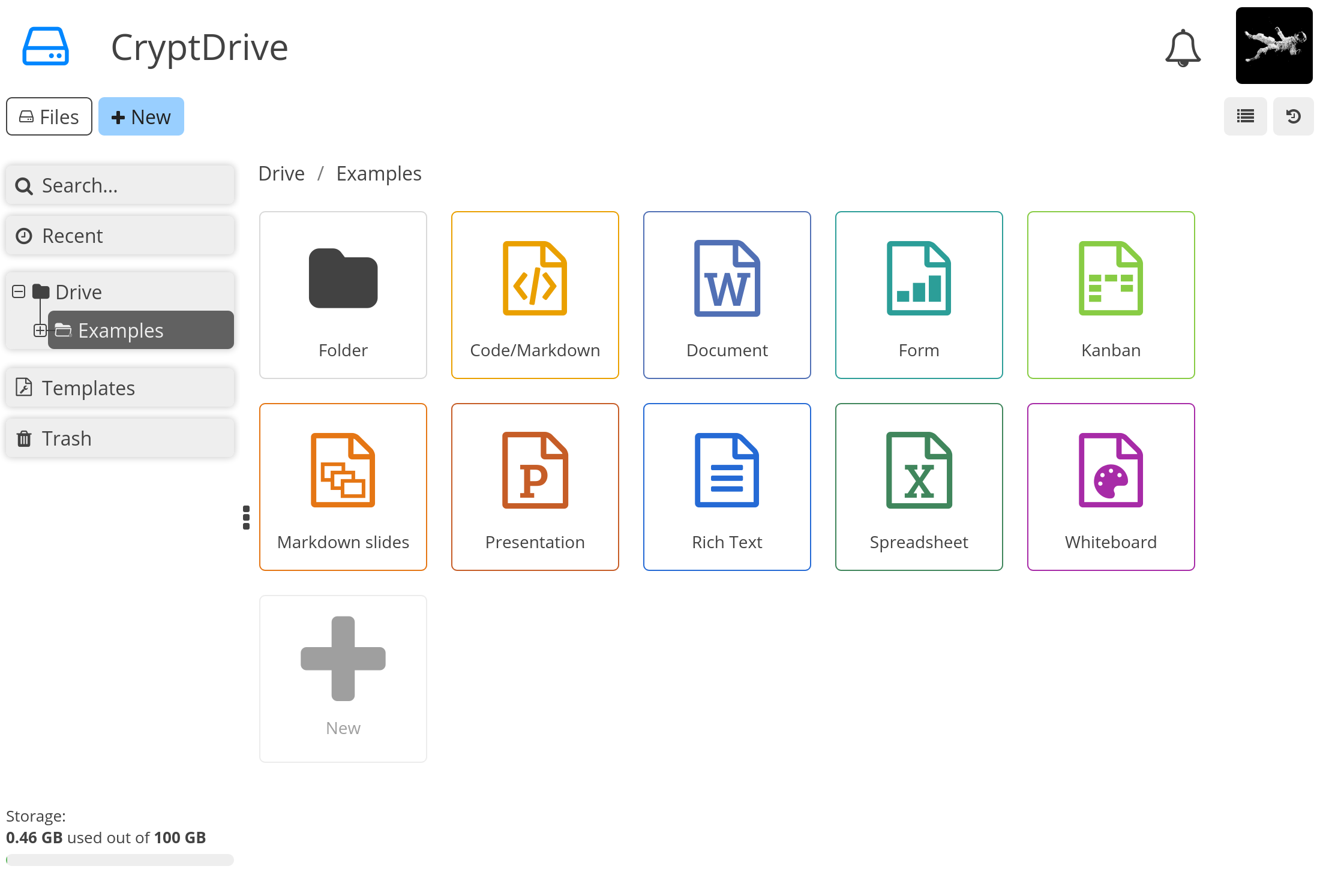
CryptPad is unique on this list: it’s a collaboration suite where you hold the encryption keys, not the provider. The server sees only encrypted data—nothing readable.
✅ Maximum privacy: Even if the server is compromised, your data is safe
✅ Transparent: Open-source, auditable
✅ Unique security model: Different from anything else on this list
✅ French law protection: Hosted in France, protected by French privacy law
❌ Limited free version: Storage and features restricted
❌ Performance overhead: Encryption/decryption takes resources
❌ Feature set: Good but not as comprehensive as mainstream suites
❌ Technical comfort required: Understanding encryption helps
Legal professionals, journalists, activists—anyone handling extremely sensitive information. Organizations where confidentiality is the absolute priority.
Free tier with paid premium features; self-hosting option available.
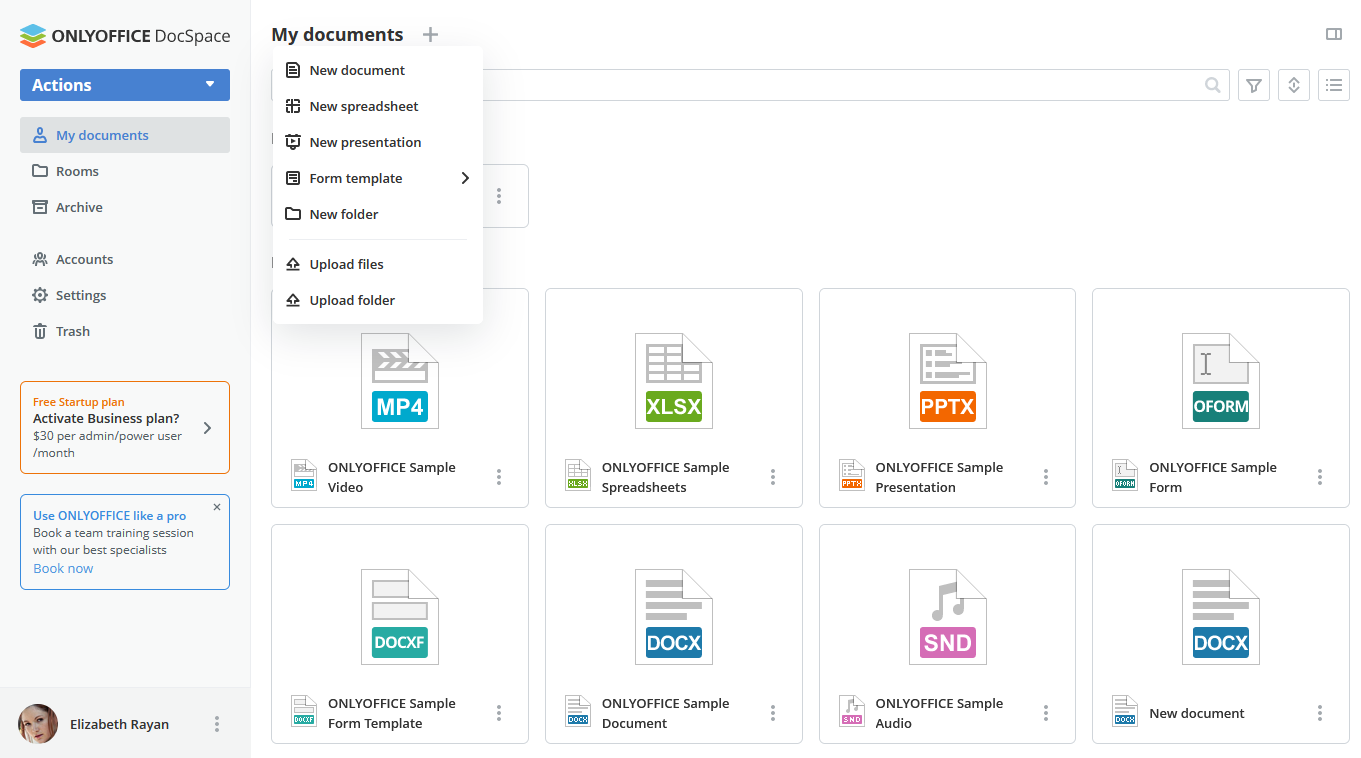
If your biggest concern is making sure documents look exactly right when exchanged with Microsoft Office users, OnlyOffice is your best bet. It has the best compatibility with Microsoft file formats of any European alternative.
✅ Best format compatibility: Documents look right when opened in Microsoft Office
✅ Intuitive interface: Minimal training needed
✅ Affordable: Much cheaper than Microsoft
✅ Self-hostable: Keep data on your servers
✅ Active development: Regular updates and improvements
❌ Complex documents: Some very complex Excel macros or PowerPoint animations may have issues
❌ Feature depth: LibreOffice has more features in some areas
❌ Mobile apps: Functional but not as polished as desktop
Organizations that frequently exchange documents with Microsoft Office users and need perfect format fidelity. Law firms, consultants, anyone collaborating with Microsoft-using partners.
Free desktop version; paid cloud and server versions.
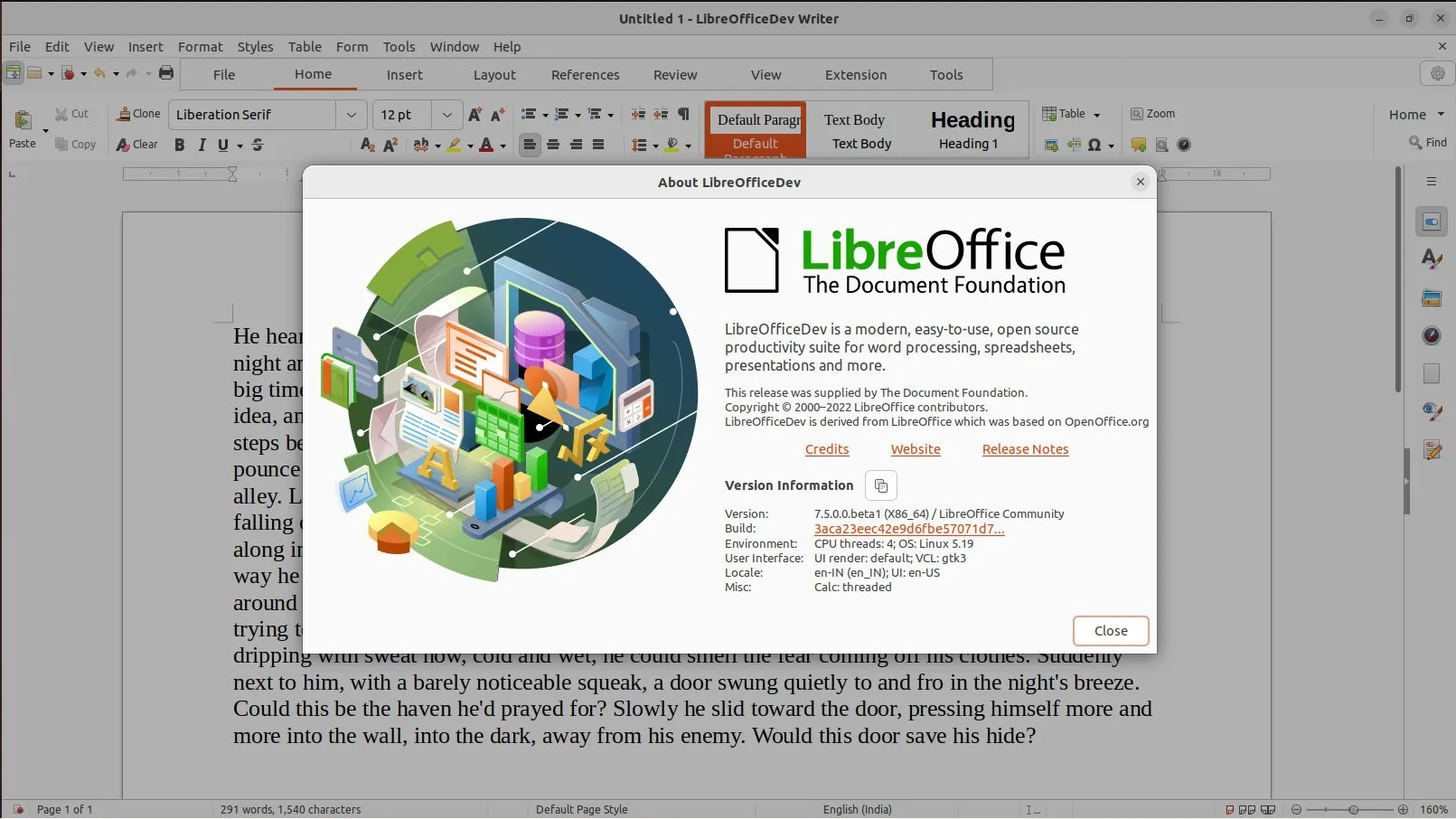
LibreOffice is the granddaddy of open-source office suites. It’s mature, feature-rich, and completely free. While it lacks built-in cloud collaboration, it remains the most powerful desktop office suite available in Europe.
✅ Completely free: No licenses, no subscriptions, no hidden costs
✅ Mature and stable: Decades of development
✅ Huge community: Extensive documentation, forums, tutorials
✅ Cross-platform: Windows, Mac, Linux all supported
✅ No internet required: Works entirely offline
❌ No built-in collaboration: Real-time collaboration requires third-party tools
❌ Interface: Can feel cluttered and dated to new users
❌ No mobile apps: Limited mobile experience
❌ Format compatibility: Good but not perfect with Microsoft formats
Organizations on a tight budget, educational institutions, Linux users, anyone who needs a powerful desktop suite without ongoing costs. Great as a secondary suite for internal use where format exchange isn’t critical.
Free, forever.
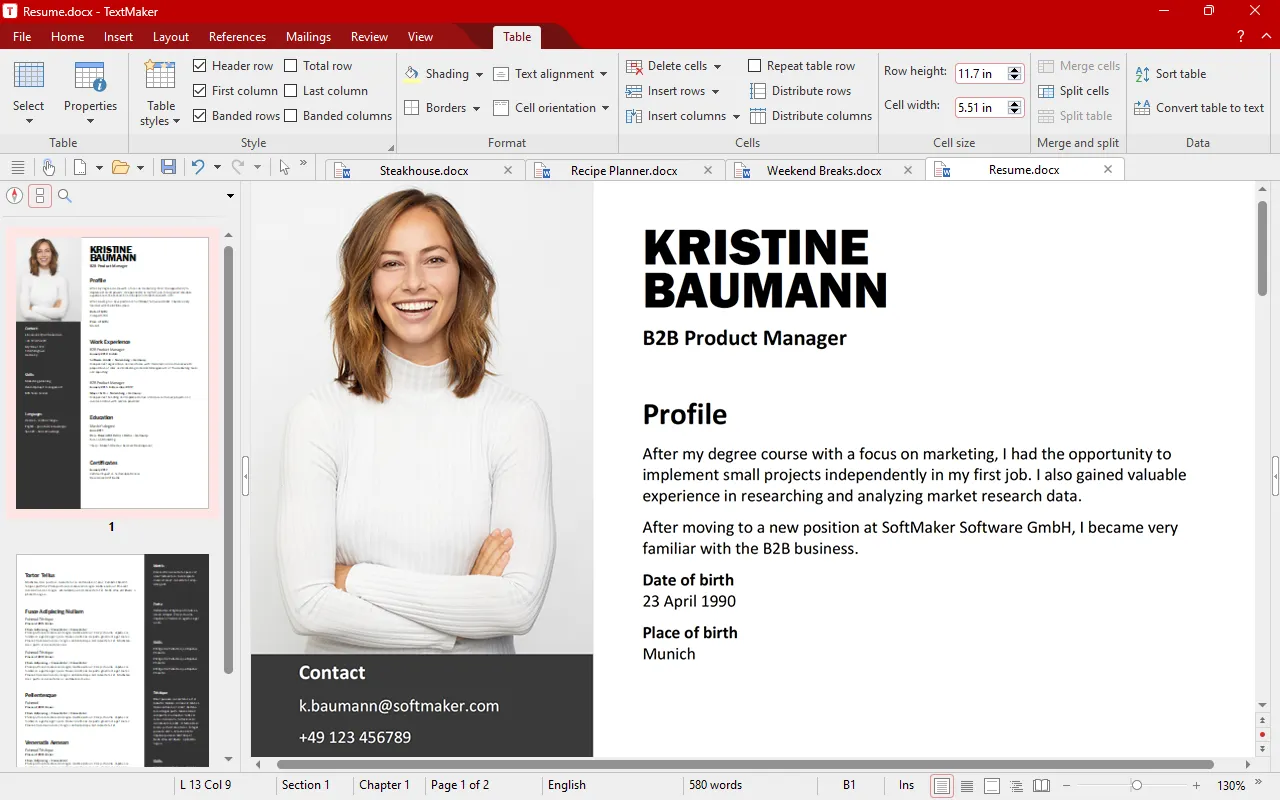
SoftMaker Office takes a different approach from most alternatives: it’s a commercial desktop suite available with a perpetual license (pay once, use forever). It’s built in Germany and designed specifically for GDPR compliance.
✅ GDPR-compliant: Built in Germany for European privacy laws
✅ Fast: Lightweight and responsive
✅ Perpetual license: Pay once, own forever
✅ Good compatibility: Handles most Microsoft files well
✅ No cloud required: Works entirely offline
❌ Interface: Traditional, not modern or innovative
❌ Complex files: Issues with very complex Excel macros or PowerPoint animations
❌ Smaller ecosystem: Fewer templates, extensions, community resources
❌ Mobile versions: Available but limited
Organizations that hate subscriptions and want to pay once. Users with older hardware who need speed. Anyone who wants a solid, privacy-respecting desktop suite without ongoing costs.
One-time purchase (perpetual license) or subscription.
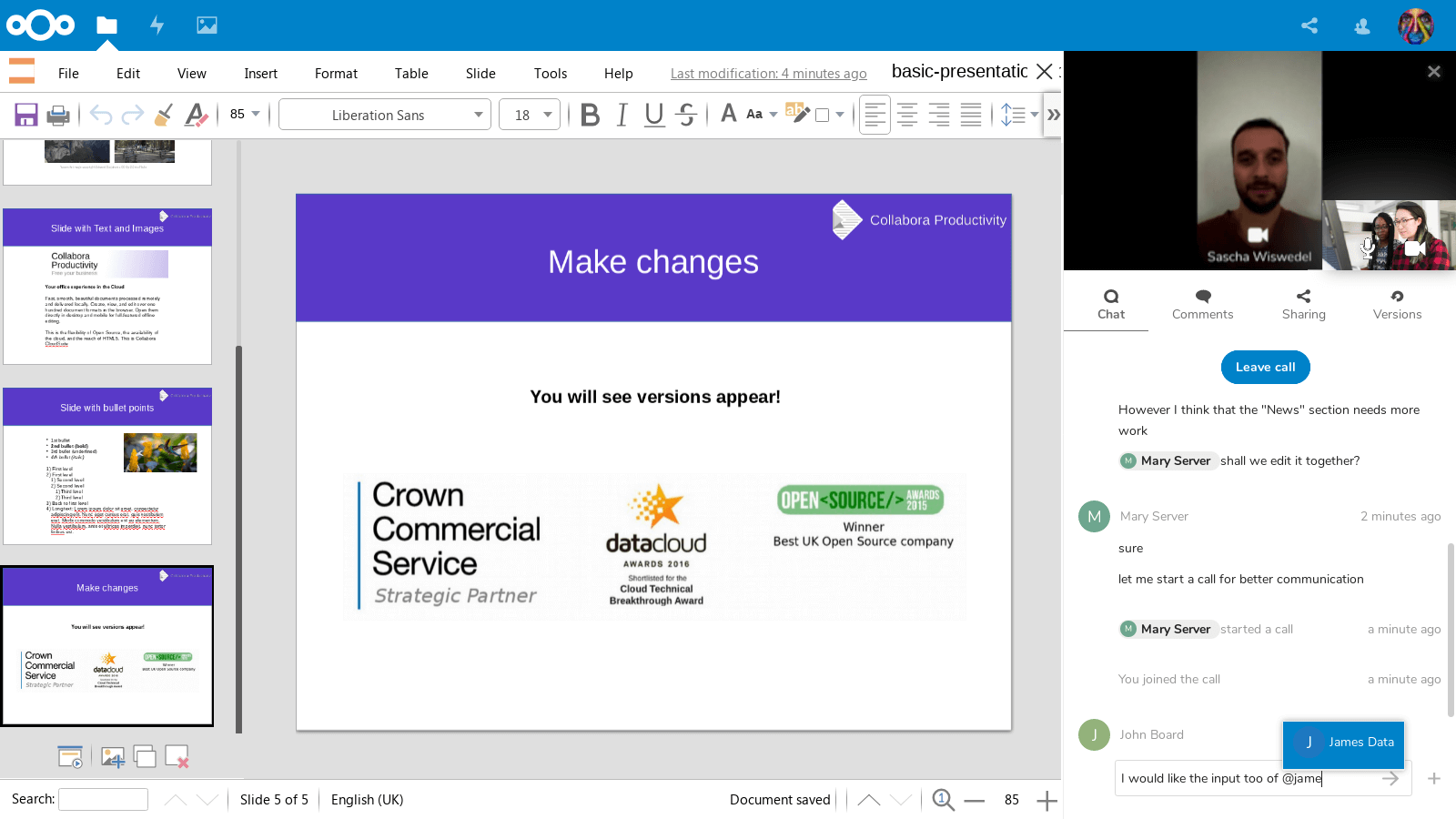
Collabora Online brings the power of LibreOffice to the browser. It’s the engine behind Nextcloud Office and can be integrated into other platforms for online document editing.
✅ Powerful editing: Inherits LibreOffice’s feature depth
✅ Good ODF support: Native to the format
✅ Scalable: Works for small teams to large enterprises
✅ Integration options: Works with Nextcloud, ownCloud, others
❌ Server resources: Can be resource-intensive
❌ Interface: Functional but not as modern as OnlyOffice
❌ Microsoft format compatibility: Good but not perfect
❌ Setup complexity: Requires technical expertise to self-host
Organizations already using Nextcloud or ownCloud. Teams that need LibreOffice’s features in a browser. Mobile-heavy workforces.
Free open-source core; paid enterprise support.
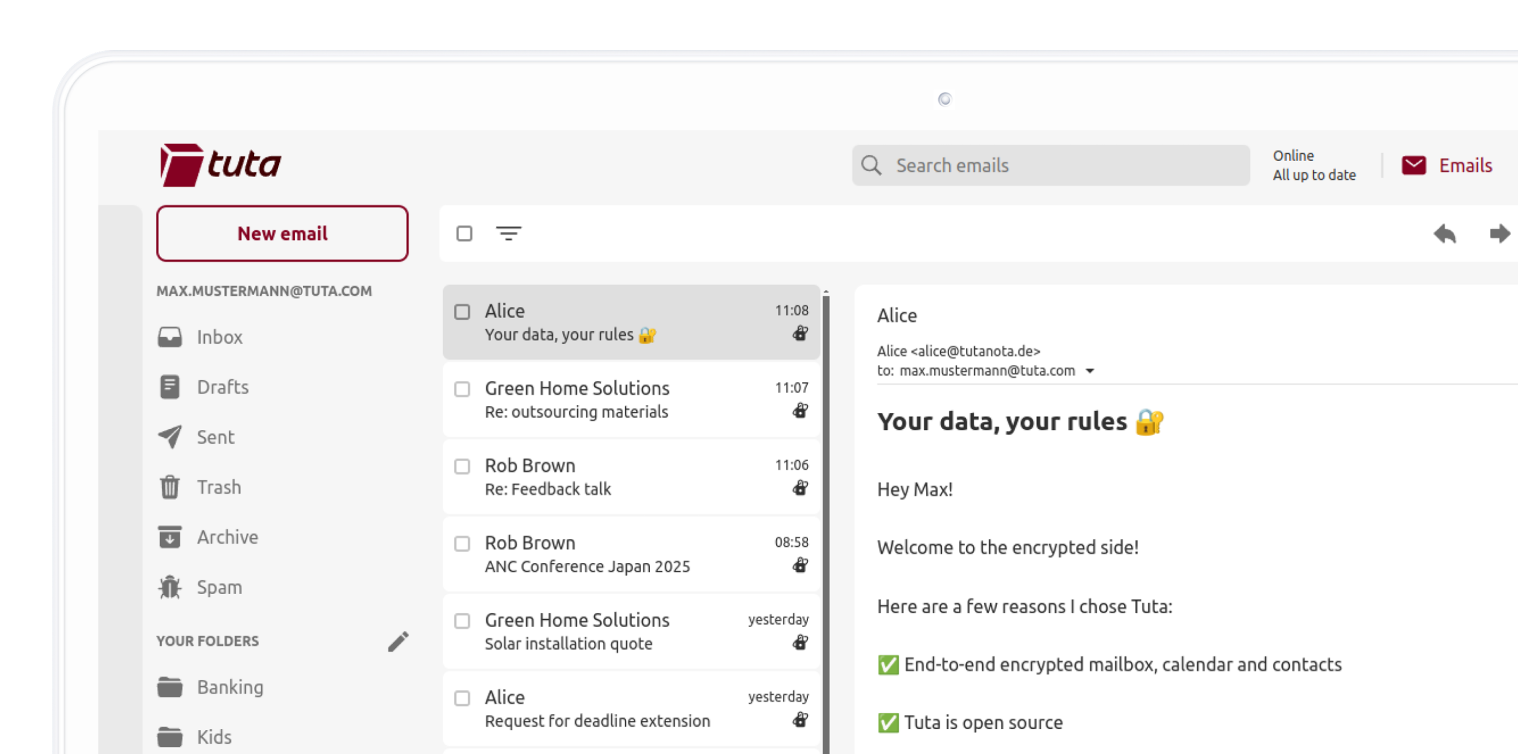
Tuta is an email service with a singular focus: privacy through encryption. Everything is encrypted by default, and the company is based in Germany with a strong commitment to user privacy.
✅ Maximum email privacy: Industry-leading encryption
✅ Simple to use: Just works, no technical knowledge required
✅ Affordable: Free tier available, reasonable paid plans
✅ Cross-platform: Apps for all devices
✅ No personal information required: Sign up without giving your phone number
❌ Email only (mostly): Calendar included, but no document editing
❌ Encryption limitations: Can’t search encrypted content
❌ Sending to non-Tuta users: Emails are encrypted but must be decrypted via password
❌ Feature set: Focused on security, not feature breadth
Organizations where secure email communication is critical. Journalists, legal professionals, anyone handling sensitive communications. Small teams that need private email without collaboration features.
Free tier; paid plans for additional features and storage.
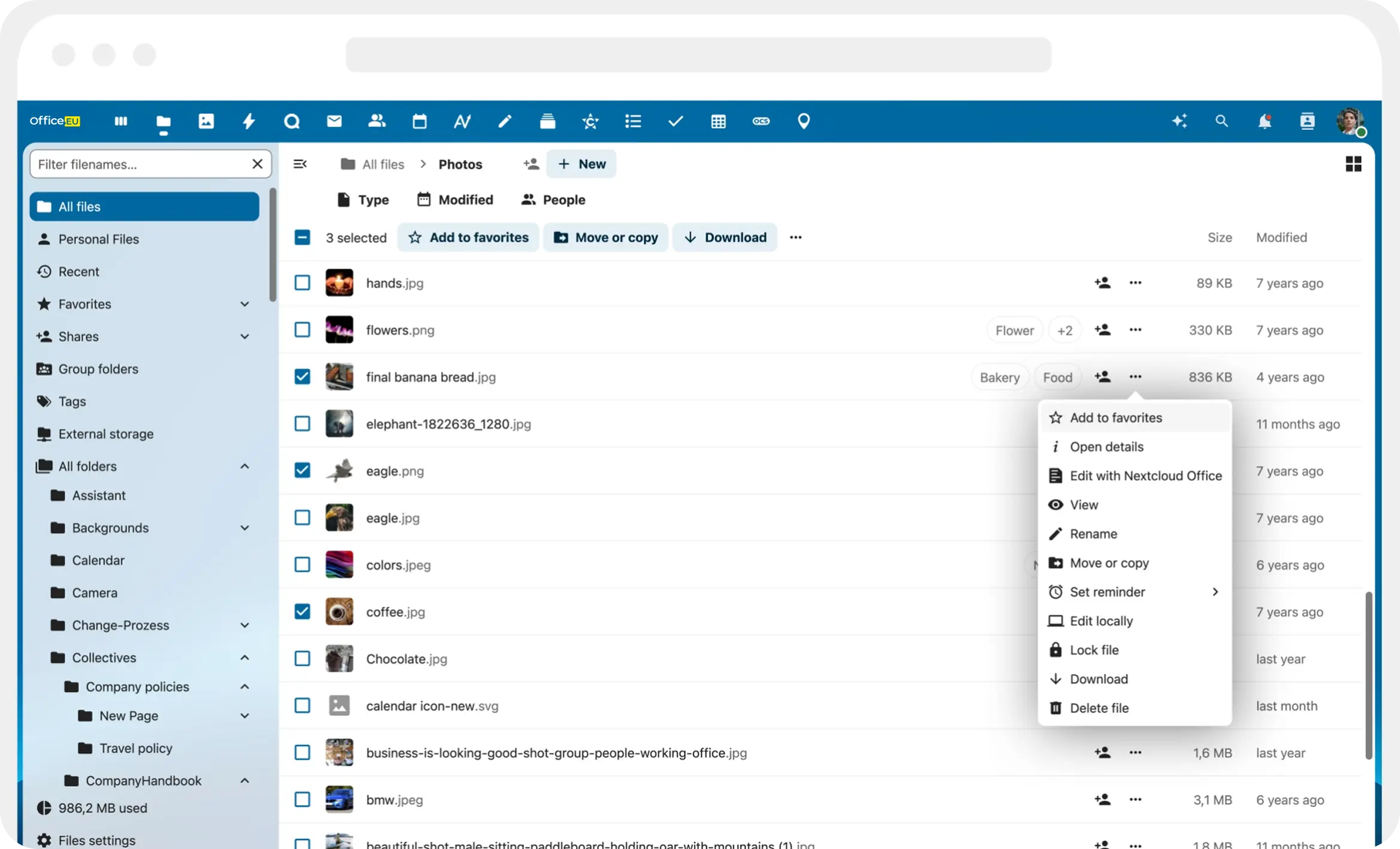
Office.eu provides a privacy-focused email platform with integrated basic document capabilities, all protected by encryption.
✅ More than just email: Basic document storage included
✅ Strong security: Multiple layers of protection
✅ Digital signatures: Useful for legal and business documents
✅ Compatible: Works with standard email clients
✅ Privacy-focused: No data mining, no ads
❌ Document editing: Very basic compared to dedicated office suites
❌ Collaboration features: Limited compared to full platforms
❌ Interface: Functional but not modern
❌ Mobile apps: Available but limited
Organizations that need secure email with occasional document needs. Legal professionals who need digital signatures. Small businesses that prioritize privacy over features.
Free tier; paid plans for businesses.
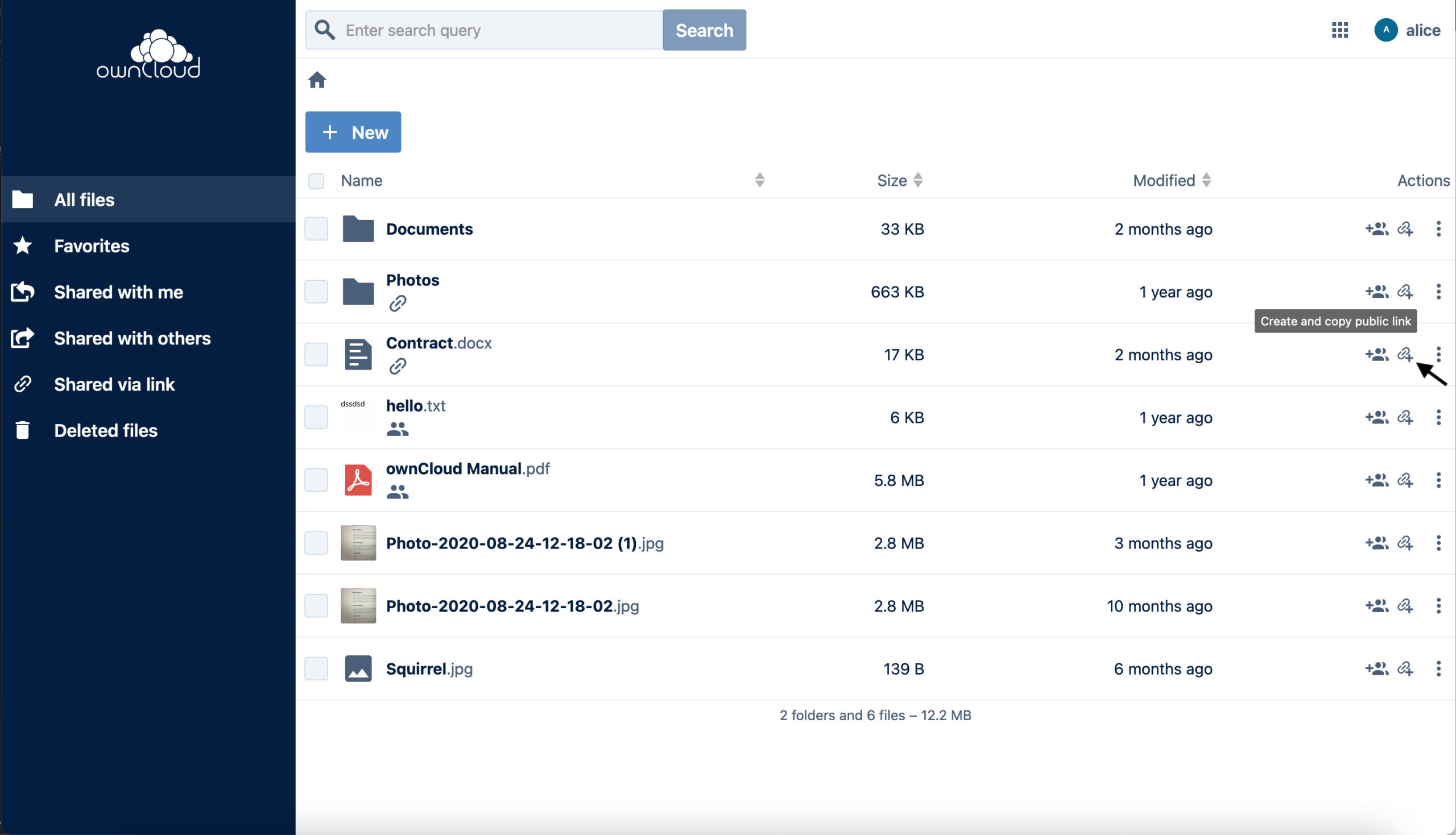
ownCloud was one of the first self-hosted file sync and share platforms. It’s focused on enterprise security and compliance, making it popular in regulated industries.
✅ Maximum security: Built for regulated industries
✅ Compliance-ready: Audit logs, access controls, retention policies
✅ Flexible deployment: On-premise, private cloud, hybrid
✅ Integration ecosystem: Works with many other tools
✅ German engineering: Strong focus on quality and security
❌ Core focus: File management, not office editing (needs integration)
❌ Setup complexity: Requires technical expertise
❌ Interface: Functional, not beautiful
❌ Pricing: Enterprise-focused, can be expensive
Regulated industries (finance, healthcare, government) where compliance and security are paramount. Large enterprises with complex file management needs.
Free community edition; paid enterprise subscriptions.
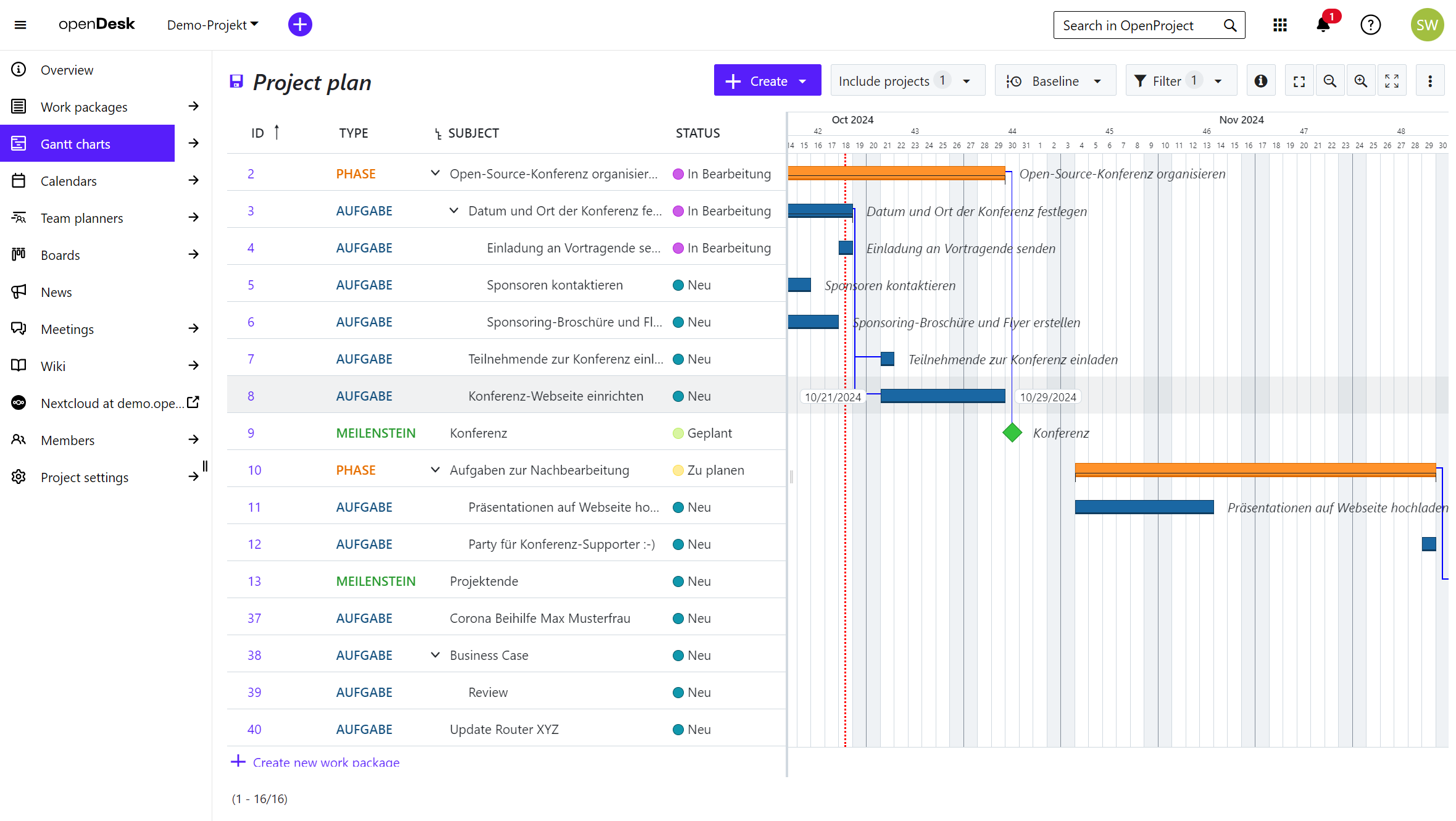
Open Desk offers a lightweight, no-database approach to team knowledge management and documentation. Everything is stored in simple files, making it easy to maintain and portable across servers.
✅ Extremely simple: Install in minutes and maintain easily
✅ Portable: Backup by copying files, migrate servers effortlessly
✅ Low resource usage: Runs on minimal hardware
✅ Plugin ecosystem: Extend functionality as needed
✅ Free and open-source: No licensing costs
❌ Knowledge-base only: Not a full office suite
❌ Limited rich editing: Uses markdown or simple syntax, no WYSIWYG
❌ Structured data limitations: Not built for complex databases
❌ Collaboration: Multiple users can edit, but not in real-time
Documentation-heavy teams, small organizations needing a simple knowledge base, technical teams comfortable with lightweight syntax, and anyone who wants a reliable, low-maintenance tool.
Free, forever.
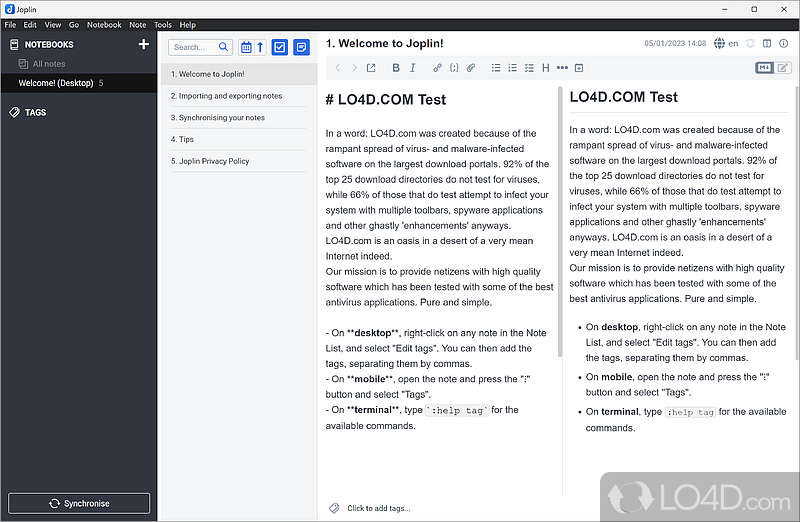
Joplin is an open-source note-taking application that puts privacy first. It’s like Evernote or OneNote but with end-to-end encryption and no vendor lock-in.
✅ Privacy-focused: Your notes, your data
✅ Cross-platform: Windows, Mac, Linux, iOS, Android
✅ No vendor lock-in: Export your notes anytime, in multiple formats
✅ Powerful organization: Notebooks, tags, search
✅ Free: No cost, no premium tiers
❌ Single-user focus: Limited collaboration features
❌ No real-time collaboration: Not for team editing
❌ Markdown learning curve: Not everyone knows Markdown
❌ Syncing setup: Requires some configuration
Individuals and teams that need private, organized note-taking. Technical users who appreciate Markdown. Researchers, writers, students. Anyone who wants to own their notes forever.
Free, donations accepted.
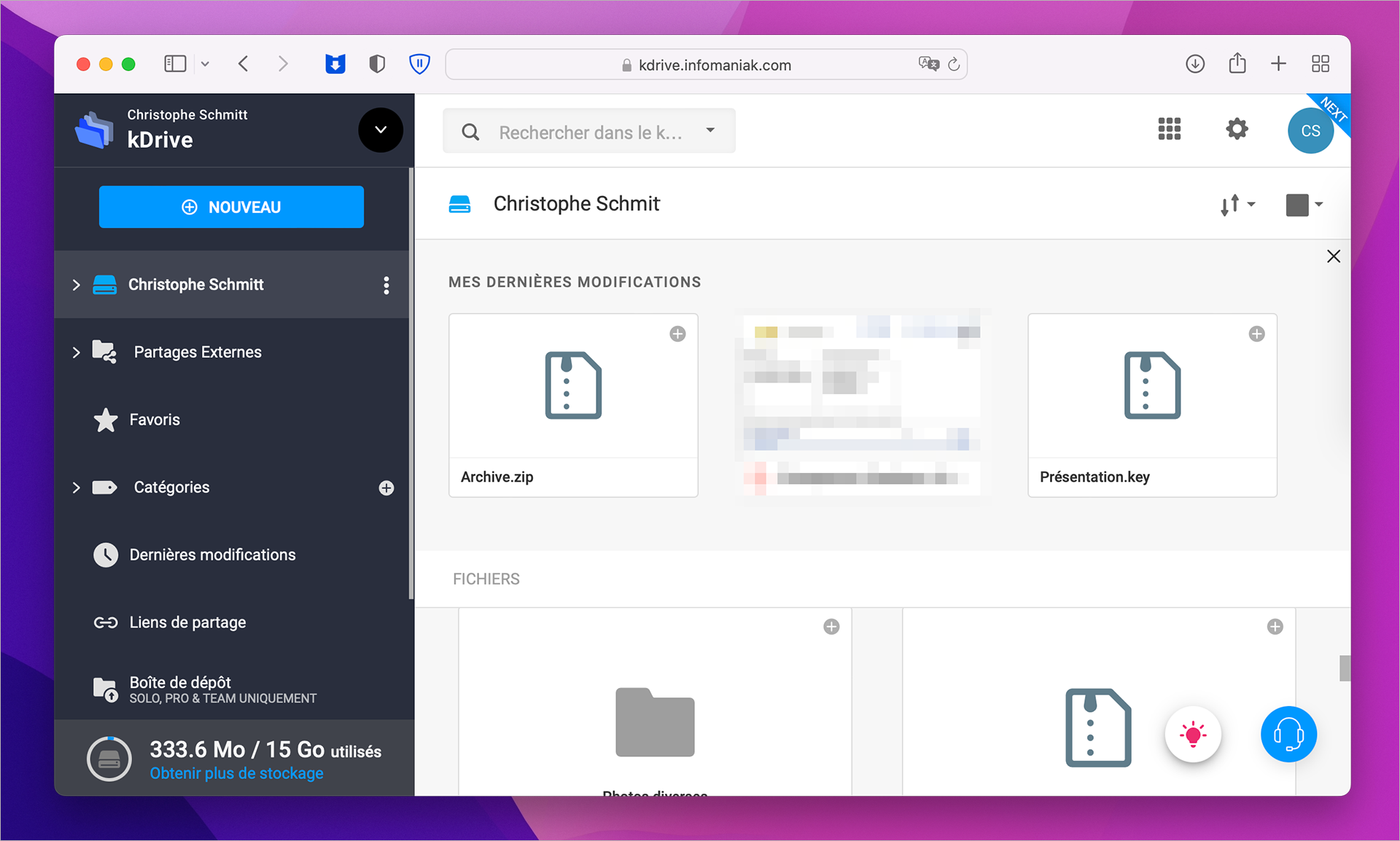
Ksuite Swisse is an ethical, privacy-focused online form builder that offers a transparent, user-first approach.
✅ Privacy-respecting: Your data isn’t sold or analyzed
✅ Free to use: Supported by donations or community support
✅ Swiss legal protection: Secure hosting
✅ No account required for respondents: Easy to fill out
✅ Simple but capable: Works well for forms
❌ Niche tool: Only for forms
❌ Limited features: Less advanced than Typeform or SurveyMonkey
❌ Few integrations: Limited connections to other tools
❌ Basic interface: Functional but not very stylish
Non-profits, educational institutions, community organizations. Ideal for simple form needs where privacy matters more than advanced features.
Free (donation-supported).
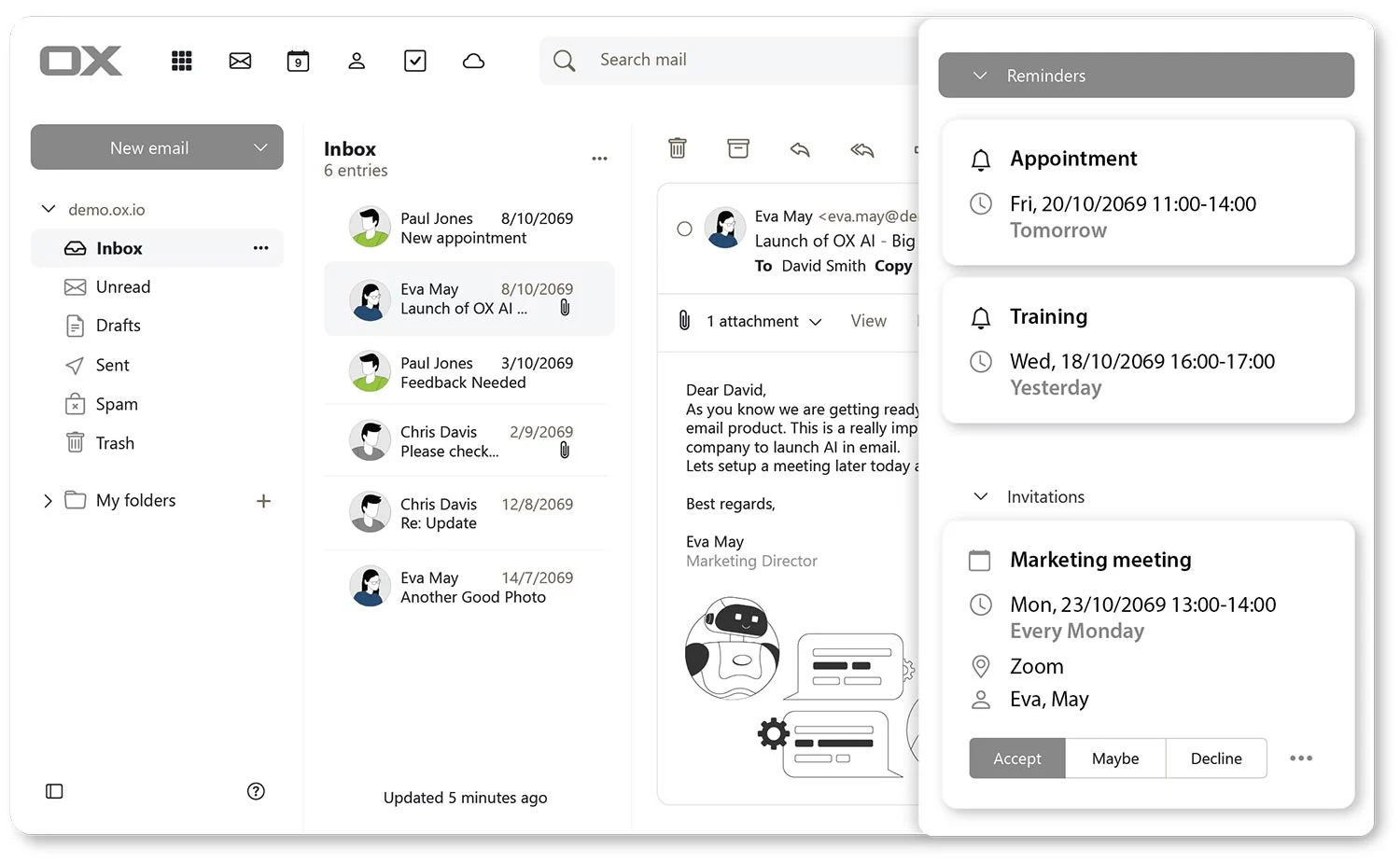
Open-Xchange is the engine behind many European email and collaboration services. You might not use it directly, but if you have email through a European provider, you might be using it without knowing.
✅ Proven at scale: Handles massive user bases
✅ Robust: Enterprise-grade reliability
✅ Flexible: Can be customized for different needs
✅ Strong ecosystem: Many providers and partners
❌ Not a direct product: Typically sold through service providers
❌ End-user experience: Depends on the provider’s customization
❌ Office features: Basic compared to dedicated suites
❌ Not for individual buyers: Designed for organizations and providers
Service providers (hosting companies, telcos) offering email and collaboration to their customers. Large organizations that want to run their own email infrastructure.
Through service providers; enterprise licensing available.
| Platform | Country | Core Focus | Key Features | Pros | Cons | Best For | Pricing Model |
| eXo Platform | France | All-in-One Digital Workplace | Social intranet, team spaces, document management, workflows, OnlyOffice integration | True all-in-one, open-source, engagement features, enterprise security, flexible hosting | Document editing via integration, complex customization, advanced document management limited | Medium to large orgs wanting full digital workplace replacement | Open-source with enterprise subscriptions |
| Nextcloud Office | Germany | Self-Hosted Collaboration | File sync/share, Collabora Online, video/chat, calendar/contacts, thousands of apps | Maximum data control, extensible, privacy-focused, active community, integrates with infrastructure | Technical expertise needed, setup complex, interface less polished, performance depends on infra | Teams needing absolute data sovereignty | Free open-source; paid enterprise support |
| XWiki | France | Knowledge Management | Enterprise wiki, app builder, collaborative editing, structured data, rights management | Flexible, strong community, open-source, enterprise features | Editing experience not smooth, complexity, learning curve, not a full office suite | Complex knowledge management, large orgs, research institutions | Free open-source; enterprise editions |
| CryptPad | France | Zero-Knowledge Collaboration | Encrypted docs, spreadsheets, presentations, polls, kanban, whiteboards | Maximum privacy, open-source, unique security, French law protection | Limited free version, performance overhead, limited feature set, technical comfort required | Legal, journalists, activists, sensitive info handling | Free tier; paid premium; self-hosting option |
| OnlyOffice | EU (Latvia) | Microsoft Format Compatibility | Document/spreadsheet/presentation editors, PDF, collaborative editing, forms, CRM/PM | Best format fidelity, intuitive interface, affordable, self-hostable, active development | Complex documents may have issues, feature depth, mobile apps less polished | Firms exchanging docs with MS Office users | Free desktop; paid cloud/server versions |
| LibreOffice | Germany | Open-Source Desktop Suite | Writer, Calc, Impress, Draw, Base, Math | Free, mature, stable, cross-platform, offline | No built-in collaboration, interface dated, mobile limited, MS format compatibility imperfect | Budget-conscious orgs, educational, Linux users | Free, forever |
| SoftMaker Office | Germany | Perpetual License Desktop Suite | TextMaker, PlanMaker, Presentations, macro support | GDPR-compliant, fast, perpetual license, MS format support, offline | Traditional interface, complex files, smaller ecosystem, limited mobile | Users hating subscriptions, older hardware, privacy-conscious | One-time purchase or subscription |
| Collabora Online | UK/Global | Online LibreOffice | Online Writer/Calc/Impress, real-time collaboration, mobile-friendly | Powerful editing, ODF support, scalable, integration-ready | Resource-intensive, interface functional, MS format not perfect, self-hosting complex | Teams needing LibreOffice in browser, Nextcloud users | Free open-source; paid enterprise support |
| Tuta (Tutanota) | Germany | Encrypted Email | End-to-end email, calendar, contacts, secure attachments | Maximum email privacy, simple, affordable, cross-platform, no personal info | Email-only, encryption limits, non-Tuta recipients, focused feature set | Organizations needing encrypted email | Free tier; paid plans |
| Office.eu | Belgium | Secure Email Suite | Encrypted email, calendar, contacts, document storage, digital signatures | More than email, strong security, digital signatures, compatible, privacy-focused | Document editing basic, collaboration limited, functional interface, limited mobile | Secure email + basic docs, legal professionals | Free tier; paid business plans |
| ownCloud | Germany | File Sync & Share | File management, access control, versioning, audit logs, storage integration | Maximum security, compliance-ready, flexible deployment, integration ecosystem, German quality | Office editing not core, setup complex, interface functional, enterprise pricing | Regulated industries, large enterprises | Free community; paid enterprise subscriptions |
| Open Desk | Germany | Simple Knowledge Base | Pages for documentation, access control, versioning, search, plugins | Simple, portable, low resource, plugin ecosystem, free | Knowledge-base only, limited rich editing, structured data limitations, no real-time collaboration | Documentation-heavy teams, small orgs | Free, forever |
| Joplin | France/Global | Note-Taking | Notes (Markdown), to-do lists, web clipper, end-to-end sync, notebooks | Privacy-focused, cross-platform, no lock-in, powerful organization, free | Single-user focus, no real-time collaboration, Markdown learning curve, sync setup | Individuals/teams needing private notes | Free, donations accepted |
| Ksuite Swisse | Switzerland | Online Form Builder | Forms, surveys, responses collection, analysis, sharing | Privacy-respecting, free, Swiss law protection, no account needed, simple | Forms-only, limited features, no integrations, basic interface | Non-profits, schools, community orgs | Free (donation-supported) |
| Open-Xchange | Germany | White-Label Communication | Email, calendar, contacts, document storage, collaboration | Proven at scale, robust, flexible, strong ecosystem | Not direct product, end-user experience variable, basic office features, not for individuals | Service providers, large orgs running email | Through providers; enterprise licensing |
When evaluating alternatives to Microsoft 365, many solutions focus on replacing only one aspect of the suite — for example, OnlyOffice for document editing or Rocket.Chat for team communication. eXo Platform stands out as the only European solution that replicates the holistic nature of Microsoft 365, combining collaboration, communication, and content management into a single, cohesive digital workplace experience.
Unlike piecemeal alternatives, eXo’s integrated environment reduces context switching and centralizes collaboration, creating a single source of truth for employees.
No platform is perfect, and eXo Platform has areas where specialized tools may outperform it:
Why these drawbacks don’t outweigh the benefits:
Unlike Microsoft 365, which offers features but sometimes struggles with adoption, eXo Platform is built for engagement:
This human-centered approach transforms eXo from a set of tools into the organizational glue connecting tasks, chats, and documents within a single, sovereign environment.
Built in France, eXo Platform is designed with European data protection standards in mind:
This ensures enterprises can modernize their digital workplaces without sacrificing privacy, sovereignty, or compliance.
eXo Platform provides the flexibility of open source with the reliability expected by large enterprises:
Its modular architecture allows organizations to start small — for example, with an intranet or community workspace — and add functionality like gamification, workflow management, or document collaboration as needed.
Most alternatives replace only part of Microsoft 365:
| Function | Microsoft 365 | Typical European Alternative | eXo Platform |
| Document Editing | Word | OnlyOffice | Integrated via OnlyOffice |
| Communication | Teams/Outlook | Rocket.Chat | Fully integrated chat & notifications |
| File Storage | OneDrive | Nextcloud | Document management & knowledge base |
| Collaboration | SharePoint/Yammer | Various tools | Unified communities & project spaces |
| Engagement | Limited | Limited | Activity streams, gamification, rewards |
This illustrates why eXo is the only solution that truly replaces the entire Microsoft 365 ecosystem in a European-compliant, sovereignty-first way.
While no platform is perfect, eXo Platform’s holistic approach, engagement focus, and sovereignty-first design make it the optimal European alternative to Microsoft 365.
The shift toward European alternatives to Microsoft 365 is no longer a passing trend — it represents a strategic realignment for organizations prioritizing digital sovereignty, compliance, and operational independence. Geopolitical uncertainties, regulatory evolution, and data privacy concerns have made the question of digital control central to IT strategy.
The question is no longer “Can we leave Microsoft?”
but “Which European partner will help us build our sovereign future?”
European developers have quietly created a mature ecosystem of alternatives that meet a wide range of organizational needs:
Each of these solutions aligns with GDPR compliance, EU jurisdiction, and sovereignty-first principles, providing enterprises with legal certainty and operational freedom.
Among European alternatives, eXo Platform uniquely replicates the full Microsoft 365 experience while centering on the human element:
Unlike tools that replace only a single part of Microsoft 365, eXo provides a central hub where work, communication, and collaboration converge, creating measurable ROI in productivity, engagement, and governance.
For European organizations, moving away from Microsoft 365 delivers several tangible benefits:
In short, the move toward European solutions is a move toward digital freedom and strategic autonomy.
For organizations that want more than just an office suite — those seeking engagement, transparency, and sovereign control over their data — eXo Platform emerges as the most comprehensive, future-proof European solution.
Other European tools like Nextcloud, OnlyOffice, and Proton have their niches, but for organizations seeking holistic workplace transformation, eXo Platform is unmatched.
The European digital landscape is sovereignty-first. Organizations are no longer just choosing software—they are choosing jurisdiction, governance, and strategic autonomy.
Microsoft 365 remains a powerful tool, but European alternatives now offer mature, secure, and competitive ecosystems. For enterprises that prioritize:
…eXo Platform represents the most comprehensive and future-proof solution in the European ecosystem.

eXo Platform : The Open-Source
Digital Workplace Platform
Download the eXo Platform Datasheet and discover all the features and benefits

Download the eXo Platform Datasheet and discover all the features and benefits
You will find here Frequently Asked Questions about Microsoft 365 with all the answers in one place.
Across Europe, organizations are reassessing their reliance on U.S.-based cloud productivity suites such as Microsoft 365. While the platform remains dominant in the enterprise landscape, concerns about jurisdiction, compliance exposure, and structural dependency have triggered a broader strategic review — particularly among public institutions, regulated industries, and privacy-conscious enterprises.
This shift is not driven by ideology. It is driven by governance, risk management, and long-term strategic positioning.
🔗 Find out why Consider European Alternatives to Microsoft 365
Choosing a European alternative to Microsoft 365 is not simply a technical switch. It is a strategic infrastructure decision that affects compliance exposure, operational resilience, cost control, and long-term autonomy.
Before evaluating the top European options, organizations should assess platforms across several critical dimensions.
European solutions are designed for sovereignty-first operations, offering robust functionality without sacrificing compliance or privacy.
🌍 The Push for Sovereignty-First
🌐 Europe’s Maturing Cloud Ecosystem
🔄 A Structural Shift, Not a Trend
( Your e-mail address will not be published)

I am a Digital Marketing specialist specialized in SEO at eXo Platform. Passionate about new technologies and Digital Marketing. With 10 years' experience, I support companies in their digital communication strategies and implement the tools necessary for their success. My approach combines the use of different traffic acquisition levers and an optimization of the user experience to convert visitors into customers. After various digital experiences in communication agencies as well as in B2B company, I have a wide range of skills and I am able to manage the digital marketing strategy of small and medium-sized companies.