What Is an Intranet? Definition, Benefits, History, and Why It Still Matters in 2026

Let’s imagine a world where time travel is possible.
A fun (and slightly unsettling) experiment would be to take a tech-savvy millennial from today and drop them into a 1990s office, then bring a typical 1990s office worker into a modern workplace in 2026. It is safe to say neither would fully understand their surroundings.
what is intranet

Content

One would be confused by endless Slack notifications, AI assistants, cloud documents, and mobile dashboards. The other would be stuck navigating paper memos, static bulletin boards, and long email chains just to find a single updated policy.

What changed so dramatically isn’t just culture, it’s technology. More specifically, it’s the evolution of the tools we use to communicate, collaborate, and access information at work.

At the center of this transformation sits one quietly powerful system: the intranet.

In its simplest form, an intranet is a private, secure internal network used by organizations to share information, streamline communication, and enable collaboration among employees. Unlike the public internet, it is not open to everyone. Access is restricted through company credentials or secure authentication systems, making it a controlled digital environment for work.
But that definition only scratches the surface.

Modern intranets have evolved far beyond their early role as digital noticeboards. Today, they function as intelligent, integrated workplaces, often powered by AI, designed for mobile access, and deeply connected to everyday tools like Microsoft Teams, Slack, Google Workspace, and internal business applications. In many organizations, the intranet is no longer just a “place to find information,” but the central hub where work actually happens.

The impact is significant. Research shows that companies with well-designed, modern intranets can experience up to 21% higher employee engagement and a 38% improvement in productivity. And yet, despite these benefits, only a small fraction of employees use their intranet daily,highlighting an important truth: having an intranet is not enough; how it is designed and adopted matters just as much.

To understand why intranets still matter in 2026, it helps to zoom out.

Imagine trying to run a global company where teams are scattered across continents, engineering in Paris, marketing in New York, support teams working remotely across multiple time zones. Without a unified system, information becomes fragmented. Important announcements get buried in chat threads, critical documents disappear in shared drives, and employees waste valuable time searching for basic resources like forms, policies, or onboarding guides.

This is the friction intranets were built to solve.

Far from the rigid, outdated systems of the 1990s, today’s intranet acts as the secure, beating heart of an organization’s internal ecosystem. It connects people, tools, and knowledge in one centralized, accessible environment, designed for a workforce that is increasingly hybrid, global, and fast-moving.

But how did we get here?

To answer that, we need to go back in time to the early days of intranets, when they were simple internal webpages, and trace how they evolved into the intelligent digital workplaces we rely on today.

📘What is an intranet?

The term intranet is often used in conversations about internal communication, digital workplaces  and employee collaboration but despite its frequent use, it can still feel surprisingly difficult to define in a simple way.

At its core, an intranet is an organization’s private, secure digital space, a kind of internal website or network that exists behind a company’s firewall and is accessible only to employees. Unlike the public internet, which is open to everyone, an intranet is restricted, controlled, and designed specifically for internal use.

Think of it as a company’s private version of the internet: a centralized hub where employees can find information, access tools, and stay connected to what’s happening across the organization.

Traditionally, intranets were mainly used for top-down communication. They acted as digital noticeboards where companies published corporate news, HR policies, internal announcements, and important documents. Employees would “log in,” read updates, and occasionally download files, but interaction was limited, and collaboration was minimal.

Today, however, that model has completely changed.

Modern intranets have evolved into full digital workplace platforms. They are no longer just places where information is published, they are dynamic ecosystems where work actually happens. Modern intranets are often AI-powered, mobile-first, and deeply integrated with tools employees already use every day, such as Microsoft Teams, Slack, Google Workspace, and various business applications.

In this modern form, an intranet becomes a single, centralized environment for communication, collaboration, and knowledge sharing across the entire organization. It helps teams access internal resources, manage documents, streamline workflows, and stay aligned, regardless of department or location.

To put it in perspective, companies that adopt modern intranet platforms report up to 21% higher employee engagement and a 38% positive impact on productivity. Yet despite these benefits, only about 13% of employees use their intranet daily, highlighting an important reality: success depends not just on having an intranet, but on having one that is well-designed, useful, and embedded into daily work.

It is also helpful to distinguish it from related systems. Unlike the public internet, which is open to all, or an extranet, which extends limited access to external partners or clients, an intranet is strictly internal. Its purpose is not public communication, but rather to unify internal knowledge, improve employee experience, and break down organizational silos that often slow down decision-making.

In simple terms, an intranet is more than just a tool, it is the digital backbone of an organization’s internal life, connecting people, information, and work in one secure and structured environment.

modern-intranet-wp
FREE WHITE PAPER

The Modern Intranet: From

corporate website to digital hub

Employee engagement has become a central concern for organizations of all sizes. It is widely recognized as a key driver of performance, retention, and alignment — especially in increasingly distributed and fast-moving work environments.

cta-rectangle-orange
FREE WHITE PAPER
Employee engagement has become a central concern for organizations of all sizes. It is widely recognized as a key driver of performance, retention, and alignment — especially in increasingly distributed and fast-moving work environments.

📜 A Short History of Intranets

history-and-evolution-of-intranet

To really understand what a modern intranet is today, it helps to step back and look at where it all began. The intranet didn’t start as the powerful digital workplace hub we know now, it evolved gradually over time, shaped by changing technologies, work cultures, and employee expectations.

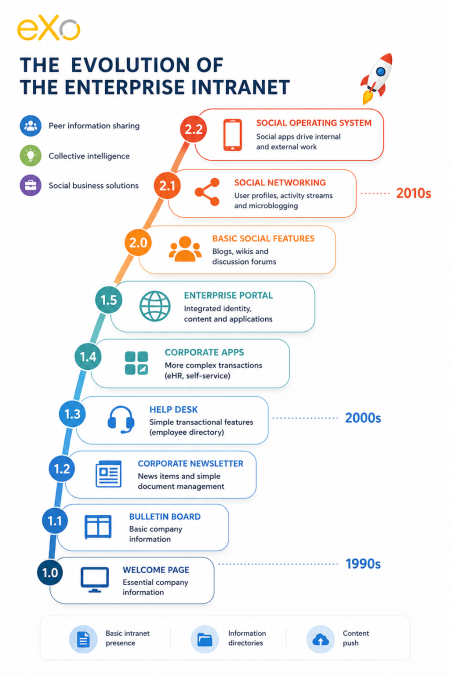
In simple terms, intranets have moved from static internal noticeboards to intelligent, AI-driven collaboration ecosystems. Each decade added a new layer of capability, transforming them from simple document repositories into the central nervous system of modern organizations.<

🟢 The 1990s — The Static Beginning

The intranet first emerged in the mid-1990s, when pioneering organizations began applying early internet technology to internal company networks. Inspired by the potential of the web, companies such as NASA and Lockheed Martin experimented with internal websites to share information more efficiently.

But in this early stage, intranets were extremely basic.

They functioned mostly as static digital bulletin boards hosted on internal servers. HR teams would upload employee handbooks, company policies, or announcements in simple HTML pages or PDF files. Employees might log in occasionally, often just to download a form or check a holiday schedule.

There was little to no interaction. No comments, no collaboration, no personalization. Even search functionality was limited, and user experience was secondary to simply “making it work.”

In short, the intranet 1.0 era was about information publishing, not communication or collaboration.

🟡 The 2000s — The Portal Era

As web technologies matured, intranets began to evolve into more structured and functional platforms. This was the age of enterprise portals, where organizations tried to centralize everything in one place.
Tools like early versions of Microsoft SharePoint helped define this era, introducing content management systems, employee directories, document libraries, and basic self-service tools for HR and IT support.

For the first time, intranets became more than just static pages, they became operational hubs.

However, despite these improvements, most intranets were still heavily top-down and IT-driven. Updating content was often slow, user experience was inconsistent, and employees still treated the intranet as something they “visited when needed,” rather than a daily work environment.

🔵 The 2010s to Early 2020s — The Social & Collaborative Shift

A major transformation arrived with the rise of social media and cloud computing. These trends reshaped what people expected from digital tools at work.

Intranets began to adopt familiar social features: user profiles, activity feeds, comments, likes, blogs, discussion forums, and wikis. Suddenly, employees were not just consuming information, they could also contribute to it.

This era marked the shift toward the social intranet, where knowledge sharing became more dynamic and collaborative. Platforms influenced by solutions like eXo Platform and other digital workplace tools helped organizations move toward collective intelligence rather than isolated information storage.
At the same time, cloud computing and mobile access made intranets more flexible and accessible for distributed and hybrid teams. Work was no longer tied to a single office, and intranets had to adapt to a more connected but geographically dispersed workforce.

🟣 The 2020s and Beyond — The AI-Powered Digital Workplace

Today, intranets have reached their most advanced stage yet: the AI-powered digital workplace.
Modern intranets are no longer just platforms for storing or sharing information. They are intelligent systems that connect communication, collaboration, knowledge management, and automation into one seamless environment.
They are cloud-based, mobile-first, and deeply integrated with everyday tools like Microsoft Teams, Slack, and enterprise business applications. AI now plays a growing role in improving search, personalizing content, automating workflows, and helping employees find what they need instantly rather than manually searching for it.
The scale of adoption reflects their importance. Gartner estimates that by 2027, a significant share of large enterprises will rely on AI-driven digital experience platforms to personalize employee experiences, while more than half of organizations are already actively modernizing or rebuilding their intranets.

At this stage, the intranet is no longer just an internal tool, it is the digital backbone of the modern organization.

👉 What started as a simple internal webpage in the 1990s has evolved into a centralized, intelligent ecosystem that supports how people work, communicate, and collaborate every day.
Discover the new generation
company intranet
Discover the new generation
company intranet

🤔What is the difference between intranets and extranets?

One of the most common points of confusion in digital workplace discussions is the difference between an intranet and an extranet. The two terms are closely related, and in practice they often share similar technologies, features, and even design principles. Both are built on secure web-based systems, both are used for communication and information sharing, and both aim to improve collaboration.

However, they serve fundamentally different audiences and that difference is what defines everything else.

🧩 The Simple Way to Understand It

An intranet is an organization’s private internal digital space. It is designed exclusively for employees and functions as the company’s internal hub for communication, knowledge sharing and collaboration.

An extranet, on the other hand, is like an extension of that internal system, but opened up selectively to external parties. These can include clients, suppliers, partners, contractors, or other stakeholders who need access to specific information or tools.

If the intranet is the company’s internal “home base,” then the extranet is the “shared workspace” where trusted outsiders are invited in under controlled conditions.

🎯 The Core Difference: Audience and Access

The key distinction between intranets and extranets comes down to who they are built for.
  • Intranets are designed for a single organization’s internal users,  its employees.
  • Extranets are designed to securely connect multiple organizations or external stakeholders.
This difference in audience directly impacts ownership, access control, and governance. Intranets are typically owned and managed by one organization, while extranets may be jointly managed or shared between different entities depending on the partnership structure.

🔍 Intranet vs Extranet: Side-by-Side Comparison

FeatureIntranetExtranet
Primary usersEmployees within a single organizationExternal stakeholders (partners, suppliers, clients) + sometimes employees
PurposeInternal communication, collaboration, knowledge sharingSecure collaboration between organizations
Access levelRestricted to internal staff onlyRestricted, but extended to approved external users
OwnershipSingle organizationOne or multiple organizations (shared agreements possible)
Security focusInternal data protection and employee access controlControlled external access and cross-organization security
Typical use casesHR portals, internal news, company policies, team collaborationSupplier portals, client dashboards, partner collaboration spaces
ScopeInternal onlyCross-organizational

🧠 Putting It Into Context

In practice, the line between intranets and extranets can sometimes feel blurry because modern platforms are increasingly flexible. Many digital workplace systems allow organizations to extend parts of their intranet outward in a controlled way, creating hybrid environments where employees and external partners can collaborate securely.
Still, the distinction remains important:
  • If the system is built only for employees, it is an intranet.
  • If it is designed to include external organizations or users, it becomes an extranet.

Understanding this difference is essential for designing secure, efficient digital workplaces, especially in 2026, where collaboration increasingly extends beyond company boundaries and into broader business ecosystems.

🛠️ How Does an Intranet Work?

At first glance, an intranet might feel like just another internal website. But under the hood, it’s actually a carefully designed digital ecosystem built on the same foundational technologies as the internet, yet wrapped in strict layers of security, identity control, and personalization.
In simple terms: an intranet works like the internet, but privately inside the boundaries of an organization.
It uses standard communication protocols such as TCP/IP, HTTP/HTTPS, and other web technologies to transfer data between users and servers. The difference is not in the technology itself, but in how tightly access is controlled and who is allowed inside.

🧩 The Core Architecture of an Intranet

A modern intranet typically runs on a combination of cloud infrastructure, identity systems, and internal applications that work together as one unified platform.
Here’s how it fits together in practice:

☁️ 1. Hosting & Infrastructure

Today’s intranets are usually cloud-based (SaaS platforms) or hosted on secure private enterprise clouds. This shift away from traditional on-premise servers has made intranets more scalable, faster to deploy, and accessible from anywhere in the world.

Instead of being tied to office networks, employees can now securely log in from laptops, tablets, or mobile devices whether they are in the office, at home, or traveling.

🔐 2. Identity & Access Management (IAM)

Security is the backbone of every intranet.
To ensure only the right people gain access, intranets integrate with enterprise identity systems such as Microsoft Active Directory or Okta. These systems manage who each employee is and what they are allowed to access.

This is where Single Sign-On (SSO) becomes important. With SSO, employees log in once using their corporate credentials and instantly gain access to all approved tools, documents, and internal systems without needing multiple passwords.

🧭 3. Role-Based Access Control (RBAC)

Not every employee should see everything and intranets are designed with that principle at their core.

Through role-based access control (RBAC), content and tools are dynamically displayed based on a user’s role within the organization.
For example:
  • A marketing employee may access campaign plans, brand assets, and content calendars
  • An HR team member can view policies, payroll systems, and employee records
  • Executives may see company-wide dashboards and sensitive financial reports
This ensures information is both accessible and secure, preventing unnecessary exposure of sensitive data.

🗄️ 4. Core System Components

Behind the scenes, several technical building blocks make the intranet function smoothly:
ComponentRole in the Intranet
Web ServerHosts intranet pages and handles user requests
FirewallBlocks unauthorized access and protects internal systems
Content Management System (CMS)Allows teams to publish and update content without technical skills
Directory Services (e.g., Active Directory)Manages user identities, roles, and permissions
DatabaseStores documents, user profiles, and organizational data

Together, these components form the foundation of the intranet’s structure balancing usability with enterprise-level security.

📱 5. How Employees Actually Use It

From a user’s perspective, accessing an intranet is simple and seamless.
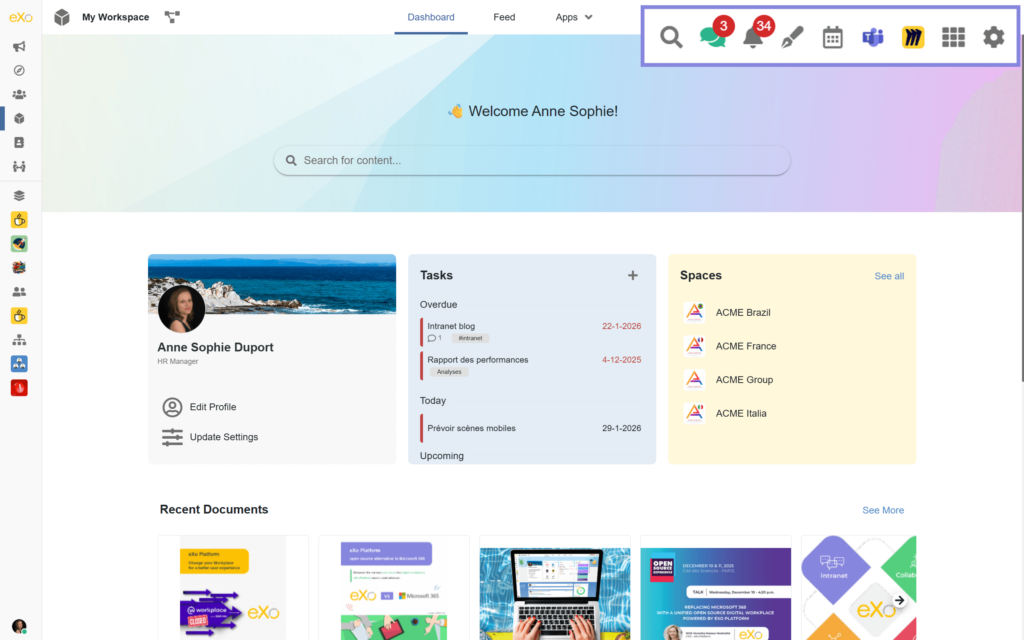
Employees typically log in through a web browser or mobile app, authenticate via SSO or multi-factor authentication, and are then taken to a personalized dashboard.
From there, they can:
  • Read company news and announcements
  • Search for internal documents and policies
  • Collaborate through messaging or workflow tools
  • Access HR services or business applications
  • Complete everyday tasks without switching between systems
The experience is designed to feel unified like a single entry point into everything an employee needs to do their job.

🧠 The Simple Mental Model

A useful way to understand it is this:
  • The internet is like a public library, open to everyone, filled with unlimited information
  • An intranet is like a private members-only workspace, secure, structured, and designed specifically for people inside the organization

🔑 The Key Idea

At its core, an intranet is not just a tool, it’s a controlled digital environment.
It ensures that:
  • Access is restricted to authorized users
  • Information is delivered based on roles and needs
  • Communication and workflows are centralized
  • Company knowledge stays secure yet easily accessible
This combination of openness within the organization and protection from outside access is what allows modern intranets to function as the digital backbone of today’s enterprises.

❓ Why Is an Intranet Important? (Key Statistics & Business Impact)

An intranet is often mistaken for a simple internal communication tool, but in reality, it plays a much more strategic role inside modern organizations. It directly affects how people work, how quickly information flows, and ultimately how efficiently a business performs.

When information is scattered across emails, chat apps, shared drives, and disconnected systems, employees lose time simply trying to find what they need. Over time, this “hidden friction” becomes a major productivity and financial drain.
A well-designed intranet exists to solve exactly that problem.

⏳ The Productivity Drain Nobody Sees

One of the biggest hidden costs in organizations is the time employees spend searching for information.

Research from McKinsey shows that corporate employees can spend up to 19% of their workweek just looking for internal information or tracking down colleagues to complete tasks. That’s nearly one full day per week lost to searching instead of doing.

A centralized intranet changes this dynamic entirely. By creating a structured knowledge hub, where documents, policies, and expertise are easy to find, it effectively “gives back” hours of productive time to every employee.

🌍 The Cost of Disconnection

Another major challenge in modern organizations is employee disengagement.

According to Gallup research, disengaged employees cost the global economy an estimated $8.8 trillion in lost productivity. Much of this disengagement comes from poor communication, lack of visibility into company goals, and weak connection to organizational culture, especially in remote and hybrid environments.

This is where intranets play a critical role. They act as a centralized communication layer that keeps employees aligned with company news, leadership updates, and cultural initiatives. Whether someone is in headquarters or working remotely, the intranet ensures they remain connected to the same source of truth.

💰 The Real Return on Investment (ROI)

Beyond productivity and engagement, intranets also deliver measurable financial impact.
A study by the International Data Corporation (IDC) found that organizations using centralized digital workplace platforms experienced:
  • An 11.3% increase in revenue
  • A 20% reduction in employee turnover

These improvements are driven by better communication, faster decision-making, and stronger employee engagement all of which stem from having a unified digital workplace.

🎯 Why Intranets Matter for Modern Organizations?

At a practical level, intranets deliver a set of core benefits that directly impact daily operations:
  • 📢 Faster communication across teams and departments
  • 📁 Centralized knowledge management for documents and policies
  • 🤝 Stronger collaboration across functions and locations
  • 🔐 Secure information sharing with controlled access
  • Higher productivity through reduced information search time

Studies consistently show that companies with strong internal communication systems can be up to 25% more productive than those without structured collaboration platforms.

🧠 1. Turning Information Into “What Is Official”

One of the most important, but often overlooked, roles of an intranet is defining organizational truth.

It is the place where policies, procedures, and official updates are published, version-controlled, and maintained with clear ownership. In other words, the intranet becomes the company’s system of record for internal knowledge.
When employees ask, “What is the official process?” or “What policy should I follow?”, the intranet is where the answer lives.

🤝 2. Strengthening Collaboration at Scale

Modern work is collaborative by nature, but collaboration breaks down quickly when information is fragmented.
An intranet solves this by bringing communication, documentation, and workflows into a single environment. This reduces duplication of effort, improves alignment between teams, and makes decision-making faster and more transparent.

As a result, collaboration becomes not just easier but more structured and scalable.

🌍 3. Bridging the Deskless Workforce Gap

A significant portion of the global workforce is not sitting at a desk.

In fact, research suggests that around 80% of employees worldwide are deskless, including retail staff, healthcare workers, manufacturing teams, and field technicians. Yet these workers are often the least connected to company communications.

Modern intranets help close this gap by delivering mobile-first access to updates, training, and operational tools ensuring that critical information reaches every employee, regardless of location or role.

📊 4. Why Leaders Are Investing in Intranets

Organizational leaders increasingly recognize that internal communication is not just an HR function, it is a business driver.

Surveys show that executives believe strong internal communication directly impacts:
  • 89% — employee engagement
  • 87% — productivity
  • 85% — company culture
  • 84% — talent attraction and retention
  • 81% — revenue performance
These numbers reflect a growing understanding that internal alignment is directly linked to external success.

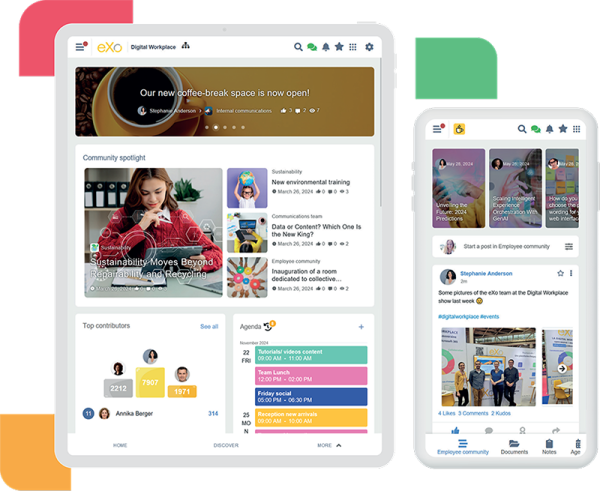
🔑 The Key Takeaway

An intranet is not just a digital workspace, it is a performance infrastructure.

It reduces wasted time, improves alignment, strengthens culture, and creates measurable business outcomes. In a world where organizations are increasingly distributed, fast-moving, and information-heavy, the intranet is no longer optional, it is a strategic necessity.

book-employee-engagement-cta-2
FREE WHITE PAPER

The Complete Guide to

Employee Engagement

Discover our in-depth analysis of the concept of employee engagement, its roots, and ways to improve it significantly

cta-rectangle-orange
FREE WHITE PAPER

Discover our in-depth analysis of the concept of employee engagement, its roots, and ways to improve it significantly

🏢 What Is an Intranet Used For?

If the definition of an intranet explains what it is, then its use cases explain why it actually matters inside an organization.
A modern intranet is not just a static internal website or a place to store documents. It functions more like a company’s digital headquarters, a central space where communication, knowledge, workflows, and collaboration all come together in one controlled environment.
Instead of employees jumping between emails, chat apps, shared drives, and disconnected tools, the intranet brings everything into a single, structured system designed to support daily work.
In practice, it acts as a Swiss Army knife for the modern workplace, adapting to multiple needs across departments and roles.<

🗂️ 1. Centralized Knowledge Management

One of the most fundamental roles of an intranet is to serve as a single source of truth for the organization.
Instead of scattering important information across email threads or multiple cloud drives, companies use the intranet to store and organize:
  • Policies and procedures
  • Standard operating procedures (SOPs)
  • Product and technical documentation
  • Brand guidelines
  • Compliance and legal resources
Because everything is centralized and searchable, employees no longer waste time “digging around” for files or asking colleagues where something is stored. The intranet becomes the place where knowledge lives, and stays up to date.

💬 2. Internal Communication Hub

An intranet also plays a critical role in how organizations communicate internally.
Leadership teams use it to share:
  • Company-wide announcements
  • Strategic updates
  • Financial results and milestones
  • Town hall summaries
But modern intranets go beyond one-way communication. They also support interaction through:
  • Comments and reactions
  • Polls and surveys
  • Targeted messaging for specific teams or regions

This turns internal communication into a two-way experience, helping employees stay informed and engaged rather than passively receiving updates.

🤝 3. Collaboration Across Teams

Work today is rarely done in isolation. Projects often involve multiple departments working together, sometimes across different countries and time zones.

An intranet supports this by creating shared digital workspaces where teams can:

  • Co-author documents
  • Share files securely
  • Manage tasks and project updates
  • Communicate in dedicated group spaces
In many ways, it functions as a private online office where collaboration happens in real time, without the noise and fragmentation of external tools.

🆕 4. Employee Onboarding & Training

For new employees, joining a company can be overwhelming, especially when information is spread across different systems.
An intranet simplifies onboarding by creating structured, guided experiences that include:
  • Training materials and learning paths
  • Company handbooks and policies
  • Organizational charts and team introductions
  • Welcome messages and onboarding checklists
Instead of relying on scattered emails or manual explanations, new hires get a clear, centralized path to understanding the company and their role within it.

🏆 5. Employee Engagement & Recognition

Modern intranets also play an important cultural role inside organizations.
They help build engagement by allowing companies to:
  • Recognize employee achievements
  • Celebrate milestones and wins
  • Share success stories across teams
  • Promote company culture through social features
This creates a sense of visibility and appreciation, especially in remote or hybrid environments where employees might otherwise feel disconnected.

📋 6. Workflow Automation & Self-Service

Beyond communication and collaboration, intranets increasingly handle everyday operational tasks through automation.
Employees can complete processes such as:
  • Leave requests
  • Expense approvals
  • IT support tickets
  • Administrative forms
Instead of relying on manual paperwork or email-based approvals, workflows are digitized and streamlined. This reduces delays, minimizes errors, and frees up time for more meaningful work.

📊 7. Insights, Analytics & Continuous Improvement

A modern intranet doesn’t just deliver content, it also learns from how employees use it.

Organizations can track:
  • Which content is most viewed
  • What employees search for most often
  • Where knowledge gaps exist
  • Levels of engagement across teams

These insights help companies continuously improve internal communication and ensure the intranet remains relevant and useful over time.

🔑 The Big Picture

When you combine all of these use cases together, a clear picture emerges.

An intranet is not just a tool for communication or storage, it is the operational backbone of a modern organization.

It connects people, information, and workflows into one unified environment, helping companies move faster, stay aligned, and work more efficiently in an increasingly complex digital workplace.

🚀 Key Features of a Modern Intranet

Modern intranets have come a long way from their early days as static internal web pages. What used to be simple document repositories have now evolved into intelligent, connected digital workplaces that support communication, collaboration, knowledge sharing, and employee engagement at scale.

In 2026, a successful intranet is no longer defined by how much information it stores, but by how easily it helps people find, connect, and get work done.

Below are the essential features that define a truly modern intranet today.

🔍 1. Smart Enterprise Search

One of the biggest frustrations in any organization is not knowing where information is stored.

Modern intranets solve this with AI-powered enterprise search that goes far beyond simple keyword matching. Instead of forcing employees to dig through folders or ask colleagues, the system understands intent and context to surface the right information instantly.

A strong search experience can:
  • Find documents across multiple systems and apps
  • Scan content inside PDFs, Word files, and presentations
  • Suggest relevant files, people, or pages automatically
  • Reduce time wasted searching for information
In fact, poor search functionality is one of the most common reasons intranets fail, because if people can’t find what they need quickly, they stop using the platform altogether.

📱 2. Mobile-First Access

Work is no longer tied to a desk, and neither is the intranet.

Modern platforms are designed with a mobile-first mindset, ensuring full functionality on smartphones and tablets. This is especially important for frontline, remote, and deskless employees who need access while on the move.

A strong mobile intranet provides:
  • Dedicated mobile apps or responsive design
  • Secure access without complicated VPN setups
  • Offline capabilities for essential documents
  • Real-time notifications and updates
The goal is simple: employees should be able to stay connected to the organization from anywhere, at any time.

🔗 3. Deep Integrations with Workplace Tools

A modern intranet does not replace existing tools, it connects them.

Instead of forcing employees to switch platforms constantly, intranets integrate directly with tools like:

With Single Sign-On (SSO), employees can move seamlessly between systems without repeated logins. This creates a unified digital experience where everything feels connected rather than fragmented.

🧑‍🤝‍🧑 4. Social Collaboration & Engagement Features

Today’s intranets are designed to feel familiar, often resembling the social platforms employees already use in their personal lives.
This includes features like:
  • Activity feeds and updates
  • Comments, likes, and mentions
  • Discussion threads and communities
  • Employee posts and knowledge sharing

These social elements transform the intranet from a static system into a living, interactive space where communication flows in multiple directions, not just top-down from leadership.

🧠 5. AI-Powered Personalization & Automation

Artificial intelligence is rapidly becoming a core part of modern intranets.
Instead of showing the same content to everyone, AI helps tailor the experience to each employee based on:
  • Role and department
  • Location
  • Behavior and interests
  • Past interactions
This leads to personalized dashboards and content feeds, ensuring employees only see what is relevant to them.
AI also supports automation by:
  • Suggesting relevant documents or experts
  • Automating routine workflows
  • Streamlining approvals and requests
  • Reducing manual administrative work
The result is a smarter, more efficient digital workplace.

☁️ 6. Cloud-Based Infrastructure

Modern intranets are almost always built on cloud infrastructure, which makes them more scalable, flexible, and accessible than traditional on-premise systems.

This shift brings several advantages:
  • Access from anywhere in the world
  • Automatic updates and maintenance
  • Improved scalability for growing organizations
  • Reduced IT overhead
Cloud-based intranets also support hybrid and global workforces more effectively, which has become the standard in most organizations today.

🔒 7. Advanced Security & Compliance

Because intranets handle sensitive company information, security is a fundamental requirement, not an optional feature.
Modern systems include:
  • Role-based access controls (RBAC)
  • Encryption of data in transit and at rest
  • Multi-factor authentication (MFA)
  • Compliance tracking and audit logs
  • Zero-trust security models
These safeguards ensure that the right people see the right information, nothing more, nothing less.

📊 8. Analytics and Usage Insights

A modern intranet is not just a communication platform, it is also a source of organizational intelligence.
Built-in analytics allow companies to track:
  • Content engagement and usage patterns
  • Most searched topics and documents
  • Employee participation levels
  • Knowledge gaps across teams

These insights help organizations continuously improve internal communication and identify where employees may be struggling to find information.

🌐 9. Multilingual and Global Support

For international organizations, language barriers can be a major challenge.

Modern intranets often include multilingual support, allowing employees to access content in their preferred language. This ensures consistency in communication across global offices and improves inclusivity for diverse workforces.

🧩 10. Custom Collaboration Spaces

Work rarely happens in a single, fixed structure. Different projects require different environments.

Modern intranets solve this with custom collaboration spaces, which allow teams to quickly create dedicated areas for:

  • Projects and initiatives
  • Departments or business units
  • Regional offices
  • Communities of practice
These spaces combine chat, files, tasks, and updates into a single secure workspace tailored to specific needs.

🔑 The Big Picture

A modern intranet is no longer just a digital noticeboard, it is a fully integrated workplace ecosystem.

When these features come together, the intranet becomes more than a tool. It becomes the place where employees:
  • Find information
  • Communicate with colleagues
  • Complete daily tasks
  • Stay aligned with company goals

In short, it becomes the operating system of the modern organization.

🎁What are the benefits of intranets?

Across all their generations, from early intranet portals to today’s AI-powered digital workplaces, the core purpose of intranets has remained the same: helping organizations work better together. What has changed is how powerful and integrated they have become.

Modern intranets (especially Intranet 2.0 and digital workplace platforms) deliver value far beyond simple information sharing. They now act as the central nervous system of the organization, connecting people, tools, and knowledge in one place.

Below are the most important benefits, explained in a practical, human-centered way.

📢 1. Streamlining Internal Communication

One of the earliest and still most important roles of an intranet is improving how companies communicate internally.
In many organizations, HR and internal communications teams struggle to keep employees consistently informed and engaged. Without a centralized platform, messages get lost across emails, chat apps, and disconnected tools, leading to confusion and disengagement.

A modern intranet solves this by creating a single communication hub where:

  • Company news and updates are published in one place
  • Policies, guidelines, and announcements are easy to access
  • Employees receive consistent, structured information
But communication is no longer just top-down. Features like comments, reactions, tagging, and micro-posts allow employees to participate in conversations, making communication more interactive and continuous rather than one-way.
In this way, intranets help information move faster and reach the right people without relying on scattered channels.

🔗 2. Connecting Employees and Eliminating Silos

One of the biggest hidden problems in modern organizations is fragmentation. Different teams often use different tools, which naturally creates communication gaps between departments, locations, or even subsidiaries.
When this happens, collaboration slows down, and in some cases, employees resort to unofficial tools like personal messaging apps, which introduces both security and productivity risks.

A modern intranet helps solve this by acting as a bridge between teams and systems.

It can:
  • Connect distributed teams in one shared environment
  • Integrate messaging and collaboration tools
  • Provide a unified access point to company resources

Platforms like Microsoft 365 and Google Workspace are often integrated into intranet ecosystems, while communication tools such as Slack are commonly embedded or connected through integrations.

The result is fewer silos, smoother communication, and a more unified organization.

🤝 3. Fostering Collaboration Across Teams

Collaboration is where modern intranets have evolved the most.

Earlier intranets were mainly about publishing information. Today, they are designed to actively support teamwork across projects, departments, and even countries.

Instead of switching between multiple apps, employees can collaborate in one centralized environment where they can:
  • Manage tasks and projects
  • Share and co-edit documents
  • Track progress and updates
  • Coordinate across teams in real time
This is especially powerful when intranets integrate with tools like Jira, project management systems, or cloud collaboration suites.

Modern intranets, often called digital workplace platforms, either include built-in collaboration features or act as a layer that connects tools like Microsoft SharePoint and other enterprise systems.

This reduces “tool switching fatigue” and allows employees to focus more on work and less on navigating systems.

🧠 4. Improving Knowledge Sharing (Explicit and Tacit Knowledge)

Knowledge sharing is one of the most valuable, but often underestimated, benefits of intranets.
In the workplace, knowledge exists in two main forms:
  • Explicit knowledge: documents, policies, training materials, and manuals
  • Tacit knowledge: experience-based insights, skills, and know-how shared between people
Traditional systems often handle only explicit knowledge well. Modern intranets, however, support both.
They do this by:
  • Centralizing documents, wikis, videos, and guides in one searchable space
  • Making information accessible anytime, from any device
  • Encouraging collaboration through discussion threads, comments, and communities
  • Allowing employees to learn from each other’s experiences, not just documents
This combination reduces the time spent searching for information and improves decision-making speed across the organization.

In many ways, the intranet becomes the organization’s living knowledge base, constantly updated by its own employees.

🏆 5. Recognizing and Rewarding Employees

Beyond communication and productivity, modern intranets also play an important role in employee engagement.
Workplaces have shifted significantly in how they motivate and retain employees. Recognition is no longer limited to annual bonuses or formal reviews, it has become continuous and social.
Many intranets now include built-in or integrated recognition features such as:
  • Peer-to-peer appreciation messages (kudos)
  • Public praise for achievements
  • Badges and contribution points
  • Leaderboards and gamification systems
These features help create a sense of visibility and belonging, where employees feel their work is noticed in real time.
Gamification elements, in particular, encourage healthy participation and can motivate employees to contribute more actively to discussions, knowledge sharing, and collaboration.

🧭 In Summary

The benefits of intranets are no longer limited to simple communication or document storage. In their modern form, they:
  • Centralize communication
  • Break down organizational silos
  • Enable seamless collaboration
  • Improve knowledge sharing (both explicit and tacit)
  • Strengthen recognition and employee engagement

Together, these benefits transform the intranet from a basic internal tool into a core part of the modern digital workplace, shaping how people connect, share, and work every day.

❓ What are the different types of intranets?

types-of-intranets

🧭 From Early Communication Systems to Modern AI-Powered Digital Workplaces

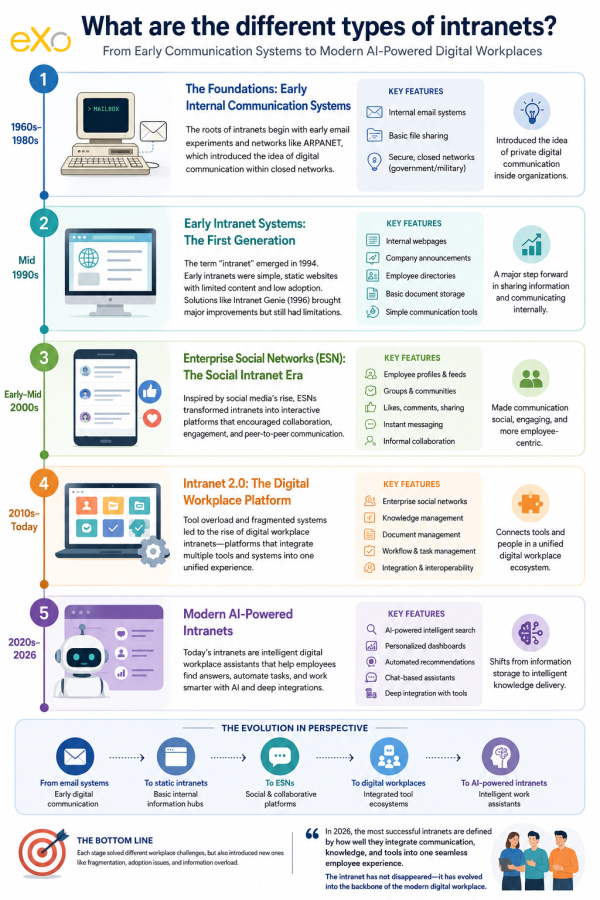
To really understand what an intranet is in 2026, you have to see it as a story of evolution rather than a single product. The intranet we know today didn’t appear overnight, it emerged through decades of changes in workplace communication, from early email experiments to fully integrated digital workplaces powered by AI.

Each stage in this journey reflects a different “type” of intranet, shaped by the technology available at the time and the growing needs of organizations.

📩 1. The Foundations: Early Internal Communication Systems (1960s–1980s)

The origins of intranets go back long before the word itself existed.
In the mid-1960s, early experiments at institutions like MIT introduced basic electronic messaging systems, often described as early forms of email. One example was the “MAILBOX” system, which demonstrated that computers could be used not just for calculations, but for human communication.

This idea expanded through government and defense research, especially with the development of ARPANET, a network created by the U.S. Department of Defense. While originally designed for research communication, ARPANET laid the groundwork for both the internet and the concept of private internal networks.

At this stage, there was no formal intranet product. Instead, organizations relied on:
  • Internal email systems
  • Basic file sharing between connected machines
  • Secure, closed government or military networks

These early systems were limited, but they introduced a powerful idea: organizations could build private digital communication networks.

🧱 2. Early Intranet Systems: The First Generation (Mid-1990s)

The term “intranet” first appeared around 1994, when companies began applying web technologies inside private organizational networks.

Early intranets were extremely simple by today’s standards. In many cases, they consisted of:
  • A single internal webpage
  • Static company announcements
  • Employee directories or phone lists
  • Basic document storage
These systems were not widely adopted because they offered limited value and often required users to access them from specific machines or internal networks.

A major turning point came in 1996 with solutions like Intranet Genie by Frontier Technologies. These early platforms introduced more practical capabilities such as:

  • Internal document sharing
  • Faster access to organizational information
  • Basic communication tools
However, they still had a major limitation: many required installation on individual computers instead of running in browsers, making them harder to maintain and scale, especially as internet adoption grew.

💬 3. Enterprise Social Networks (ESN): The Social Intranet Era (Early–Mid 2000s)

As the internet became central to daily life in the early 2000s, and platforms like Facebook and Twitter reshaped how people interacted online, companies began rethinking internal communication.

This led to the rise of the Enterprise Social Network (ESN), a more interactive and social version of the intranet.

Unlike earlier systems that focused on top-down communication, ESNs emphasized collaboration and participation across all employees.

Key features included:
  • Employee profiles and social activity feeds
  • Groups and community spaces
  • Likes, comments, and sharing
  • Instant messaging and informal collaboration
This shift was partly driven by “shadow IT,” where employees used public social media tools for work communication. Organizations needed secure internal alternatives that offered the same ease of interaction.
ESNs made workplace communication more dynamic and engaging, but they also increased complexity, as companies began using multiple overlapping tools for different needs.

🧩 4. Intranet 2.0: The Digital Workplace Platform (2010s–Today)

As organizations adopted more tools, chat apps, file storage systems, project management platforms, and knowledge bases, the workplace became increasingly fragmented.
Employees were constantly switching between systems, leading to inefficiency and what is often called tool overload.

This created the need for the next evolution: the Digital Workplace Intranet (often referred to as Intranet 2.0).

Unlike earlier versions, this type of intranet is not a standalone tool, it is an ecosystem that connects multiple systems into one unified experience.
It typically integrates:
  • Enterprise Social Networks (communication and engagement)
  • Knowledge Management Systems (information sharing)
  • Document Management Systems (storage and governance)
  • Workflow and task management tools
Rather than replacing platforms like Slack or SharePoint, modern intranets act as a central access layer that connects them.

A key principle in this generation is interoperability, ensuring all systems work together seamlessly rather than existing in isolation.

🤖 5. Modern AI-Powered Intranets (2020s–2026)

Today’s intranets are evolving into intelligent digital workplace assistants.

They are no longer passive systems where employees search for information, they actively help users complete tasks and find answers faster.
Modern intranets typically include:
  • AI-powered search that understands intent, not just keywords
  • Personalized dashboards based on role, behavior, and context
  • Automated content recommendations and alerts
  • Chat-based assistants for HR, IT, and internal support
  • Deep integration with cloud tools and enterprise systems

This represents a major shift from information storage to intelligent knowledge delivery, where the intranet anticipates employee needs instead of waiting for queries.

🧠 Final Perspective: A Continuous Evolution, Not Separate Products

When viewed as a whole, the “types of intranets” are not separate categories, but stages in a continuous evolution:
  • From email systems → early digital communication
  • To static intranets → basic internal information hubs
  • To ESNs → social and collaborative platforms
  • To digital workplaces → integrated tool ecosystems
  • To AI-powered intranets → intelligent work assistants
Each stage solved real workplace problems, but also introduced new challenges such as fragmentation, adoption difficulties, and information overload.

🔚 Where This Evolution Leads: The Intranet Today

In 2026, intranets are no longer defined by a single feature or system. Instead, they are defined by how well they unify communication, knowledge, and tools into a seamless employee experience.

The most successful intranets today are not just platforms, they are the digital backbone of the modern workplace, connecting people, information, and systems in one place.

The intranet hasn’t disappeared. It has simply evolved into something much more powerful and central to how organizations operate.
book-workplace-cta
FREE WHITE PAPER

Types of Digital workplace solutions

Der Digital Workplace ist heutzutage ein Modewort. In der Tat verwenden es verschiedene Leute, um verschiedene Dinge zu meinen. Was also ist ein digitaler Arbeitsplatz?

cta-rectangle-orange
FREE WHITE PAPER
Digital workplace is a buzzword these days. Actually different people use it to mean different things. So what is a digital workplace?

⚠️ Challenges of Using an Intranet (and How to Address Them)

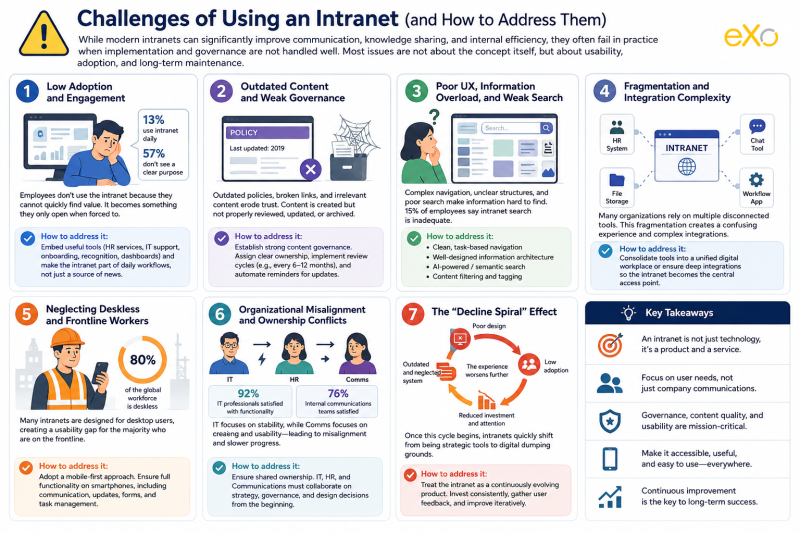
While modern intranets can significantly improve communication, knowledge sharing, and internal efficiency, they often fail in practice when implementation and governance are not handled well. Most issues are not about the concept itself, but about usability, adoption, and long-term maintenance.

Below are the most common challenges organizations face, and what they actually mean in real-world terms.
challenges-using-intranet

1. Low Adoption and Engagement

One of the biggest failures of intranets is simple: employees don’t use them.

Research shows that only around 13% of employees use their intranet daily, and 57% say they don’t see a clear purpose in it. When employees cannot quickly find value, the platform becomes something they only open when forced to.

This often happens when intranets are treated as static announcement boards rather than practical tools for daily work.

🤔How to address it:

To improve engagement, the intranet must become part of daily workflows. That means embedding useful tools like HR services, IT support, onboarding resources, recognition systems, and personalized dashboards, not just corporate news.

2. Outdated Content and Weak Governance

A common issue is content decay. Around 21% of companies report using their intranet as a repository for outdated or irrelevant content, which quickly erodes trust.

When employees repeatedly encounter old policies, broken links, or irrelevant documentation, they stop relying on the system altogether.

This is also tied to ongoing maintenance effort, where content is created but not properly reviewed, updated, or archived.

🤔How to address it:

Strong content governance is essential. Assign clear ownership for each section, implement review cycles (for example every 6–12 months), and automate reminders for updates or archival.

3. Poor UX, Information Overload, and Weak Search

Many intranets fail because they are difficult to navigate. Complex interfaces and unclear structures reduce adoption significantly. At the same time, dumping large volumes of content without structure creates information overload.

Search functionality is another weak point, 15% of employees report that intranet search is inadequate, often relying on basic keyword matching instead of understanding intent.

🤔How to address it:

A successful intranet needs:
  • A clean, task-based navigation structure
  • A well-designed information architecture
  • AI-powered or semantic search that understands context
  • Content filtering and tagging to reduce clutter
Without these, even well-written content becomes effectively invisible.

4. Fragmentation and Integration Complexity

Despite widespread adoption, 91% of organizations have some form of intranet, many systems remain fragmented. Around 55% rely on multiple disconnected tools, and 42% say they would switch to an all-in-one platform if possible.

This fragmentation creates a confusing user experience where employees must jump between platforms to complete simple tasks.
On top of that, integrating intranets with HR systems, communication tools, document storage, and workflow apps can become technically complex.

🤔How to address it:

Organizations benefit from consolidating tools into a unified digital workplace or ensuring deep integrations that make the intranet a central access point rather than another isolated system.

5. Neglecting Deskless and Frontline Workers

A major blind spot in many intranet strategies is accessibility for non-office employees. Despite the fact that around 80% of the global workforce is deskless, many intranets are still designed primarily for desktop users.

This creates a clear usability gap, where a large portion of employees either cannot access the system easily or avoid it entirely.

🤔How to address it:

A mobile-first design is essential. Full functionality must be available on smartphones, including communication, updates, forms, and task management, not just simplified viewing.

6. Organizational Misalignment and Ownership Conflicts

Intranet success is often hindered by internal politics and unclear ownership. In many companies, IT controls the platform while HR and internal communications are responsible for content.

This creates tension, especially since IT teams often prioritize stability and performance, while communication teams focus on usability and content flow. Interestingly, satisfaction differs significantly, IT professionals report around 92% satisfaction with intranet functionality, compared to 76% among internal communications teams.

🤔How to address it:

Successful intranets require shared ownership. IT, HR, and communications teams must collaborate on strategy, governance, and design decisions from the beginning.

7. The “Decline Spiral” Effect

Perhaps the most damaging issue is a self-reinforcing cycle:
Poor design leads to low adoption → low adoption reduces investment and attention → neglected systems become outdated → the experience worsens further.
Once this cycle begins, intranets quickly shift from being strategic tools to digital dumping grounds.

🤔How to address it:

The only way out is early intervention, treating the intranet as a continuously evolving product, not a one-time project. Consistent improvement, user feedback loops, and ongoing investment are critical.

🚀 The Future of Intranets: Why They Still Matter in 2026

The intranet has come a long way from its early days as a simple internal website used to post company announcements. Today, it is evolving into a central hub for communication, collaboration, and employee experience, and its future is being reshaped by technologies like artificial intelligence, automation, and advanced analytics.
Rather than disappearing, intranets are becoming more intelligent, more integrated, and more closely aligned with how people actually work.

🤖 From Static Pages to Intelligent Digital Workplaces

Modern intranets are no longer static repositories of documents. They are increasingly becoming AI-powered workplace platforms that understand employee needs, personalize content, and simplify access to information.

Artificial intelligence and data analytics are playing a key role in this transformation. Instead of forcing employees to search through folders or outdated pages, modern systems can now surface relevant content automatically, predict user intent, and recommend actions based on behavior.
This shift reflects a broader change in workplace expectations: employees now expect the same level of speed, personalization, and usability they experience in consumer apps.

📱 The Rise of Mobile-First and Always-On Access

Another major evolution is mobility. With a large portion of the global workforce being deskless or hybrid, intranets are no longer designed just for office environments.

The modern intranet is mobile-first by default, ensuring employees can:

  • Access company updates from anywhere
  • Submit requests and forms on the go
  • Receive real-time notifications
  • Stay connected regardless of location
This shift is essential because the future of work is no longer tied to a physical desk, it is distributed, flexible, and continuous.

🧩 Deep Integration with Everyday Work Tools

In the past, intranets often existed separately from the tools employees actually used. This created fragmentation and reduced adoption. The future model is different.

Modern intranets are becoming integrated digital workplaces, connecting directly with:

  • HR and payroll systems
  • Project management tools
  • Communication platforms
  • Document storage and collaboration apps

Instead of acting as another destination, the intranet is evolving into a central access layer, a single entry point to everything employees need.

👤 A Shift Toward Human-Centric Design

One of the most important changes is philosophical rather than technical. The modern intranet is increasingly being designed around people, not systems.
This means focusing on:
  • Personalized dashboards instead of generic pages
  • Task-based navigation instead of static menus
  • Simplified search instead of complex file structures
  • User experience that mirrors real workflows

Companies with modern intranet platforms report significantly higher engagement and productivity improvements, up to 38% higher positive impact on productivity in some cases.

🔄 The Intranet Is Not Dead, It’s Being Rebuilt

Despite long-standing challenges like low adoption, outdated content, and poor usability in older systems, the intranet is far from obsolete. In fact, over half of companies are relaunching or planning to relaunch their intranet platforms, signaling a clear shift toward modernization.

The difference today is that organizations are no longer asking whether they need an intranet, they are asking what kind of intranet they need.
The answer is increasingly clear: a smarter, faster, and more connected system that supports real work rather than just broadcasting information.

🚀 Moving Forward: More Than Just Software

At its core, the intranet is no longer just an IT project or a digital filing cabinet. It has become a strategic investment in how organizations communicate, collaborate, and build culture.
A well-designed intranet:
  • Centralizes knowledge and reduces information chaos
  • Strengthens internal communication and alignment
  • Breaks down silos between teams and departments
  • Supports a more connected and efficient workforce

🏁 Final Thought

The challenges of intranets have never been purely technical, they are about execution, governance, and design. When neglected, intranets become digital clutter. When thoughtfully built and continuously improved, they become one of the most powerful tools for organizational performance.

In 2026 and beyond, the question is no longer whether intranets matter. It’s whether organizations are ready to build intranets that actually work for the people who use them.
FREE DATASHEET
eXo Platform : The AI-Augmented,
Open-Source Digital Workplace Platform

Download the eXo Platform Datasheet and discover all the features and benefits

book-datasheet-7
cta-rectangle-rose
FREE DATASHEET

Download the eXo Platform Datasheet and discover all the features and benefits

FAQs

You will find here Frequently Asked Questions about intranet with all the answers in one place.

intranet is a term used with abundance whenever the subject of internal communication and collaboration is brought up which makes defining it a bit challenging. In its simplest form, an intranet is an internal website for your organization. It is used mainly for top-down communication where employees can access corporate news, policies and announcements.


See the full definition of intranet

To gather a thorough understanding of intranets and their different types, let’s walk through its history from the early days up to now:

 
  1. Intranet Portals
  2. Enterprise Social Netwrok (ESN)
  3. Intranet 2.0
 

Find out the different types of intranet solutions

The main difference between intranets and extranets lays in the target audience. Intranets typically target users from a specific organization whereas extranets is the hub that can group users from multiple external organizations ranging from partners and suppliers all the way to clients


Discover the real difference between intranet and extranet

Different types of Intranet solutions from the early days up to the intranet 2.0 (commonly referred to as digital workplace solutions) bring a host of benefits to businesses of all sizes and industries. Below is a list of benefits often associated with intranets:

 
  1. Streamline internal communications
  2. Connect employees and eliminate silos
  3. Foster collaboration
  4. Improve knowledge sharing
  5. Recognize and reward employees
 

Find out teh benefits of intranet solutions

Here are three different strategies for a successful intranet adoption:

 
  1. User focus strategy
  2. Global community management strategy
  3. Private communities focus strategy
 

Which intranet adoption strategy should you choose?

4.7/5 - (761 votes)
I am a Digital Marketing specialist specialized in SEO at eXo Platform. Passionate about new technologies and Digital Marketing. With 10 years' experience, I support companies in their digital communication strategies and implement the tools necessary for their success. My approach combines the use of different traffic acquisition levers and an optimization of the user experience to convert visitors into customers. After various digital experiences in communication agencies as well as in B2B company, I have a wide range of skills and I am able to manage the digital marketing strategy of small and medium-sized companies.
Related posts
  • All
  • eXo
  • Digital workplace
  • Employee engagement
  • Open source
  • Future of work
  • Internal communication
  • Collaboration
  • News
  • intranet
  • workplace
  • Knowledge management
  • Employee experience
  • Employee productivity
  • onboarding
  • Employee recognition
  • Change management
  • Cartoon
  • Digital transformation
  • Infographic
  • Remote work
  • Industry trends
  • Product News
  • Thought leadership
  • Tips & Tricks
  • Tutorial
  • Uncategorized
Leave a Reply

( Your e-mail address will not be published)

guest
0 Comments
Commentaires en ligne
Afficher tous les commentaires

I am a Digital Marketing specialist specialized in SEO at eXo Platform. Passionate about new technologies and Digital Marketing. With 10 years' experience, I support companies in their digital communication strategies and implement the tools necessary for their success. My approach combines the use of different traffic acquisition levers and an optimization of the user experience to convert visitors into customers. After various digital experiences in communication agencies as well as in B2B company, I have a wide range of skills and I am able to manage the digital marketing strategy of small and medium-sized companies.