
FREE WHITE PAPER
Digital workplace is a buzzword these days. Actually different people use it to mean different things. So what is a digital workplace?
Enterprise Content Management (ECM) has evolved far beyond simple document storage. Once relegated to the back-office as a digital filing cabinet, ECM now serves as a foundational layer of the modern digital workplace, connecting people, processes, and information in ways that amplify organizational intelligence.
Content is no longer valuable when locked away; it becomes powerful when fluidly integrated into workflows, reaching the right people at the right time, and supporting real-time decision-making.
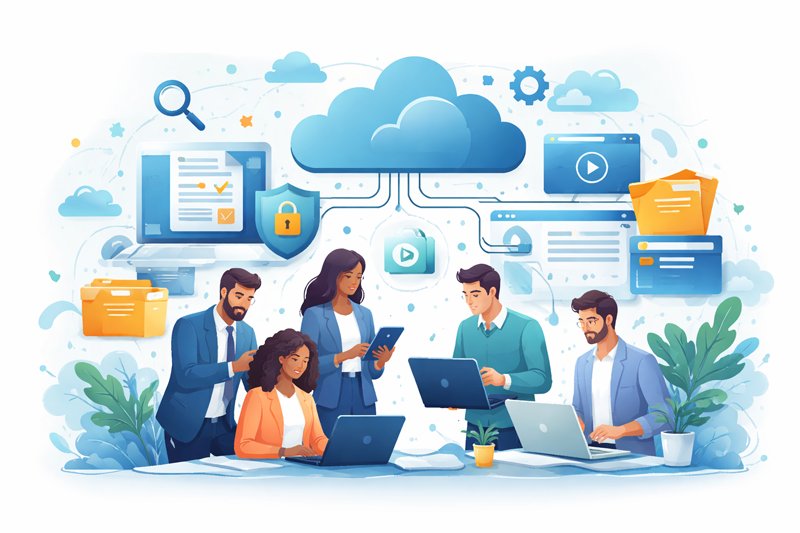
As organizations generate, share, and consume enormous volumes of information, from contracts, reports, and spreadsheets to emails, presentations, multimedia, policies, and customer records, managing content effectively has become essential for productivity, compliance, and seamless collaboration.
Digital workplaces are now dynamic, interconnected ecosystems of communication platforms, collaboration tools, and business applications. In this context, traditional ECM as a standalone system is increasingly outdated, and modern organizations require intelligent, integrated content management that fuels digital transformation.
This article explores why Enterprise Content Management has become a cornerstone of the modern digital workplace, highlights its evolution, and examines how it functions as a foundational, integrated component of contemporary work environments.
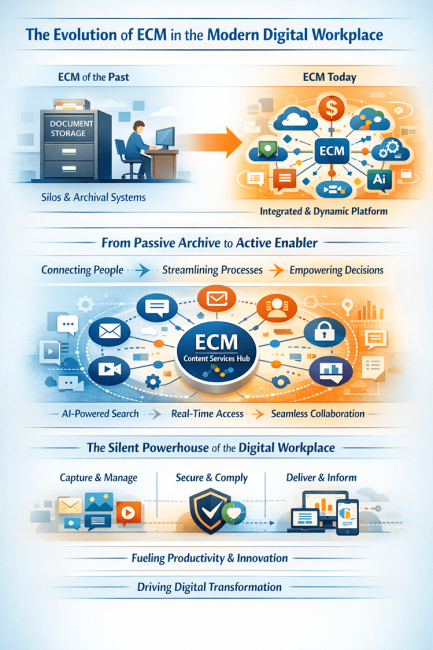
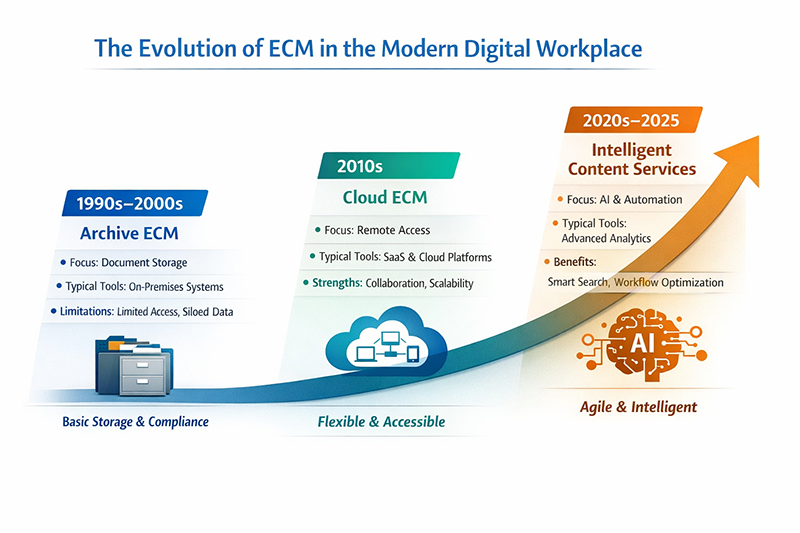
For decades, ECM systems were seen as back-office utilities, structured silos where documents were archived and often forgotten. Their primary role focused on storage, version control, and compliance rather than collaboration or usability.
As hybrid work, asynchronous collaboration, and cloud-first strategies became the norm, Enterprise Content Management (ECM) underwent a profound transformation. Content creation and usage spread across emails, chat tools, cloud storage, project platforms, and collaborative workspaces. In this environment, static, repository-centric ECM models could no longer keep pace.
Modern ECM is no longer a static destination but the connective tissue of the digital workplace. It integrates seamlessly with collaboration platforms, project tools, and business applications to ensure that content is discoverable, actionable, and contextually relevant.
AI-driven indexing, metadata generation, and contextual tagging now make information easier to find and reuse. Employees no longer waste time searching across disconnected systems, relevant content surfaces directly within their workflows.
This evolution is so significant that analysts increasingly describe ECM as Content Services: a strategic approach focused on delivering content dynamically across the enterprise rather than simply storing it. Modern ECM connects content to context, people to processes, and data to decisions.
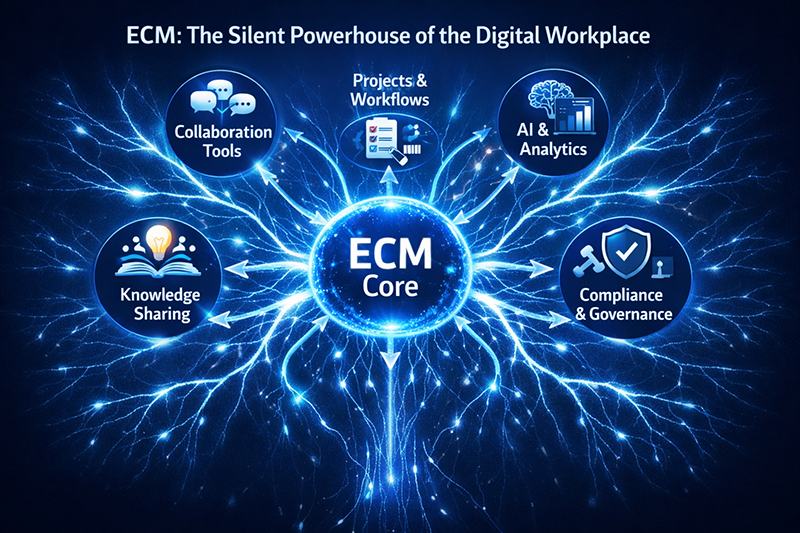
Beneath the surface of collaboration apps, AI assistants, and other visible tools lies a silent powerhouse: ECM. It functions as the organization’s central nervous system, capturing, managing, preserving, and delivering content across teams and departments.
Modern ECM handles all forms of unstructured data, emails, videos, images, chat logs, and more, and ensures this information is accessible, meaningful, and compliant. By embedding content seamlessly into workflows, ECM supports hybrid work, knowledge sharing, and real-time decision-making.
The modern digital workplace is a flexible, interconnected ecosystem where work can happen anywhere, on any device. ECM operates invisibly yet critically, powering productivity, governance, and organizational intelligence without disrupting the user experience.
In essence, ECM has shifted from a reactive archive to an active enabler of work. It ensures that content flows naturally within the systems employees use daily, unlocking the value of information and transforming it into actionable insights that drive organizational success.
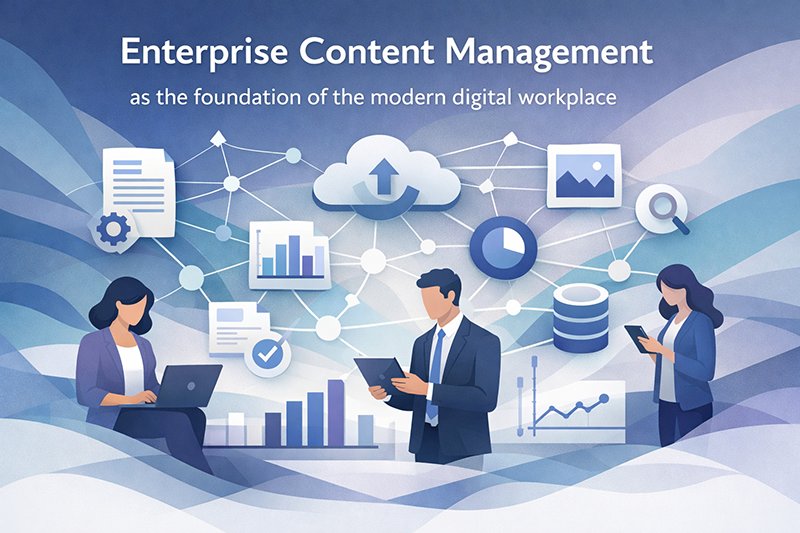
Enterprise Content Management (ECM) is far more than a system for storing files, it is a comprehensive framework that enables organizations to capture, manage, store, preserve, and deliver content and documents across all business processes.
By combining strategies, methods, and tools, ECM organizes both structured and unstructured information, ensuring that content is secure, accessible, and actionable throughout its lifecycle.
At its core, ECM provides a systematic approach to information management: from creation, collaboration, and workflow automation to archiving and eventual disposal.
Modern ECM is not a single application but a suite of integrated capabilities that transform raw information into a strategic asset, driving productivity, regulatory compliance, and informed decision-making.
Types of Digital workplace solutions
Digital workplace is a buzzword these days. Actually different people use it to mean different things. So what is a digital workplace?
Digital workplace is a buzzword these days. Actually different people use it to mean different things. So what is a digital workplace?
Enterprise Content Management (ECM) has evolved tremendously since its early days as a system for storing and securing documents. Yet, many organizations still rely on legacy, monolithic, repository-centric ECM platforms, designed for a pre-digital era.
In 2025, this traditional approach increasingly hinders collaboration, slows productivity, and exposes organizations to compliance and knowledge risks.
Content creation today is distributed across multiple tools and platforms: cloud storage, project management apps, chat systems, email, video recordings, and collaboration spaces. A single, isolated repository cannot keep pace with this dynamic content landscape.
Legacy ECM systems often force employees to:
The result is duplication, slow workflows, and a fractured “single source of truth”, which undermines organizational efficiency and frustrates knowledge workers.
Modern workplaces demand speed, flexibility, and seamless collaboration. Traditional ECM platforms, however, were built around rigid folder hierarchies, check-in/check-out processes, and complex approvals. These systems:
Consequently, teams spend more time managing content than leveraging it to achieve business outcomes, reducing overall productivity and innovation.
Content alone has limited value. Without context, discussion, and social signals, knowledge becomes static and underutilized. Legacy ECM treats documents as isolated files, disconnected from:
Without these connections, employees struggle to learn from past projects, collaborate effectively, or make informed decisions, leading to knowledge loss and operational inefficiency.
Even the most secure and compliant ECM system fails if employees don’t adopt it. Legacy platforms often present:
Low adoption drives shadow IT usage, where employees turn to unofficial tools like personal Google Drive or Dropbox, creating:
Without widespread adoption, Enterprise Content Management fails to deliver its core goals: efficiency, control, and knowledge preservation.
In 2025, content is everywhere: collaborative documents, chat messages, videos, presentations, and knowledge assets flow across multiple tools daily. Organizations without modern ECM face information overload, inefficiency, and elevated risk.
A modern ECM platform transforms content from static files into a strategic business asset by providing:
The old, monolithic ECM model is unsuitable for today’s hybrid, distributed, and collaborative workplaces. Content is no longer static; it is dynamic, context-rich, and embedded in workflows.
To thrive, organizations must shift to integrated, context-aware ECM platforms that embed governance, intelligence, and collaboration into the employee experience.
Modern solutions like eXo Platform replace legacy ECM with a unified, intelligent, and user-centric approach, enabling organizations to:
🤏In short, Enterprise Content Management (ECM) is no longer a back-office utility, it is a strategic pillar of the modern digital workplace, powering efficiency, agility, and business performance in 2025 and beyond.
Looking beyond traditional ECM doesn’t mean abandoning content management, it means redefining it as part of a broader digital workplace ecosystem.
Employees don’t just store documents, they co-create, share, discuss, comment, and reuse content. Enterprise Content Management (ECM) must be embedded into collaboration hubs and intranets, not isolated in the background.
Modern work should feel frictionless. Content access, search, and workflows must be:
If users don’t feel the system, they won’t use it.
Modern Enterprise Content Management (ECM) must go beyond basic workflows and support:
AI-enhanced ECM reduces manual effort, improves accuracy, and scales content management without adding complexity.
The modern digital workplace requires a unified content layer that connects:
This creates a single source of truth, reduces duplication, and strengthens compliance while keeping content accessible.
In 2025, traditional ECM systems are no longer sufficient on their own. While control and compliance remain essential, they must be balanced with collaboration, context, user experience, and intelligent automation.
To deliver real business value, ECM must evolve from a standalone repository into a foundational, integrated component of the modern digital workplace, supporting how people actually work, communicate, and create knowledge today.
A modern Enterprise Content Management (ECM) platform is much more than a document repository, it is a dynamic ecosystem that manages content throughout its lifecycle while embedding intelligence, governance, and collaboration directly into workflows. The following interconnected components define the backbone of effective ECM in today’s digital workplace:
Modern ECM begins with the intelligent capture of content from multiple sources:
By capturing content at the point of creation, ECM ensures that information enters the system structured, searchable, and ready for action.
At its core, ECM provides secure, scalable storage for all content types. Modern repositories go beyond traditional folder hierarchies:
This repository becomes the single source of truth, centralizing information while maintaining context and accessibility.
Automation is a critical component of modern ECM. Platforms streamline business processes around content, including:
Automation reduces manual bottlenecks, accelerates decision-making, and ensures that policies and procedures are consistently applied.
Modern ECM enforces legal, regulatory, and industry-specific requirements through:
These capabilities protect organizations from risk while maintaining operational efficiency.
Content is most valuable when it is actively used and shared. ECM platforms enable:
Embedding collaboration directly into content ensures that knowledge is living, not static, and drives better decision-making.
Employees must find the right content quickly. Modern ECM enhances discovery with:
This transforms ECM into a true knowledge hub, eliminating wasted time spent hunting for documents.
Protecting sensitive information is a top priority:
These measures ensure that content remains secure without impeding productivity.
Modern ECM does not operate in isolation. Integration capabilities allow the platform to:
Seamless integration brings content into the natural flow of work, ensuring adoption and context-aware usage.
Finally, modern ECM provides intelligent insights about your content ecosystem:
Analytics help organizations continuously improve content management, transforming ECM from a static repository into a strategic, data-driven asset.
A modern ECM platform is not just a place to store files, it is a comprehensive system for capturing, managing, securing, automating, and intelligently using content. By combining these components, organizations can break down silos, accelerate collaboration, enforce governance, and turn content into a strategic driver of productivity and business success in the digital workplace.
In 2025, Enterprise Content Management (ECM) is no longer just a back-office system for storing documents. It has become a core pillar of the modern digital workplace, directly impacting productivity, security, compliance, collaboration, and employee experience. As organizations face hybrid work, stricter regulations, and growing volumes of content, a modern, integrated ECM delivers both strategic value and measurable business outcomes.
Below is a clear, human-centric overview of the key benefits of ECM in today’s digital workplace.
One of the most immediate benefits of ECM is its ability to eliminate manual, time-consuming tasks.
Modern ECM platforms automate workflows such as:
By automating approvals, versioning, and content lifecycle management, organizations can reduce manual effort by up to 80% in some processes. In practice, this means faster turnaround times, fewer errors, and employees spending less time on repetitive administrative work, and more time on high-value, creative, or strategic tasks.
📌Employees save an average of 2.5 hours per week simply by finding information faster and avoiding duplicate work.
In a fragmented digital workplace, content is often scattered across email inboxes, shared drives, cloud apps, and collaboration tools. ECM solves this by acting as a single source of truth.
With centralized content repositories, metadata, and advanced search capabilities:
Instead of “hunting for files,” employees can rely on structured content and intelligent search to work efficiently and confidently.
ECM enables secure and structured collaboration across teams, departments, and locations.
Teams can:
Unlike uncontrolled file sharing, ECM ensures transparency and accountability while still supporting agile teamwork, making it ideal for remote and hybrid work environments.
As data breaches become more frequent and costly, security is a top priority in 2025. ECM platforms provide enterprise-grade protection for sensitive information.
Key security benefits include:
These features significantly reduce the risk of unauthorized access, data leaks, and human error, especially in distributed workforces.
Compliance requirements are increasing across industries, from GDPR and ISO standards to sector-specific regulations. Enterprise Content Management helps organizations stay compliant by design.
With automated retention and records management:
This proactive governance protects organizations from massive fines, reputational damage, and legal exposure.
Beyond storage and collaboration, Enterprise Content Management enforces consistent content governance across the organization.
By managing the entire content lifecycle, from creation to archiving or deletion, ECM ensures:
This structured approach brings clarity, trust, and compliance to enterprise information management.
Enterprise Content Management delivers measurable financial benefits by:
Over time, these efficiencies translate into lower operational costs, improved scalability, and better ROI from digital workplace investments.
When content is centralized and searchable, leaders and knowledge workers gain a complete and reliable view of organizational information.
This enables:
A unified information landscape turns content into a strategic asset rather than a liability.
Finally, ECM has a direct impact on people, both employees and customers.
For employees:
For customers:
By simplifying work and removing friction, ECM supports a more human-centric digital workplace.
In 2025, the benefits of Enterprise Content Management go far beyond document storage. A modern ECM solution:
As a foundational component of the digital workplace, ECM empowers organizations to work smarter, stay compliant, and remain agile in an increasingly complex business environment.
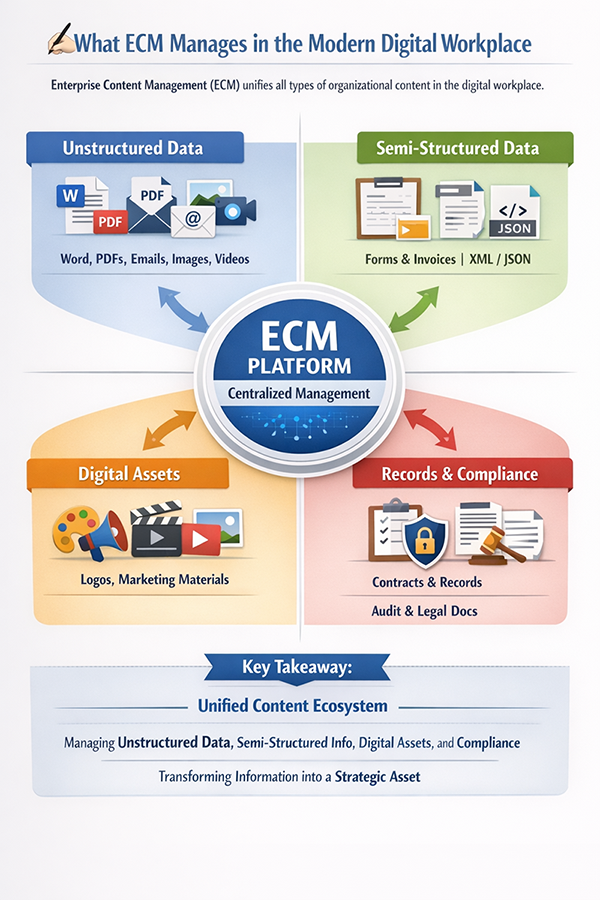
The majority of enterprise content is unstructured, meaning it does not follow a fixed data model. ECM platforms manage:
By centralizing these assets, ECM ensures that employees can quickly locate, collaborate on, and reuse critical content, rather than wasting time searching across disparate systems.
Beyond fully unstructured content, organizations also generate semi-structured data such as:
Modern ECM platforms can capture, index, and automate workflows around this type of content, turning otherwise difficult-to-manage data into actionable business intelligence.
Marketing, design, and product teams generate a wealth of digital assets that require careful management:
ECM systems provide centralized storage, version control, and secure access, allowing teams to reuse assets efficiently while maintaining brand consistency and compliance.
Official business records, such as contracts, audit logs, and regulatory documentation, are critical for legal, financial, and compliance purposes. ECM platforms ensure that records are retained according to policy, protected against unauthorized access, and easy to retrieve for audits or regulatory requests.
Modern ECM is more than a document repository; it is a comprehensive content ecosystem that spans unstructured, semi-structured, digital assets, and official records.
By unifying and governing these diverse content types, ECM platforms transform information into a strategic asset that enhances collaboration, protects organizational knowledge, and drives business outcomes.
The digital workplace can be seen as the modern, virtual equivalent of a physical office. Instead of desks, filing cabinets, and meeting rooms, employees rely on an integrated ecosystem of digital tools to collaborate, communicate, and get work done, anytime and from anywhere. This ecosystem typically brings together messaging, project management, collaboration spaces, enterprise search, knowledge sharing, and business applications into a unified experience.
At the heart of this environment lies Enterprise Content Management (ECM). While digital workplace platforms focus on user experience and collaboration, ECM provides the structure, governance, and intelligence that make this experience reliable, secure, and scalable. In other words, ECM is the foundation that turns a collection of digital tools into a coherent and productive digital workplace.
In a modern digital workplace, content is constantly created, shared, and reused, documents, presentations, policies, videos, meeting notes, and more. Without ECM, this content quickly becomes fragmented across emails, personal drives, and disconnected applications.
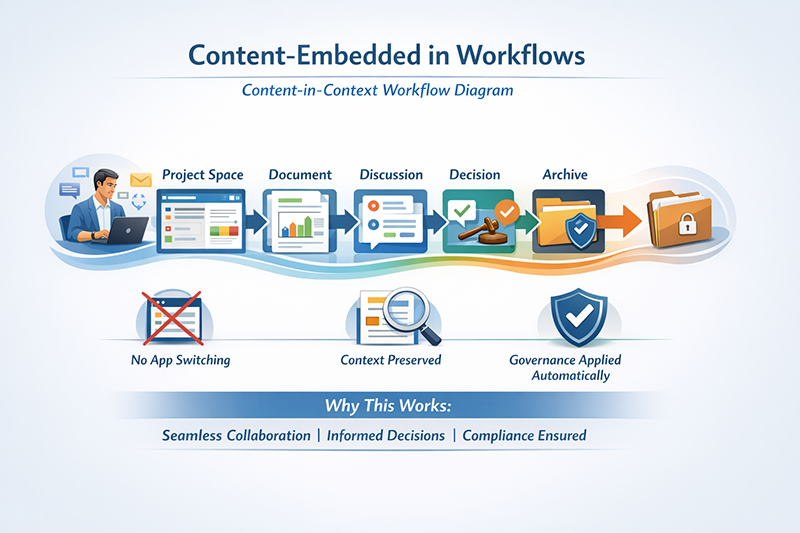
ECM ensures that content is accessible in context, meaning employees can find and use information directly within the tools they already work in, whether that’s a project space, a team discussion, or a task workflow. Instead of switching between systems, content follows the employee throughout their daily work.
One of the most visible benefits of ECM in a digital workplace is unified search. Employees should not need to know where a document is stored to find it. ECM enables fast, enterprise-wide search experiences that surface relevant content regardless of format or location.
By indexing content and enriching it with metadata, ECM allows digital workplace platforms to deliver accurate and contextual search results. This significantly reduces time spent looking for information and helps employees focus on execution rather than navigation.
As organizations grow more digital, governance becomes more complex. Content must comply with internal policies, industry regulations, and data protection laws, without slowing down collaboration.
ECM provides the governance layer of the digital workplace by applying consistent security, retention, and compliance rules across all content. Permissions, version control, audit trails, and lifecycle management are handled automatically, allowing employees to collaborate freely while ensuring the organization remains compliant and secure.
In a true digital workplace, collaboration goes beyond file sharing. Employees need to work together on content in real time, track changes, and maintain a clear history of decisions.
ECM enables collaborative content experiences through real-time sharing, versioning, and co-authoring. Content is no longer static, it evolves alongside discussions, tasks, and projects. This reduces confusion, prevents duplicate work, and ensures that teams always know which version of a document is the right one.
One of the most important shifts enabled by ECM is the move from isolated content to connected experiences. Instead of floating in email inboxes or siloed file shares, content becomes an active part of business workflows, knowledge graphs, and personalized employee experiences.
Documents are linked to processes, discussions, and people. Knowledge is structured and reusable. Employees receive relevant content based on their role, projects, and interests. This transforms the digital workplace into a living environment where information actively supports productivity and decision-making.
Modern digital workplace platforms such as eXo Platform illustrate this close relationship between ECM and the digital workplace. By tightly integrating content management with collaboration, social interaction, and knowledge sharing, eXo Platform ensures that content is not just stored, but fully embedded into the employee experience.
This integration enables organizations to deliver a seamless, secure, and intelligent digital workplace where content drives collaboration, engagement, and business outcomes.
Ultimately, ECM and the digital workplace are not separate concepts, they are deeply interconnected. ECM provides the structure and governance, while the digital workplace delivers the experience and collaboration. Together, they create an environment where employees can work efficiently, securely, and confidently in an increasingly digital world.
In the modern organization, a successful digital workplace is impossible without a strong ECM foundation.
Enterprise Content Management (ECM) is no longer just about storing documents. Modern ECM platforms embed content intelligence, automation, and collaboration directly into workflows, transforming content into a strategic asset that drives productivity, compliance, and knowledge retention. Here’s how organizations leverage ECM in real-world digital workplace scenarios:
In the modern digital workplace, Enterprise Content Management (ECM) has evolved from a passive “digital filing cabinet” into a high-velocity operational engine.
Leading organizations no longer view documents as isolated files; instead, content is treated as an active participant in business logic. By embedding intelligence directly into daily workflows, modern ECM eliminates the friction of manual “information hunting” and transforms content into a measurable performance enabler.
The shift toward “Workflow Intelligence” is best seen in three critical, document-heavy areas:
Contracting is often an organization’s biggest bottleneck. Modern ECM platforms centralize the entire lifecycle, from first draft to final signature, within contextual business workspaces. These workspaces are often integrated directly into ERP or CRM systems (like SAP or Salesforce), allowing legal teams to work without leaving their primary environment.
Managing personnel files is a high-stakes compliance task. Modern ECM platforms utilize Intelligent Document Processing (IDP) to turn static scans into actionable data.
Procurement teams often struggle with “email-chasing” for invoice approvals. Modern ECM replaces this with trigger-based automation.
A prime example of document-centric transformation is the Metropolitan District Commission (MDC), a major public utility.
MDC managed a complex web of water and wastewater services with information scattered across shared drives and an aging legacy system. Engineering drawings, maintenance manuals, and procurement contracts were disconnected from their core business data in SAP. This “semantic fragmentation” led to:
MDC implemented OpenText Extended ECM, bridging the gap between their structured SAP data and unstructured content.
Within three years, the results were transformative:
The evolution of document-centric processes represents a fundamental paradigm shift. Organizations are no longer asking, “Where should we store this?” but rather, “How can this content accelerate our next decision?”
| Capability | Legacy ECM Approach | Modern ECM Impact (2025) |
| Data Entry | Manual and prone to error | AI-powered extraction (IDP) |
| Search | Folder and keyword-based | Natural language & contextual search |
| Workflows | Email-driven and manual | Rule-based & automated |
| Compliance | Reactive audits and manual logs | Built-in governance & automated retention |
| ROI | Indirect / Hard to measure | ~312% to 400% ROI over 5 years |
By embedding content directly into the flow of work, modern ECM eliminates the “search tax” on productivity and ensures that compliance is a silent, automated byproduct of doing business.
In the highly scrutinized worlds of finance, healthcare, and government, content is never “just information.” Every document, whether a patient record, a loan agreement, or a policy memo, represents a legal responsibility and a potential regulatory liability.
Organizations in these sectors navigate a “regulatory maze” of global standards including GDPR, HIPAA, SEC Rule 17a-4, and Basel III. In 2025, the stakes for non-compliance have reached record highs: the average cost of a healthcare data breach has climbed to $7.42 million, while U.S. breaches across all sectors now average a record $10.22 million due to escalating regulatory fines and detection costs.
Modern Enterprise Content Management (ECM) has therefore evolved into a system of Adaptive Governance, where compliance is no longer a manual task for employees but a silent, automated layer embedded into the digital workplace.
Legacy models relied on training employees to “do the right thing.” Modern ECM reverses this by enforcing compliance through the system architecture itself.
As work moves between home offices and headquarters, security must be fluid. Modern ECM uses context-aware governance to protect data in motion.
A powerful example of ECM in a high-stakes environment is HSBC UK, which transformed its fragmented content ecosystem to meet rigorous global banking standards.
As a Tier 1 global bank, HSBC faced:
HSBC moved toward a unified model, integrating Microsoft 365 and OpenText Content Cloud with specialized Intelligent Access Orchestration (via ROK Solution).
By shifting to policy-driven automation, HSBC reported:
By 2025, the divide between leaders and laggards is clear. Organizations using AI-driven ECM to automate governance save an average of $2.2 million in breach-related costs compared to those using manual methods.
| Metric | Legacy ECM Approach | Modern ECM Impact |
| Audit Readiness | Weeks of manual preparation | "Always-on" audit logs |
| Data Retention | Manual deletion or "keep everything" | Auto-disposition based on policy |
| Access Rights | Static, permanent permissions | Dynamic, context-aware access |
| Breach Risk | High due to silos and human error | Minimized via AI-powered detection |
By turning governance into an automated background process, modern ECM allows banks, hospitals, and government agencies to focus on their core mission, serving their constituents, rather than managing regulatory anxiety.
In 2025, one of the greatest risks facing modern organizations is no longer just data loss, but knowledge loss. As the average length of employment for mid-career professionals drops and the “Great Resignation” ripples into a new era of workforce mobility, organizations are losing not only people, but the experience, judgment, and problem-solving intuition those people carry with them.
This tacit knowledge, the “how-to” and “why” behind successful projects, is rarely written down in formal documents. When an expert leaves, that intelligence often disappears. Enterprise Content Management (ECM) has therefore evolved far beyond its historical role as a document archive.
Modern ECM platforms now act as Knowledge Catalysts, transforming scattered content into living, reusable organizational intelligence that is delivered directly into the flow of work.
Traditional knowledge management relied on static repositories, folders and shared drives that assumed users already knew exactly what to look for. Modern ECM replaces this with dynamic, self-organizing systems powered by AI and Contextual Awareness.
Instead of treating documents as isolated files, modern platforms like OpenText Content Aviator and Microsoft Copilot analyze relationships between content, people, and projects.
Keyword-based search is being replaced by Semantic and Vector Search, which understands the intent behind a query. An employee no longer needs to remember a filename; they can simply ask:
The ECM platform draws from emails, project notes, and meeting transcripts to provide a curated answer, even if the user doesn’t use the exact wording found in the original files.
Avanade, a global professional services firm with tens of thousands of consultants, provides a textbook example of transforming ECM into a performance engine.
Avanade consultants were facing a massive “search tax.” Despite having millions of documents in SharePoint and Teams, employees spent hours sifting through fragmented folders to find technical templates or experts. New hires, in particular, struggled to navigate the firm’s vast collective experience, leading to duplicated efforts and slower proposal cycles.
Avanade implemented an AI-driven knowledge management layer (using the technology that powered Microsoft Viva Topics) to bridge these gaps.
By moving from static storage to an active knowledge engine, Avanade reported:
When teams recreate solutions that already exist elsewhere in the organization, they pay a “reinvention tax.” Research from 2025 suggests that large enterprises lose upwards of $4.5 million annually in productivity simply by failing to share and preserve information effectively.
| Capability | Legacy Knowledge Storage | Modern ECM Intelligence |
| Discovery | Manual folder browsing | AI-powered topic discovery |
| Context | Knowledge isolated from work | "In-flow" delivery (Teams, chat, projects) |
| Expertise | Informal, word-of-mouth | AI-assisted expert identification |
| Retention | Lost when employees leave | Persistent Institutional Memory |
By embedding knowledge into daily workflows, modern ECM ensures that an organization’s “best thinking” is never trapped in the past. Instead, every team, new or experienced, benefits from the full weight of collective experience, turning yesterday’s lessons into today’s competitive advantage.
In the modern digital workplace, content is no longer a place employees visit, it is a service that follows them. For years, Enterprise Content Management (ECM) systems existed as standalone destinations: users had to leave their primary tools, log into a separate repository, search for documents, and then return to their work. In 2025, that model is no longer sustainable.
Modern ECM platforms have evolved into an invisible integration layer, embedding content directly into the systems where work already happens, ERP, CRM, and collaboration tools. This shift is a direct response to a well-documented productivity drain known as the “Toggle Tax.”
Recent research from the Harvard Business Review and Forrester paints a stark picture of the modern workday. The average knowledge worker now switches between applications and browser tabs nearly 1,200 times per day. While each switch may take only seconds, the cumulative impact is a massive “cognitive tax.”.
Modern ECM addresses this by bringing content into the flow of work, rather than forcing users to chase it.
Cross-application integration is where modern ECM delivers immediate, measurable value. Instead of duplicating files, platforms connect content to business “objects” in real time.
In finance and procurement, documents are inseparable from transactions. With integrated ECM:
Sales teams operate at high speed and cannot afford “information friction.”
Collaboration tools are where daily conversations happen, but unmanaged file sharing often creates chaos.
A powerful example of this integration comes from a global industrial manufacturing giant managing more than 20,000 employees.
The organization relied on SAP S/4HANA for core operations, but its technical specifications, compliance certificates, and engineering drawings were stored in a legacy repository disconnected from SAP. This led to:
The manufacturer implemented OpenText Extended ECM, bridging the gap between SAP S/4HANA and Microsoft 365. Every SAP “object” (like a vendor or asset) was linked to a Business Workspace. Documents added in SAP became instantly visible in Microsoft Teams, and metadata synchronized automatically between systems.
By creating this “unified content bridge,” the organization achieved:
In 2025, the goal of integration is not just technical connectivity, it is cognitive offloading. By removing the burden of remembering where a file is stored or which version is correct, modern ECM allows employees to stay in a “flow state,” focusing on strategy and execution rather than digital logistics.
| Metric | Fragmented Systems | Integrated ECM Ecosystem |
| App Toggling | 1,200+ switches/day | Minimal; content is "in-app" |
| Search Time | ~1 hour/day lost | Near-zero; contextual access |
| Data Integrity | High risk of manual entry errors | Automated metadata sync |
| Audit Status | Manual and time-consuming | Continuous and automatic |
| Work State | High friction and fatigue | Seamless and "flow" oriented |
By 2025, Enterprise Content Management (ECM) has undergone a fundamental shift from being a “passive filing cabinet” to an active business partner. The sheer volume of enterprise data, much of it unstructured text, images, and video, has made traditional manual management untenable.
Modern organizations no longer view ECM as just a place to put things. Instead, they leverage Generative AI (GenAI) and Agentic Workflows to solve the “dark data” problem: the 80% of company information that is typically unsearchable and underutilized. According to Gartner, by the end of 2025, organizations that prioritize “AI-ready data”, content that is accurately tagged and qualified, will see a 30% improvement in the accuracy of their internal AI models and Retrieval-Augmented Generation (RAG) systems.
The “metadata gap” has historically been the leading cause of digital friction. Employees rarely have the time or inclination to manually tag every file. Modern ECM platforms like NewgenONE and Hyland utilize Intelligent Document Processing (IDP) to close this gap.
In 2025, search has evolved from “keyword matching” to Semantic Intent. Next-generation ECM platforms, such as OpenText Content Aviator, understand the meaning behind a query.
AI now acts as a 24/7 digital compliance officer, managing the risk of every file from creation to disposal.
A powerful example of this intelligence in action is seen in the legal sector, which transitioned in 2024–2025 from standard document storage to Agentic AI workflows.
A global law firm faced severe “administrative drain.” Attorneys were spending nearly 30% of their billable hours on non-billable administrative tasks: tagging discovery documents, summarizing long depositions, and tracking contract renewal dates across thousands of files. This led to associate burnout and increased the risk of missing critical deadlines.
The firm implemented an AI-embedded strategy using NetDocuments ndMAX. Rather than moving sensitive client data to external AI tools, they brought the AI directly into the secure document repository.
In 2025, your curated enterprise content is your greatest competitive advantage. AI-driven ECM transforms “dead” archives into a strategic asset that fuels your company’s custom AI models.
| Metric | Legacy ECM | AI-Driven Content Intelligence |
| Metadata Entry | 100% manual (often ignored) | 80% Automated (GenAI/IDP) |
| Search Accuracy | Low (Keyword-only) | High (>90% via Intent/Semantic Search) |
| Compliance | Reactive (Audit-based) | Proactive (Real-time anomaly detection) |
| User Value | "Filing" (A chore) | "Insight" (A strategic edge) |
By making content self-organizing and intelligent, modern ECM frees your teams from the drudgery of “managing files” and empowers them to focus on judgment, innovation, and value creation.
The theoretical benefits of modern Enterprise Content Management, integration, intelligence, and accessibility, become tangible only when organizations move from merely “storing files” to orchestrating knowledge. By 2025, the most successful ECM implementations are no longer monolithic, siloed systems. Instead, they are integrated ecosystems that connect people, content, and AI intelligence at the precise moment of need.
Modern ECM transforms content from a passive record into a dynamic, revenue-enabling asset. Below are the benchmarks and real-world results from organizations leading this shift.
Operating in over 150 countries, Deloitte faced severe “knowledge fragmentation.” With hundreds of thousands of professionals, teams were frequently “reinventing the wheel” because prior methodologies, proposals, and market insights were trapped in disconnected regional repositories.
Deloitte consolidated its global knowledge into a cloud-based ecosystem centered on Microsoft 365, enhanced with Azure AI and Microsoft Viva. This wasn’t just a migration; it was a reimagining of their knowledge architecture into a single “Digital Core.”
Maersk needed to manage over 100 terabytes of data spread across 100+ legacy systems. In global logistics, missing a technical vessel manual or a customs document can trigger multi-million-dollar delays at port.
The company replaced its fragmented landscape with a unified cloud environment integrated with its operational tools via API and EDI (Electronic Data Interchange) solutions.
KPMG’s 95,000 auditors faced the “administrative drain” of manually reviewing massive datasets and document populations for risk.
In 2024 and 2025, KPMG integrated Agentic AI into its KPMG Clara smart audit platform. These AI agents don’t just “search”, they “reason,” performing first-pass analysis on documents before a human ever sees them.
Transitioning to an AI-integrated, cloud-based ECM delivers measurable improvements that fundamentally change the “Toggle Tax” and search burdens.
| Metric | Legacy ECM Impact | Modern ECM Impact (2025) |
| Searchability | ~1 hour lost per day | Near-instant, intent-driven search |
| Security | Manual folder permissions | Automated AI-driven sensitivity labeling |
| Collaboration | Versioning chaos via email | Real-time co-authoring & live links |
| Data Integrity | High risk of manual entry errors | 80% reduction via automated extraction |
| Compliance | Reactive (Found during audit) | Proactive (Continuous AI monitoring) |
In 2025, curated enterprise content is the “fuel” for your AI strategy. Organizations using AI-driven ECM are seeing a 30-35% boost in employee productivity simply because their data is clean, tagged, and accessible. These results demonstrate that modern ECM is no longer an IT expense, it is a competitive necessity.
Modern ECM goes beyond content storage. By embedding intelligent content services directly into the digital workplace, organizations achieve:
Platforms like eXo Platform exemplify this approach, turning ECM into a strategic enabler rather than a back-office utility, ensuring that content actively supports employees, projects, and organizational goals.
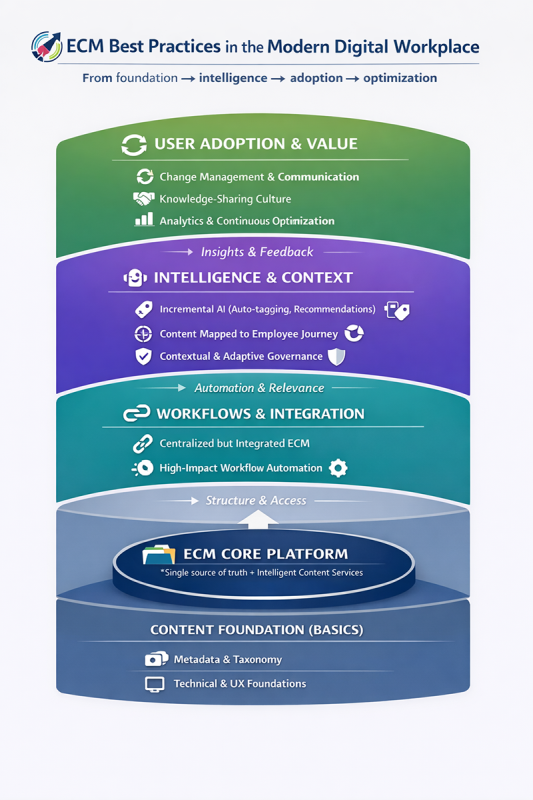
Implementing Enterprise Content Management (ECM) in a digital workplace is about more than technology, it is about aligning content with workflows, empowering employees, and creating intelligent, context-aware experiences. To maximize the benefits of ECM, organizations need a strategic approach that combines governance, AI, user adoption, and continuous optimization. Below are practical tips and best practices for making ECM a success in your modern digital workplace.
A well-designed metadata model and taxonomy is the foundation of effective ECM. By organizing content intuitively, you make documents easier to find, automate processes, and enable advanced search capabilities.
While centralization is important, ECM should never become a silo. Ensure that your system integrates seamlessly with:
Integration ensures that content flows naturally where employees work, making it actionable and contextually relevant.
Prioritize automation in areas where it delivers the most value. Typical high-volume workflows include:
Automation not only reduces manual effort but also enforces compliance, improves accuracy, and accelerates decision-making.
Artificial intelligence is a powerful ally for ECM, but adoption should be gradual and strategic:
Understanding how content flows through workflows is key to effective ECM implementation:
This approach ensures adoption, minimizes disruption, and demonstrates value early.
Governance should be adaptive, not rigid, and aligned with the context of content usage:
ECM is most effective when users actively contribute and maintain content:
Continuous improvement relies on insights from actual usage:
Ensure your ECM is built for modern digital work:
Technology alone does not guarantee success. Invest in change management and employee adoption:
Successful ECM in the modern digital workplace requires strategy, context, and continuous evolution. Start with metadata and search, integrate deeply into collaboration workflows, automate intelligently, leverage AI, enforce adaptive governance, and foster a culture of knowledge sharing. Combined with analytics-driven optimization and thoughtful change management, these best practices ensure ECM transforms content from a static resource into a strategic asset, empowering employees, enhancing collaboration, and driving business outcomes.
In the modern digital workplace, Enterprise Content Management (ECM) is no longer just about storing and securing documents, it is about embedding content seamlessly into collaborative workflows, enabling knowledge workers to access, use, and manage information in context.
Many traditional ECM systems and even modern content services platforms treat content management as a separate function, often creating silos and friction in daily work.
eXo Platform represents the evolution of ECM into what can be described as a “Contextual Content Fabric”: a seamless layer that integrates content capabilities directly into the digital workplace experience. By connecting ECM to collaboration, social, and productivity tools, eXo ensures that content is accessible, discoverable, governed, and actionable exactly where employees need it.
Unlike platforms that rely on integrations or connectors, eXo Platform offers native content services embedded into team spaces, projects, and communities. Documents are not merely linked, they live within the workspace itself, with automatic versioning, permissions, and governance applied contextually.
Example: A pharmaceutical company integrated eXo’s content services into their clinical trial collaboration spaces, reducing document retrieval time by 70% while ensuring automatic compliance with trial documentation protocols.
eXo Platform leverages a knowledge graph that maps relationships between content, people, discussions, expertise, and business processes. This architecture enables:
By connecting content to the people and projects that rely on it, knowledge becomes actionable and discoverable in real time.
Governance in eXo is context-aware and adaptive. Policies automatically adjust based on where content is created and how it is used. For example, documents in highly regulated compliance areas receive stricter controls, while content in innovation spaces remains flexible, supporting creative collaboration without sacrificing security or auditability.
| Evaluation Criteria | Traditional ECM (Documentum, Filenet) | Cloud ECM (Box, Dropbox Business) | Modern Content Services (M-Files, Nuxeo) | eXo Platform |
| Native Digital Workplace Integration | Poor | Moderate | Moderate | Excellent |
| Context-Aware Content Delivery | Limited | Basic | Good | Excellent |
| Collaborative Content Creation | Poor | Good | Moderate | Excellent |
| Unified Search & Discovery | Limited | Moderate | Good | Excellent |
| Adaptive Governance | Rigid | Basic | Good | Excellent |
| Total Cost of Ownership | High | Moderate | Moderate to High | Competitive |
| User Adoption Potential | Low | High | Moderate | High |
As the table shows, eXo Platform excels across every criterion critical to modern ECM, particularly integration, collaboration, search, governance, and adoption.
While many vendors address individual ECM or collaboration needs, eXo Platform offers a holistic, all-in-one solution:
| Feature / Platform | eXo Platform | Legacy ECM (IBM/OpenText) | MS SharePoint |
| Core Philosophy | Integrated Digital Workplace | Records Management | Document Repository |
| User Experience | Intuitive & Social-First | Complex & Functional | Functional but Fragmented |
| Flexibility | Open Source / Highly Extensible | Rigid / High Custom Cost | Ecosystem Locked |
| Deployment | Cloud, On-Prem, Hybrid | Mostly On-Prem | Cloud-First (SaaS) |
| Incentives | Built-in Gamification/Kudos | None | Basic via 3rd Party |
| Digital Sovereignty | High (Full Control) | Medium | Low (Vendor Cloud) |
🤏In short, eXo Platform is more than ECM, it is the digital workplace itself, providing a contextual, integrated, and intelligent content experience that drives adoption, collaboration, and business outcomes.
Enterprise Content Management (ECM) is no longer a static repository for documents, it is rapidly becoming a dynamic, intelligent, and integral part of the digital workplace. As organizations adopt hybrid work, real-time collaboration, and AI-driven productivity tools, ECM is poised to evolve in ways that fundamentally transform how content is created, managed, and leveraged. Emerging technologies and workplace trends point to a future where ECM is proactive, immersive, and highly adaptive.
Artificial intelligence is moving beyond simple assistance into autonomous content management. Future ECM systems will automatically organize documents, manage versions, and govern content lifecycles with minimal human intervention, while maintaining oversight and compliance checks. By automating repetitive and time-consuming tasks, organizations can focus employees’ energy on higher-value work, reducing errors and improving efficiency across the enterprise.
The rise of augmented and virtual reality (AR/VR) promises to redefine how employees interact with content. Instead of viewing static documents, users will navigate three-dimensional content environments, manipulating data, diagrams, or workflows within virtual collaboration spaces. This immersive approach will enhance understanding, accelerate decision-making, and make complex information more accessible and engaging.
Tomorrow’s ECM will anticipate what content employees need and deliver it before it is explicitly requested. By analyzing calendars, ongoing projects, historical usage patterns, and workflow context, predictive ECM systems can surface relevant documents, templates, or resources at the right time. This proactive approach not only saves time but also ensures that employees have the information they need to make decisions and collaborate effectively.
Emerging technologies such as blockchain are set to revolutionize content integrity and verification. Blockchain-integrated ECM platforms will allow organizations to create immutable records of critical documents, contracts, and approvals, ensuring authenticity without relying solely on centralized authorities. This capability enhances trust, reduces fraud, and simplifies auditing and compliance processes in increasingly digital and decentralized environments.
The next frontier of ECM involves emotionally and cognitively aware systems. By analyzing behavioral patterns, stress levels, workload, and time constraints, future ECM platforms could adapt how content is presented and recommended. For example, an employee under tight deadlines may receive concise summaries or prioritized documents, while teams engaged in strategic planning could see richer, more detailed insights. Such intelligent adaptation increases productivity, reduces cognitive overload, and makes content more human-centric.
These trends indicate that ECM will no longer be a passive tool, it will become an active, intelligent partner in the digital workplace. Organizations that embrace this evolution will gain a significant competitive advantage: content will not only be accessible and secure but anticipatory, immersive, verified, and adaptive to human needs.
🙏By integrating emerging technologies, predictive intelligence, and immersive experiences, future ECM platforms will turn enterprise content into a living, responsive asset. This evolution ensures that knowledge flows seamlessly to the right people at the right time, empowering employees, enhancing collaboration, and driving innovation in increasingly complex and distributed work environments.
Enterprise Content Management (ECM) has evolved far beyond its origins as a digital filing cabinet. In today’s digital workplace, ECM is no longer optional, it is a foundational, strategic capability that fuels productivity, collaboration, compliance, and decision-making. Modern organizations generate massive volumes of content across teams, projects, and systems, and without a cohesive approach, this content risks being fragmented, underutilized, or mismanaged.
ECM addresses this challenge by transforming content from a static repository into a dynamic, intelligent asset. It enables organizations to capture, organize, automate, secure, and surface information across business applications, making content actionable and contextually relevant. This is critical for modern workflows, hybrid work environments, and knowledge-intensive processes where employees must quickly find the right information, collaborate seamlessly, and make informed decisions.
Traditional ECM systems excelled at storage and governance but often operated in isolation from the broader collaboration ecosystem. Today, the modern digital workplace demands integration-first ECM, where content services are embedded into collaboration, project management, social interactions, and productivity tools. When ECM is deeply integrated, content is no longer siloed in inboxes or drives; it becomes part of workflows, knowledge graphs, and personalized employee experiences.
Platforms like eXo Platform exemplify this next-generation approach. By fusing ECM capabilities with collaborative spaces, social intranets, and productivity tools, eXo makes content invisible yet intelligent, surfacing the right information at the right moment, in the right context. Employees can focus on work rather than hunting for documents, while organizations gain stronger governance, compliance, and insight into their content landscape.
Organizations that treat ECM as a dynamic engine rather than a static vault unlock measurable benefits:
By embedding ECM within a unified digital workplace, organizations not only streamline operations but also foster higher employee engagement, better knowledge sharing, and stronger innovation capabilities.
The shift from “storage-first” to “integration-first” ECM represents one of the most significant transformations in enterprise technology strategy. In the future of work, content is not just something to manage, it is a strategic asset that accelerates collaboration, innovation, and business outcomes. The competitive advantage will go to organizations that view ECM as an integral layer of the digital workplace, seamlessly connecting people, processes, and information.
Choosing the right platform is critical. By investing in a solution like eXo Platform, organizations gain more than an ECM, they gain a unified, intelligent, and engaging digital workplace where content works for the business, not the other way around. This ensures that governance and efficiency coexist with user adoption, agility, and productivity.
In conclusion, modern ECM is the silent powerhouse of the digital workplace. Its value is measured not by how well it stores documents, but by how effectively it empowers employees, safeguards knowledge, and drives strategic outcomes. Organizations that embrace this integrated, intelligent approach to content management will be the ones that thrive in an increasingly connected, content-driven, and knowledge-intensive world.

eXo Platform : The Open-Source
Digital Workplace Platform
Download the eXo Platform Datasheet and discover all the features and benefits
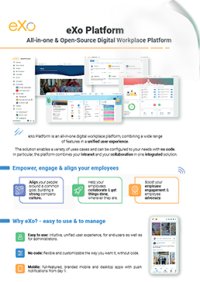

Download the eXo Platform Datasheet and discover all the features and benefits
You will find here Frequently Asked Questions about modern digital workplace with all the answers in one place.
Enterprise Content Management (ECM) is far more than a system for storing files — it is a comprehensive framework that enables organizations to capture, manage, store, preserve, and deliver content and documents across all business processes.
➝ See the full definition of Enterprise Content Management (ECM)
In 2025, content is everywhere: collaborative documents, chat messages, videos, presentations, and knowledge assets flow across multiple tools daily. Organizations without modern ECM face information overload, inefficiency, and elevated risk.
A modern ECM platform transforms content from static files into a strategic business asset by providing:
🗃️Breaking Down Information Silos
🤝Enabling Contextual and Seamless Collaboration
👨⚖️Accelerating Decision-Making
🔐Ensuring Compliance, Security, and Governance
🧠Preserving Knowledge and Organizational Memory
🤖Enabling Automation and Intelligence
➝ Discover Why Modern ECM is Essential in the Digital Workplace
A Modern Digital Workplace is a connected ecosystem of people, processes, and cloud-native tools that enable employees to work effectively from anywhere. It integrates communication, collaboration, knowledge sharing, automation, and security into a single, seamless experience — empowering teams to focus on meaningful outcomes rather than juggling multiple apps.
A digital workplace is a next generation of intranet solutions or intranet 2.0 that is based on three pillars: communication, collaboration and information. In a way this definition is true but it doesn’t cover the whole spectrum of the term.
Here are some definitions of digital workplace:
The Digital Workplace Experience (DWX) is the holistic sum of how people in an organization engage with its digital tools, platforms, and services throughout their journey—from onboarding, through learning, through day-to-day work, through collaboration, up to career growth. It’s not merely about having technology; it’s about how that technology is designed, how the systems connect, how people feel, how easy it is to get work done, and how the organization supports employees in that flow.
➝ See the full definition of digital workplace experience (DWX)
The Modern Digital Workplace (MDW) is no longer a “nice-to-have”—it has become a strategic imperative for organizations that want to thrive in today’s fast-evolving business landscape. Its impact goes far beyond technology: it directly influences employee experience, business outcomes, productivity, resilience, and cost efficiency.
👥Driving Employee Experience and Business Outcomes
🤖Productivity, Efficiency, and AI Integration
🤝Inclusion Across Hybrid and Frontline Teams
💰Agility, Resilience, and Cost Optimization
The Modern Digital Workplace is evolving rapidly. Today, it’s no longer just about basic collaboration or document sharing—it’s an intelligent, integrated, employee-centric ecosystem that connects people, processes, and technology. The following features distinguish a truly modern digital workplace from legacy intranet and collaboration stacks, reflecting the latest trends and vendor innovations.
💬Unified Communication and Collaboration
🧑💻Integrated Employee Experience Platforms (EXP)
⚡AI and Automation
🔍Intelligent Search and Knowledge Management
🧩Contextual Integrations and Composable Architecture
👀Data-Driven Employee Experience and Observability
🛡️Advanced Security and Zero Trust
📱Mobile-First and Hybrid Enablement
🛠️Hyperautomation, Low-Code, and No-Code Platforms
♻️ESG and Sustainability Support
🤏In short: A modern digital workplace integrates communication, collaboration, knowledge, AI, automation, and security into a seamless, employee-centric ecosystem. It enables smarter, faster, and more resilient work while empowering employees to focus on high-value outcomes rather than mundane tasks.
Organizations that implement a Modern Digital Workplace typically experience:
A digital workplace strategy is a deliberate plan that aligns people, processes, and technology so employees can do their best work anywhere. It’s not just a collection of apps — it’s a human-centered ecosystem that defines workflows, governance, culture, and employee experience.
Key points:
( Your e-mail address will not be published)

I am a Digital Marketing specialist specialized in SEO at eXo Platform. Passionate about new technologies and Digital Marketing. With 10 years' experience, I support companies in their digital communication strategies and implement the tools necessary for their success. My approach combines the use of different traffic acquisition levers and an optimization of the user experience to convert visitors into customers. After various digital experiences in communication agencies as well as in B2B company, I have a wide range of skills and I am able to manage the digital marketing strategy of small and medium-sized companies.