

FREE WHITE PAPER
Discover our in-depth analysis of the concept of employee engagement, its roots, and ways to improve it significantly
Internal communication (IC) is no longer a peripheral HR task or a simple newsletter update. As we move through 2025 and look ahead to 2026, internal communicators are increasingly recognized as strategic architects of culture, employee experience, and organizational alignment.
In today’s hybrid and globally distributed workplaces, where digital tools, collaboration platforms, and AI-driven workflows intersect, the role of Internal Communication professionals has never been more critical—or more complex.

Modern internal communications teams do far more than transmit information. They design experiences that engage employees, empower leaders, and directly influence business outcomes. Whether it’s fostering a sense of belonging across remote teams, amplifying organizational values, or supporting change management initiatives, effective Internal Communication is at the heart of high-performing organizations.
The workplace itself has undergone a seismic shift. The centralized, office-centric model has given way to a fragmented, hybrid, and remote reality. In this new paradigm, internal communication is no longer a supportive function—it is the organization’s central nervous system. It serves as the primary conduit for strategy, alignment, culture, and engagement, ensuring employees feel informed, connected, and motivated regardless of where they work.
Looking toward 2026, the most successful internal communication strategies will go beyond buzzwords and fleeting trends. They will combine technology, creativity, and a deep understanding of human behavior to generate meaningful, measurable impact. By studying real-world use cases, leveraging modern digital tools, and adopting a strategic mindset, Internal Communication teams can position themselves as true enablers of organizational success.
In this article, we explore the internal communication trends set to shape workplaces in 2026. We go beyond surface-level predictions to examine the “why” behind each trend, the challenges organizations face, and the actionable strategies Internal Communication teams can implement to stay ahead of the curve.
Many trend reports simply list buzzwords—“AI integration,” “employee well-being,” “data-driven measurement”—without exploring what they actually mean for organizations. For internal communicators, the challenge is deeper: it’s not about chasing every new idea, but understanding which trends can truly drive impact.
Not every organization starts from the same place. A decentralized, frontline-heavy company will have very different communication needs than a centralized, desk-based enterprise. Trends that work wonders in one context may fall flat in another. Understanding your organization’s unique culture, workforce distribution, and strategic priorities is the first step in making trends meaningful.
What’s popular isn’t always transformational. While buzzwords may dominate industry reports, Internal Communication teams need to identify which initiatives can genuinely move the needle on engagement, alignment, and productivity. Simply adopting the latest tool or strategy without assessing its relevance can lead to wasted effort and disengaged employees.
Some “hot” innovations may generate short-term excitement but fail to gain long-term traction. Internal communication initiatives must be scalable, measurable, and supported by leadership.
By carefully analyzing and prioritizing trends, Internal Communication teams can avoid fleeting experiments and instead build programs that last.
The term “trend” can be misleading. It often implies a temporary wave to ride until the next one comes along. In internal communication, this mindset is risky. The shifts we’re witnessing are not fleeting—they are fundamental changes driven by technological acceleration, evolving employee expectations, and a redefinition of the employer-employee relationship.
One of the biggest risks for Internal Communication teams is initiative fatigue. Chasing every new platform, tool, or approach without a cohesive vision leads to fragmented efforts, wasted resources, and ultimately, a disengaged workforce. The goal for 2026 is not to adopt all trends, but to intelligently integrate the ones that align with your organizational DNA and strategic objectives.
The world of work is transforming rapidly, fueled by economic pressures, shifting employee expectations, and the exponential rise of AI.
Internal communication has evolved from a function of broadcasting messages to a strategic orchestrator of the Digital Employee Experience (DEX) and a key driver of business performance.
Relying on past practices or superficial trend adoption is a recipe for misalignment. Instead, Internal Communication teams must look beyond channels and tools, focusing on approaches that are strategic, data-driven, and human-centered. By doing so, internal communicators can ensure their programs are not just timely, but transformative.
Internal communicators increasingly report a sense of urgency—or even “panic”—in their roles. This isn’t just stress; it’s the result of multiple converging pressures reshaping the modern workplace.
Internal Communication is no longer optional. Executives expect measurable ROI, culture alignment, and tangible business impact. Gone are the days when sending out a newsletter was enough; today, communicators are accountable for engagement, retention, and organizational performance.
Employees are drowning in a sea of platforms—email, chat apps, intranets, and collaboration tools—creating what experts call “digital friction.” App fatigue is real: unless tools simplify work, employees tune them out, causing critical messages to be missed.
The pace of transformation is relentless. Hybrid work, generative AI, and digital workplace innovations are reshaping how people collaborate and consume information. IC teams must adapt or risk irrelevance, ensuring consistent messaging for a dispersed workforce while avoiding information silos in both physical and digital spaces.
Poor communication directly impacts engagement and turnover. In the current “war for talent,” missteps in Internal Communication can have serious consequences, making effective communication not just strategic—but essential for organizational survival.
Employees, particularly younger generations, expect transparency and genuine leadership communication. Traditional top-down broadcasts and corporate-speak no longer resonate; Internal Communication teams must facilitate authentic, two-way dialogue that builds trust.
Leadership increasingly expects Internal Communication to demonstrate measurable outcomes: improved engagement, productivity, and retention. Moving beyond vanity metrics like email opens or newsletter clicks, communicators must link initiatives directly to business performance.
To navigate this “panic,” Internal Communication teams can find guidance in broader workplace trends:
Internal communication is the vehicle through which these macro-trends are operationalized. By addressing information overload, ensuring hybrid accessibility, proving ROI, and fostering authenticity, IC can transform panic into strategic opportunity.
The Complete Guide to
Employee Engagement
Discover our in-depth analysis of the concept of employee engagement, its roots, and ways to improve it significantly
Discover our in-depth analysis of the concept of employee engagement, its roots, and ways to improve it significantly
As internal communication evolves at lightning speed, the numbers reveal a clear truth: IC teams are more strategic, more tech-enabled, and more essential than ever — yet still constrained by measurement, resources, and adoption challenges.
Below is a consolidated and easy-to-read overview of the most impactful data shaping Internal Communication strategies for 2026.
Measurement remains the Achilles’ heel of internal communication.
➡️ Insight: Despite advancements in tools and AI, there’s still a gap between intention and execution. Many IC teams operate without mature measurement frameworks or real-time employee feedback loops.
AI has rapidly moved from experimentation to mainstream adoption.
➡️ Insight: Internal Communication professionals who master AI governance, literacy, and strategic use will play a critical role in shaping the future employee experience.
The workplace is permanently hybrid, and Internal Communication strategies must reflect that.
➡️ Insight: The digital employee experience (DEX) is no longer a “nice to have” — it’s a performance and engagement driver, directly linked to retention and productivity.
Communication channels have expanded — but so has the noise.
➡️ Insight: Organizations need fewer, better-integrated tools, and more dynamic formats like short-form video, mobile-first experiences, and personalized feeds.
Internal communication has finally entered the strategic spotlight.
➡️ Insight: Leadership sees the value of IC, but teams must prove their impact through better measurement, storytelling, and cross-functional collaboration.
Bringing all these statistics together shows a workplace at a crossroads:
🤏In short: There is a widening gap between ambition and execution.
IC teams are positioned to drive culture, trust, and workplace experience — but need better tools, clearer governance, stronger analytics, and leadership alignment to fully realize that potential.
As we look toward 2026, many trends from 2025 will continue to evolve, while new dynamics are sharpening the role of internal communicators. According to industry experts, the focus is shifting from experimenting with new tools to strategically embedding practices that deliver measurable impact.
AI is no longer just a “nice-to-have” for internal communications. In 2026, IC teams will move from pilot projects to fully integrating AI into their workflows. From content personalization to automated measurement and orchestration of messages, AI will enable communicators to deliver the right information to the right employees at the right time—without adding friction to their workday.
The measurement of success is evolving. Instead of relying solely on engagement metrics like open rates or clicks, IC teams will increasingly be evaluated on the tangible outcomes of their initiatives. Did a campaign influence employee behavior, improve collaboration, or reinforce organizational values? Data-driven insights will become the foundation for strategic decision-making.
Internal communicators will take on the role of trusted advisors to executives, shaping how change initiatives are communicated and aligning messaging with business goals. By influencing how strategies are understood and adopted across the organization, IC professionals will solidify their place as critical partners in driving organizational success.
Internal communication teams will extend their influence beyond messaging. They will play a central role in designing the broader digital workplace experience, integrating intranet platforms, collaboration tools, workflows, and AI assistants. By reducing friction and increasing clarity, they will help employees navigate hybrid work environments more efficiently.
As AI becomes more pervasive, employees expect transparency and ethical guidance. IC teams will need to clearly communicate why AI is being used, establish guardrails, and involve employees in shaping AI policies. Building trust in technology will be essential to ensuring adoption and maintaining engagement.
Internal communication (IC) is evolving faster than ever. As organizations move deeper into hybrid and digital-first workplaces, the role of internal communicators is shifting—from simply broadcasting messages to strategically shaping the employee experience. The focus is no longer just on what is sent, but on how messages land, what actions they inspire, and the value they create for the organization. Based on research, expert insights, and real-world practices, here are the key trends shaping internal communication in 2026.
AI is no longer just a novelty for drafting messages—it has become an embedded strategic partner for internal communicators.
💥Impact: More than 50% of IC professionals now report using AI in some capacity, enabling smarter, data-driven communication.
Gut instinct alone is no longer enough. IC teams are increasingly expected to demonstrate measurable outcomes.
📈Stats: 54% of communication leaders use internal surveys to inform strategies (Fratzke Consulting).
With shrinking attention spans, video and interactive content dominate internal communication.
Internal Communication is expanding to shape the entire digital workplace.
📈Stats: 67% of leaders find mobile apps to be an effective communication tool (Fratzke Consulting).
Internal communicators are optimizing multiple channels to reach employees effectively.
Building trust, engagement, and connection is at the heart of Internal Communication in 2026.
Managers are the frontline communicators and culture carriers.
As content and interaction grow, data governance and security become critical.
Preparedness and engagement go hand-in-hand.
The top internal communication trends for 2026 highlight a shift toward strategy, data, technology, and the human element. Internal communicators are no longer mere messengers—they are architects of the employee experience, using AI, analytics, and engaging formats to shape culture, drive engagement, and deliver measurable business impact.
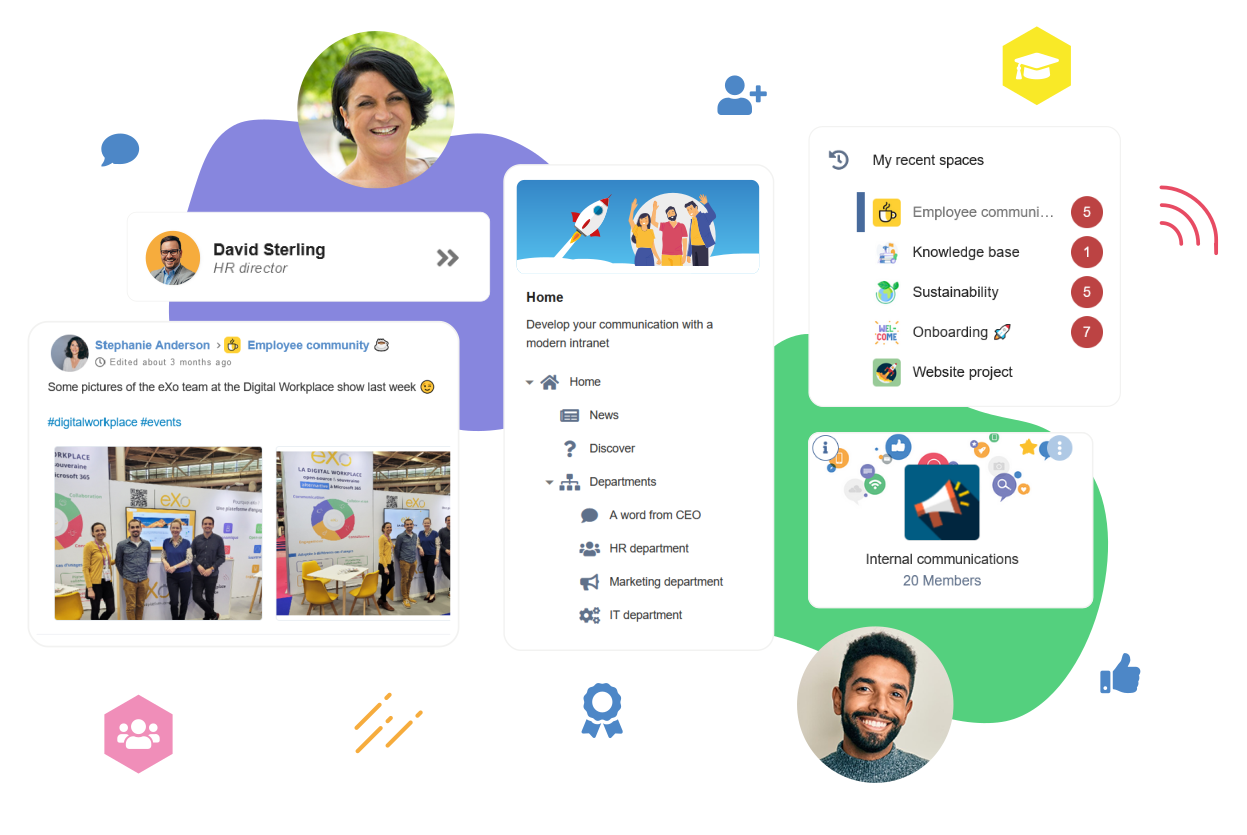
eXo Platform Digital Workplace
While staying ahead of trends can unlock engagement and innovation, internal communication teams face real-world challenges that can make adoption complex. Understanding these hurdles is critical for turning trends into meaningful impact.
Many Internal communication teams are small and already stretched thin. Experimenting with AI tools, video content, gamification, and immersive experiences can be exciting—but also overwhelming. Without proper planning and prioritization, new initiatives risk overloading teams and reducing overall effectiveness.
🔑Key Consideration: Start small, test trends selectively, and scale initiatives based on impact rather than hype.
Although trend reports increasingly emphasize data-driven communication, over half of Internal communication professionals still cite measurement as their biggest challenge. Tracking the right metrics—like behavior change, engagement, and comprehension—requires both tools and analytical skills that not all teams currently possess.
🔑Key Consideration: Focus on outcome-based metrics instead of vanity metrics such as open rates or clicks. Implement simple pulse surveys and sentiment tracking to build measurement maturity gradually.
Introducing new platforms or channels can trigger employee resistance. Frequent updates, multiple apps, or complex workflows can lead to fatigue, reducing engagement and adoption even for powerful tools.
🔑Key Consideration: Combine trend adoption with clear onboarding, ongoing support, and communication campaigns that explain why new tools matter for employees’ daily work.
As internal communication becomes more decentralized and user-generated content grows, maintaining governance, data security, and information quality becomes more complex. Uncontrolled platforms can lead to inconsistent messaging, outdated content, or even compliance risks.
🔑Key Consideration: Establish clear policies, workflows, and approval processes. Integrate security features into digital workplaces without stifling innovation.
For Internal Communication to truly act as a strategic partner, leaders must view communicators as more than “senders of news.” They need to trust IC teams to guide change, culture, and employee engagement. However, shifting leadership mindset from tactical to strategic communication is often difficult.
🔑Key Consideration: Demonstrate value through data, pilot high-impact initiatives, and engage leaders in co-creating messaging strategies to build trust and credibility.
Trends like AI, video, and immersive content offer immense potential, but success depends on strategy, resources, governance, and leadership alignment. By addressing bandwidth, measurement, adoption, governance, and buy-in, IC teams can transform exciting trends into meaningful, sustainable improvements for the organization.
As internal communication continues to evolve, teams must prioritize strategic, human-centered initiatives rather than chasing every new tool or trend. Based on current research, expert insights, and workplace projections, the following focus areas will drive impact in 2026.
Modern internal communication thrives when tools, platforms, and content are unified.
💥Impact: A cohesive digital workplace reduces confusion, increases engagement, and makes IC initiatives easier to manage.
AI is no longer optional—it’s a force multiplier for IC teams.
💥Impact: AI frees teams from administrative tasks and enables more strategic, story-driven, and human-focused communication.
Measuring the impact of communication is essential for credibility and continuous improvement.
💥Impact: Data-driven communication builds credibility with leadership and ensures initiatives drive measurable results.
Managers and leaders are multipliers of IC impact.
💥Impact: Authentic leadership communication amplifies reach, fosters connection, and drives culture.
Internal communication should create meaning, connection, and belonging.
💥Impact: Employees feel valued, informed, and engaged, leading to higher morale and retention.
As communication channels expand, governance, security, and compliance become critical.
💥Impact: Protects sensitive information while enabling safe, interactive, and effective communication.
In 2026, internal comms teams must focus on strategy, technology, human connection, and measurement. By consolidating platforms, leveraging AI wisely, empowering leaders, prioritizing employee experience, and governing with care, IC teams can transform communication into a strategic driver of engagement, culture, and business outcomes.
Internal communication is entering a defining era. What was once a support function is now a strategic powerhouse—shaping culture, guiding change, and orchestrating the entire digital employee experience.
In 2026 and beyond, internal communicators are no longer mere messengers. They are strategists, storytellers, advisors, and experience architects.
The trends shaping the year ahead make one thing clear:
the future of internal communication is integrated, intelligent, and deeply human.
The modern Internal communication function can only reach its full potential with technology that supports scale, governance, and flexibility. This is where a platform like eXo Platform stands apart:
Rather than stitching together endless point solutions, Internal communication teams can anchor their strategy in a platform designed for the complexity of the modern workplace.
2026 marks a turning point. Internal communication teams that succeed will be those who:
The question is no longer if internal communications will evolve, but how ready each organization is to lead that evolution.
As you plan your 2026 roadmap, focus less on the noise and more on the structures, tools, and practices that will scale with you. If your priorities include alignment, engagement, and an elevated employee experience, eXo Platform deserves serious consideration as the strategic backbone of your communication ecosystem.
Internal communication’s future is here—and it’s yours to shape.
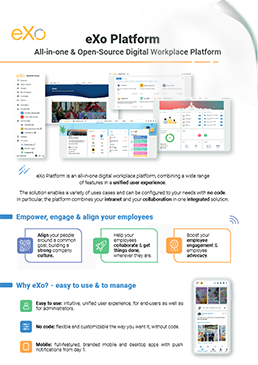

eXo Platform : The Open-Source
Digital Workplace Platform
Download the eXo Platform Datasheet and discover all the features and benefits
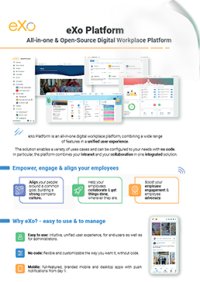

Download the eXo Platform Datasheet and discover all the features and benefits
Internal communication (IC) is the process, strategy, and set of tools that organizations use to share information, align employees with business goals, and foster engagement and collaboration. It is much more than simply sending out company announcements or newsletters—it is a deliberate, strategic function that shapes how employees experience the organization every day.
Effective internal communication creates meaningful linkages: between leadership and teams, across departments, and between on-site and remote employees. It ensures that information doesn’t just travel—it lands, resonates, and prompts action.
In practice, internal communication involves:
🤏In short, internal communication transforms information into understanding, alignment, engagement, and action.
Effective internal communication is no longer optional—it is essential for organizational success. Studies consistently show that improving communication drives engagement, productivity, and business outcomes.
🕵Quick evidence
🕺The Modern Challenge
The way we communicate at work has evolved dramatically. In 2025, improving internal communication means combining strategic leadership, modern technology, and a human-centered culture. Below are 22 actionable and up-to-date strategies designed to help organizations strengthen engagement, boost productivity, and build trust across distributed teams.
In the modern workplace, Internal Communication (IC) goes far beyond simply sharing updates—it is the lifeline that connects employees, aligns teams, and drives organizational success.
Effective Internal Communication ensures that everyone understands the company’s goals, feels included in decision-making, and has the information they need to perform their roles confidently. Research consistently shows that organizations with strong internal communication enjoy higher employee satisfaction, better retention, and improved overall performance.
As workplaces continue to evolve at a rapid pace, internal communication (IC) has moved beyond simply sending messages—it has become a strategic pillar of organizational success. Building a strong Internal Communication strategy and using the right platform is no longer optional; it’s essential. Here’s why:
👨💻The Hybrid Work Imperative
🧲Employee Engagement and Retention
🔬Accelerating Innovation
🧠Knowledge Management and Operational Efficiency
👨👩👧👦Crisis and Change Management
Here are some Key differences between internal and external communications:
➝ Find out the Key differences between internal and external communications
Selecting the right internal communications (IC) platform is a strategic decision. It’s about more than just picking a tool—it’s about enabling effective communication, engagement, and alignment across your organization.
Here’s a structured, step-by-step approach to guide your decision:
➝ Discover How to Choose the Right Internal Communications Platform
( Your e-mail address will not be published)

I am a Digital Marketing specialist specialized in SEO at eXo Platform. Passionate about new technologies and Digital Marketing. With 10 years' experience, I support companies in their digital communication strategies and implement the tools necessary for their success. My approach combines the use of different traffic acquisition levers and an optimization of the user experience to convert visitors into customers. After various digital experiences in communication agencies as well as in B2B company, I have a wide range of skills and I am able to manage the digital marketing strategy of small and medium-sized companies.