
FREE WHITE PAPER
Discover our in-depth analysis of the concept of employee engagement, its roots, and ways to improve it significantly
The first day at a new job should be the beginning of an exciting journey, not a whirlwind of paperwork, forgotten passwords, disconnected systems, and unanswered questions. It is a moment when new employees should feel welcomed, supported, and inspired to contribute. Yet, for many organizations, the reality is very different.
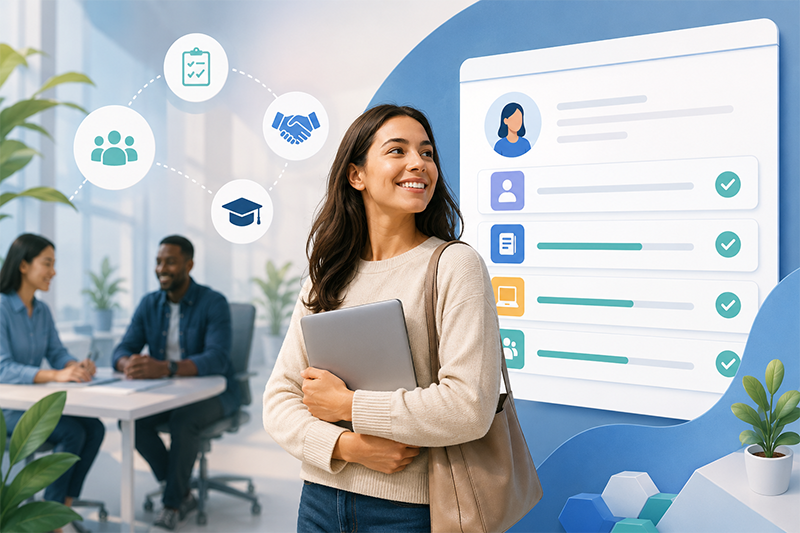
Too often, the employee onboarding process becomes an administrative maze of forms, email chains, orientation documents, and scattered training materials. New hires spend their first days trying to gain access to tools, understand company processes, and figure out who to contact for help. Instead of building enthusiasm and confidence, these experiences create confusion and frustration at a time when first impressions matter most.
The consequences of poor onboarding are significant. Research consistently shows that ineffective employee onboarding negatively impacts employee engagement, productivity, and retention. Nearly 88% of employees believe their employer could improve the onboarding experience, according to Gallup’s onboarding research, while organizations with a structured onboarding process can achieve up to 50% greater new-hire productivity, according to research from SHRM and the Brandon Hall Group. These figures underscore a critical truth: the way organizations welcome employees during their first days and weeks can shape their success for months, or even years, to come.
At the same time, the workplace itself has fundamentally changed. Remote and hybrid work models, distributed teams, and increasingly digital operations have made traditional onboarding methods inadequate. Manual processes, fragmented communication, isolated training sessions, and disconnected systems create unnecessary friction precisely when employees need clarity, guidance, and a sense of belonging.
This is where employee onboarding software has become indispensable.
What began as a tool for digitizing forms and collecting electronic signatures has evolved into a strategic platform for employee experience management. Modern employee onboarding software automates administrative tasks, streamlines workflows, coordinates activities between HR, IT, and managers, and provides employees with personalized, guided experiences from day one. By automating repetitive tasks and centralizing information, employee onboarding software helps organizations deliver a more efficient and engaging new hire onboarding experience.
In 2026, onboarding software is no longer considered a “nice-to-have” technology. It has become a strategic investment for organizations seeking to improve productivity, employee engagement, and long-term retention. The market reflects this growing importance, with the global employee onboarding software industry projected to reach $2.53 billion in 2026, growing at a remarkable 19.7% compound annual growth rate (CAGR), according to the Employee Onboarding Software Global Market Report 2026 by The Business Research Company. Businesses increasingly recognize that effective onboarding is about much more than compliance and paperwork, it is about building the foundation for employee success through a seamless and connected employee onboarding experience.
Today’s most advanced employee onboarding platforms go far beyond administrative automation. They combine workflow management, document processing, learning and development, knowledge sharing, employee communication, social collaboration, and analytics into a unified digital experience. New hires can complete preboarding activities before their first day, follow personalized onboarding journeys, access role-specific training, connect with colleagues through digital communities, and receive continuous support throughout their first months in the organization.
The evolution of onboarding technology has also given rise to several categories of onboarding solutions. Some platforms focus primarily on HR administration and compliance, while others specialize in workflow automation, learning management or employee experience. Increasingly, however, organizations are seeking comprehensive employee onboarding software solutions that integrate all these capabilities into a single digital workplace, creating a seamless and engaging onboarding journey.
The goal of modern onboarding software is simple: transform onboarding from a series of disconnected tasks into a structured, collaborative, and human experience that helps employees become productive faster, integrate into the company culture more effectively, and build meaningful connections from the very beginning. By implementing automated onboarding processes, organizations can improve efficiency while creating a better experience for every new hire.
In this complete guide, we will explore everything you need to know about employee onboarding software in 2026. We will define what onboarding software is, examine the different types of employee onboarding solutions available, compare the leading employee onboarding software platforms on the market, analyze their key features and use cases, and provide practical guidance for implementing automated onboarding successfully.
Whether you are an HR professional, business leader, or digital workplace manager, this guide will help you understand how modern employee onboarding software can transform the way your organization welcomes, engages, and retains talent from the very first day.
However, in 2026, the role of onboarding software has fundamentally changed.
Traditionally, onboarding was viewed as a short-term administrative process focused on collecting documents, completing compliance requirements, and providing basic orientation. Today, organizations recognize that onboarding is a strategic component of the employee experience. A new hire’s first weeks and months have a direct impact on engagement, productivity, job satisfaction, and long-term retention.
As a result, modern employee onboarding software supports every stage of the employee journey, from preboarding, which begins as soon as a candidate accepts an offer, to role-specific training, social integration, performance enablement, and continuous engagement during the first 90 days and beyond.
Research highlights just how important this process has become. Studies show that organizations with a structured onboarding program can improve new-hire retention by up to 82% and significantly accelerate employee productivity. In other words, effective onboarding software does much more than streamline administration, it helps organizations create better employee experiences and achieve faster business outcomes.
Many organizations still associate onboarding software with digital paperwork and compliance management. While these capabilities remain essential, modern solutions have evolved far beyond administrative automation.
At a foundational level, employee onboarding software simplifies tasks such as:
But the most advanced onboarding platforms in 2026 act as a central hub that connects three critical dimensions of the onboarding experience.
Organizations need to ensure that every new employee completes required paperwork, understands company policies, and meets regulatory obligations. Employee onboarding software automates these processes by centralizing documents, sending reminders, and tracking completion status in real time.
This reduces administrative workload, minimizes the risk of errors, and ensures compliance requirements are met before an employee’s first day.
New hires need immediate access to the tools, applications, and resources required to perform their jobs effectively. Waiting days for email accounts, software licenses, or equipment can negatively impact both productivity and employee perception.
Modern onboarding platforms can automatically trigger IT workflows, provision user accounts, assign software licenses, request equipment, and coordinate access permissions based on department or job role. Instead of manually submitting IT tickets, organizations can ensure employees are ready to contribute from day one.
Successful onboarding extends far beyond forms and technology. Employees also need to understand the company’s mission, values, culture, and ways of working.
Advanced onboarding software helps organizations foster meaningful human connections by introducing new hires to colleagues, assigning mentors or onboarding buddies, facilitating team interactions, and encouraging participation in employee communities. The objective is not simply to complete administrative tasks but to help employees feel connected, engaged, and part of the organization from the very beginning.
The Complete Guide to
Employee Engagement
Discover our in-depth analysis of the concept of employee engagement, its roots, and ways to improve it significantly
Discover our in-depth analysis of the concept of employee engagement, its roots, and ways to improve it significantly
The role of onboarding software has evolved dramatically over the past few years. As remote and hybrid work continue to reshape the workplace, organizations face new challenges when integrating employees who may never set foot in a physical office during their first weeks.
By the end of 2026, remote and hybrid work models are expected to remain a standard part of the employee experience for a significant portion of the global workforce. This shift has transformed onboarding software into something much larger than an HR tool, it has become the digital gateway to the organization itself.
Today’s onboarding platforms help employees connect, learn, collaborate, and engage regardless of their location. Many solutions now incorporate artificial intelligence to personalize onboarding experiences based on factors such as job role, department, location, skills, and seniority level.
For example, a software developer may automatically receive technical setup guides, coding standards, engineering documentation, and introductions to the development team. A newly hired manager, on the other hand, may be guided through leadership resources, strategic objectives, executive communities, and performance expectations.
This personalized approach ensures employees receive the right information, resources, and connections at the right time, reducing information overload while accelerating productivity and engagement.
Ultimately, modern employee onboarding software has evolved from a simple HR administration tool into a comprehensive employee experience platform. It no longer focuses solely on helping organizations complete paperwork, it helps new hires become productive faster, integrate into the company culture more effectively, and build meaningful relationships that support long-term success.
Employee onboarding has become far more than a simple HR process. In today’s fast-changing work environment, it plays a critical role in shaping how employees perceive their organization, adapt to their new responsibilities, and contribute to business success. The first days and weeks of employment often determine whether a new hire feels engaged, supported, and motivated, or overwhelmed, disconnected, and uncertain about their future within the company.
Employee expectations have evolved significantly in recent years. New hires now expect seamless, personalized, and digital experiences similar to the applications and platforms they use in their everyday lives. At the same time, the rise of remote and hybrid work has made onboarding more complex, requiring organizations to connect employees with people, knowledge, tools, and company culture without relying solely on face-to-face interactions.
Unfortunately, many organizations still struggle with fragmented onboarding processes. New employees are often required to navigate multiple systems, complete repetitive paperwork, search for information independently, and wait for access to the tools they need to perform their jobs. These challenges can create frustration from day one, slowing productivity and increasing the risk of early disengagement or turnover.
This is where employee onboarding software delivers significant value.
By centralizing onboarding activities into a single platform, organizations can provide a structured and consistent experience that guides employees through every step of their journey. Rather than treating onboarding as a checklist of administrative tasks, modern onboarding software creates an engaging experience that combines compliance, training, communication, collaboration, and cultural integration.
In 2026, successful onboarding programs must support a wide range of business and employee needs, including:
Managing these elements manually can be time-consuming and difficult to scale. Onboarding software helps organizations automate routine tasks while ensuring that every employee receives a consistent and high-quality experience regardless of their location, role, or department.
Organizations that invest in modern onboarding solutions often experience measurable improvements across several areas:
Beyond operational efficiency, onboarding software also helps organizations create stronger human connections. New hires can quickly access resources, connect with colleagues, join employee communities, participate in training programs, and gain a clearer understanding of their role within the organization.
Perhaps the greatest value of employee onboarding software lies in its ability to transform what can often feel like an overwhelming process into a guided and welcoming experience. Instead of spending their first days chasing documents, requesting system access, and searching for information, employees follow a structured onboarding journey that helps them build confidence, establish relationships, and become productive more quickly.
A positive onboarding experience not only benefits new employees but also strengthens the organization as a whole. Employees who feel supported from the beginning are more likely to remain engaged, perform at a higher level, and develop a stronger connection to the company’s mission and culture.
As organizations continue to embrace digital, hybrid, and globally distributed work models, employee onboarding software has become much more than an administrative tool. It is now a strategic platform that helps companies deliver exceptional employee experiences, accelerate productivity, foster collaboration, and build the foundation for long-term engagement and retention.
AI-Augmented Digital Workplace
Artificial intelligence has rapidly become part of everyday work. Employees experiment with AI tools, generate content, and explore new ways to be more productive.
Artificial intelligence has rapidly become part of everyday work. Employees experiment with AI tools, generate content, and explore new ways to be more productive.
Not all employee onboarding software is designed to solve the same challenges. While some platforms focus primarily on administrative efficiency, others prioritize employee engagement, training, IT provisioning, or collaboration.
Understanding these different categories can help organizations identify the solution that best aligns with their onboarding objectives, company culture, and operational requirements.
Over the years, onboarding software has evolved from simple HR tools into sophisticated employee experience platforms. Today, organizations can choose from several types of onboarding solutions, each addressing a specific aspect of the onboarding journey from compliance and training to digital adoption and employee engagement.
HR-centric onboarding solutions are the most common type of onboarding software. Typically integrated into Human Resource Information Systems (HRIS) or Human Capital Management (HCM) platforms, they focus on streamlining administrative tasks, compliance management, and employee record creation.
Their primary objective is to ensure that new hires complete all required paperwork and administrative procedures before or during their first days at work.
These platforms excel at compliance and workforce administration. However, they often provide limited support for employee engagement, collaboration, and cultural integration, making them only one piece of a comprehensive onboarding strategy.
Dedicated onboarding platforms focus specifically on creating engaging experiences for new hires. Rather than emphasizing compliance or back-office processes, these solutions prioritize communication, personalization, and manager involvement.
Many of these platforms use storytelling, automated reminders, surveys, and personalized onboarding journeys to improve the employee experience during the first weeks and months.
These solutions create highly engaging onboarding experiences but often require integrations with HR, learning, and collaboration platforms to deliver a complete employee journey.
For some organizations, onboarding is primarily a learning challenge. New employees need to acquire knowledge, complete certifications, and understand processes before they can become fully productive.
Learning-focused onboarding platforms are built around Learning Management Systems (LMS) and emphasize structured training programs and knowledge transfer.
LMS platforms are excellent for delivering training and ensuring consistency. However, they typically operate separately from daily workflows and often lack collaboration, communication, and social onboarding capabilities.
Some organizations view onboarding primarily as an operational challenge involving account creation, software provisioning, access management, and workflow coordination.
This category focuses on automating repetitive tasks and ensuring employees have the resources they need from day one.
These solutions significantly reduce delays and administrative bottlenecks, but they generally focus more on systems and processes than on employee experience and cultural integration.
As organizations rely on increasingly complex software ecosystems, another category has emerged: Digital Adoption Platforms (DAPs).
Rather than training employees outside of applications, DAPs guide users directly inside the tools they use every day. They provide contextual assistance that helps new hires learn by doing.
Digital Adoption Platforms ensure that new hires are not just trained theoretically but can confidently use the applications where their day-to-day work actually happens.
The newest and most comprehensive category combines onboarding, communication, collaboration, knowledge management, learning, and employee engagement into a single digital environment.
Rather than treating onboarding as a standalone process, Digital Workplace Platforms view onboarding as the beginning of an employee’s broader workplace experience. They serve as a central hub where employees can access information, connect with colleagues, complete training, collaborate on projects, and become active participants in the company culture.
This approach is particularly relevant as organizations continue to embrace hybrid and remote work models, where employees need a unified digital space to work, learn, and connect.
Among Digital Workplace Platforms, eXo Platform stands out as one of the most comprehensive onboarding solutions available in 2026.
Unlike traditional onboarding software that focuses on a single aspect of the employee journey, eXo Platform brings together onboarding, collaboration, communication, knowledge sharing, employee communities, and engagement within one integrated platform. New hires can access training materials, complete onboarding tasks, connect with teammates, participate in communities, discover company knowledge, and collaborate on projects from a single digital workspace.
This holistic approach helps organizations move beyond administrative onboarding and create an experience that accelerates productivity, strengthens company culture, and improves long-term employee engagement.
Beyond digital workplace platforms, another category that can support employee onboarding is Digital Experience Platforms (DXPs).
Digital Experience Platforms (DXPs) provide organizations with a centralized environment for creating, managing, and delivering personalized digital experiences across multiple channels. While DXPs are not exclusively designed for employee onboarding, they can play an important role in organizations that want to create a more personalized and engaging digital employee experience.
For onboarding, DXPs can bring together employee-facing content, personalized resources, knowledge, communications, and self-service experiences through a unified digital environment. They can also integrate with HR, learning, collaboration, and other enterprise systems to create a more connected onboarding journey.
DXPs can provide a highly personalized and content-rich onboarding experience, but they are generally broader than dedicated employee onboarding platforms. They may also require additional integrations with HR, learning, collaboration, and employee experience systems to support the complete onboarding lifecycle.
The right onboarding solution ultimately depends on your organization’s priorities and biggest onboarding challenges.
In 2026, the most successful organizations are moving away from isolated onboarding tools and toward integrated digital workplace experiences that help employees not only complete onboarding tasks but also connect, collaborate, and truly belong from day one.
Employee onboarding software has evolved significantly over the past decade. What once functioned mainly as a tool for managing paperwork and compliance has transformed into a comprehensive employee experience platform that supports new hires throughout their transition into the organization.
In 2026, the most effective onboarding solutions go far beyond administrative automation. They are designed to create personalized, engaging, and connected onboarding experiences that accelerate productivity, strengthen company culture, and improve employee retention from day one.
While features vary across platforms, the best employee onboarding software typically includes a combination of the capabilities below.
The onboarding journey no longer begins on an employee’s first day. It starts the moment a candidate accepts the offer. This phase, known as preboarding, is critical for shaping first impressions and reducing first-day uncertainty.
Modern onboarding software automates many of the manual steps that previously required multiple emails, forms, and follow-ups. This allows new hires to complete essential tasks before they officially join the company.
By completing administrative requirements in advance, employees can spend their first days focusing on learning, building relationships, and becoming productive more quickly.
No two employees experience onboarding in the same way. A software engineer, a sales representative, and a finance manager all require different tools, knowledge, and context to succeed.
Modern onboarding platforms address this by delivering personalized onboarding journeys tailored to each employee’s role and profile.
This tailored approach ensures employees receive relevant information at the right time, reducing information overload while increasing engagement and clarity.
Artificial intelligence has become a defining element of modern onboarding software. Instead of requiring employees to navigate multiple systems or wait for HR responses, AI-powered platforms provide real-time guidance throughout the onboarding journey.
These systems act as intelligent assistants that help employees find information, complete tasks, and stay on track.
By reducing friction and uncertainty, AI helps employees become productive faster while easing the workload on HR teams and managers.
Successful onboarding is not only about completing tasks, it is also about building connections. Especially in remote and hybrid environments, new hires can easily feel disconnected without intentional social integration.
Modern onboarding software increasingly includes community-driven features that help employees feel part of the organization from the start.
Platforms such as eXo Platform emphasize this social dimension by combining onboarding with communication and collaboration, helping new hires quickly integrate into both their teams and the broader company culture.
One of the biggest challenges in onboarding is information overload or, conversely, not knowing where to find the right information. New employees often spend their first weeks searching for documents, policies, and processes scattered across multiple systems.
Modern onboarding software solves this by centralizing organizational knowledge into a single, accessible hub.
By making knowledge easily accessible, organizations reduce dependency on managers and help employees become self-sufficient more quickly.
Onboarding is most effective when employees can communicate easily with managers, teammates, and support teams. Without strong communication channels, new hires often feel isolated or unsure of how to proceed.
Many onboarding platforms either include built-in collaboration tools or integrate with broader digital workplace ecosystems.
These tools help transform onboarding from a passive experience into an active, interactive process where employees participate from day one.
Modern employees rarely work with a single application. During onboarding, new hires may need access to HR systems, communication tools, project management platforms, learning systems, document repositories, and business applications. Having to navigate multiple disconnected tools can create friction and slow down time-to-productivity.
Modern employee onboarding software increasingly addresses this challenge by integrating applications and enterprise systems into a more unified employee experience. Instead of requiring new hires to search across different platforms, organizations can provide centralized access to the tools, resources, and information employees need from a single environment.
By connecting the applications employees use every day, organizations can reduce tool fragmentation, simplify onboarding, and create a more consistent digital employee experience. This is particularly valuable for hybrid and remote teams, where employees may otherwise have to navigate a complex ecosystem of disconnected applications from their first day.
Digital Workplace platforms can take this approach further by providing a unified entry point where employees can access applications, collaborate with colleagues, discover organizational knowledge, and complete onboarding activities within the same digital environment.
Today’s workforce expects flexibility. Employees may complete onboarding tasks from home, on mobile devices, or across multiple locations and time zones.
As a result, mobile accessibility has become a standard requirement rather than a luxury.
Mobile-first onboarding ensures employees can complete tasks, access information, and communicate with colleagues wherever they are, improving both engagement and completion rates.
One of the core purposes of onboarding software is to eliminate manual coordination and repetitive administrative work. Workflow automation ensures that onboarding steps are completed consistently, on time, and without constant supervision.
This level of automation helps HR teams, IT departments, and managers stay aligned while ensuring a smooth and structured onboarding process.
To continuously improve onboarding experiences, organizations need visibility into what is working and what is not. Modern onboarding software provides analytics that help measure performance and identify bottlenecks.
These insights allow organizations to refine onboarding programs, improve efficiency, and enhance the overall employee experience.
The most advanced onboarding platforms in 2026 bring all these capabilities together into a single, unified environment. Instead of switching between multiple systems, employees experience onboarding as a seamless journey that blends learning, communication, collaboration, and task completion.
This is why Digital Workplace platforms are gaining significant traction. By integrating onboarding with communication tools, knowledge management, employee communities, and workflow automation, they create a single entry point into the organization.
Ultimately, the best employee onboarding software is not defined by feature quantity alone. It is defined by how effectively it helps employees feel welcomed, informed, connected, and productive from their very first day while giving organizations the structure and scalability needed to deliver consistent onboarding experiences at scale.
With dozens of onboarding solutions available on the market, choosing the right platform can be challenging. Some tools focus primarily on HR administration and compliance, while others specialize in training, IT provisioning, workflow automation, or employee engagement.
The best choice ultimately depends on your organization’s size, onboarding goals and digital workplace strategy.
To help narrow down the options, the following comparison highlights some of the leading employee onboarding software solutions in 2026 and the areas where they excel.
| Platform | Best For | Core Strengths | Deployment |
| eXo Platform | All-in-one digital workplace onboarding | Collaboration, employee communities, knowledge management, communication, AI-powered employee experience, workflow automation | Cloud, On-Premise, Sovereign Cloud |
| BambooHR | Small and medium-sized businesses | HR administration, employee records, document management, compliance workflows | Cloud |
| Workday | Large enterprises | Enterprise HR ecosystem, workforce planning, analytics, global workforce management | Cloud |
| SAP SuccessFactors | Global organizations | Compliance management, scalability, talent management, international workforce support | Cloud |
| Microsoft Viva | Microsoft 365 environments | Employee experience, learning, communication, Microsoft ecosystem integration | Cloud |
| Rippling | HR and IT automation | Device provisioning, account creation, payroll synchronization, workflow automation | Cloud |
| Docebo / TalentLMS | Learning-focused onboarding | Employee training, certifications, learning management, compliance education | Cloud |
| Enboarder | Employee engagement onboarding | Personalized onboarding journeys, automated nudges, manager-driven experiences | Cloud |
| ServiceNow HR Service Delivery | Enterprise workflow automation | Process orchestration, approvals, cross-department onboarding workflows | Cloud |
While all of these platforms support onboarding in some capacity, they approach the process from different angles.
Solutions such as BambooHR, Workday, and SAP SuccessFactors primarily focus on HR administration, employee records, and compliance. They are highly effective at managing forms, contracts, benefits enrollment, and workforce data, making them popular choices for organizations seeking operational efficiency and regulatory compliance.
Learning-focused platforms such as Docebo and TalentLMS concentrate on training and development. Their strength lies in delivering structured learning programs, certifications, and role-based educational content that help employees develop the skills required for their positions.
Platforms like Rippling and ServiceNow address onboarding from an operational perspective. They excel at automating account creation, hardware provisioning, software access, approval workflows, and other tasks that typically require coordination between HR, IT, and management teams.
Finally, employee experience platforms such as Enboarder focus on engagement and journey design, helping organizations create more personalized and interactive onboarding experiences through automated communications, surveys, and milestone tracking.
Although each solution offers strengths in a specific area, many organizations today are looking for more than a standalone onboarding tool. They need a platform capable of connecting employees, knowledge, communication, collaboration, and business processes within a single digital environment.
This is where eXo Platform distinguishes itself from traditional onboarding solutions.
Rather than treating onboarding as a short-term HR process, eXo Platform approaches it as the beginning of an employee’s broader workplace experience. New hires are not only guided through administrative tasks but are also immediately connected to the people, information, communities, and resources they need to succeed.
Through a unified Digital Workplace, employees can:
Unlike many competitors that require separate systems for communication, knowledge management, collaboration, and employee engagement, eXo Platform brings these capabilities together in a single integrated solution.
The right onboarding software depends on your organization’s priorities.
However, for organizations seeking a complete onboarding ecosystem that combines employee experience, communication, collaboration, knowledge management, workflow automation, and community-building within a single platform, eXo Platform offers one of the most comprehensive solutions available in 2026.
By transforming onboarding from a simple administrative process into a connected digital workplace experience, eXo Platform helps organizations accelerate productivity, strengthen company culture, and improve employee engagement from the very first day.
The employee onboarding software market has never been more diverse. Organizations can choose from dozens of platforms, each designed to solve a specific onboarding challenge. Some focus on HR administration and compliance, others specialize in training and learning management, while some excel at IT provisioning and workflow automation.
However, one common challenge remains: most onboarding solutions only address a portion of the employee journey. They help organizations complete onboarding tasks but often rely on a collection of separate tools for communication, collaboration, knowledge sharing, and employee engagement once the onboarding process is complete.
As modern workplaces become increasingly digital, remote, and collaborative, organizations are looking for solutions that go beyond paperwork and checklists. They need platforms capable of supporting employees not only during their first days but throughout their entire employee experience.
The following solutions represent some of the leading employee onboarding tools in 2026, with eXo Platform standing out as the most comprehensive option for organizations seeking a unified digital workplace approach.
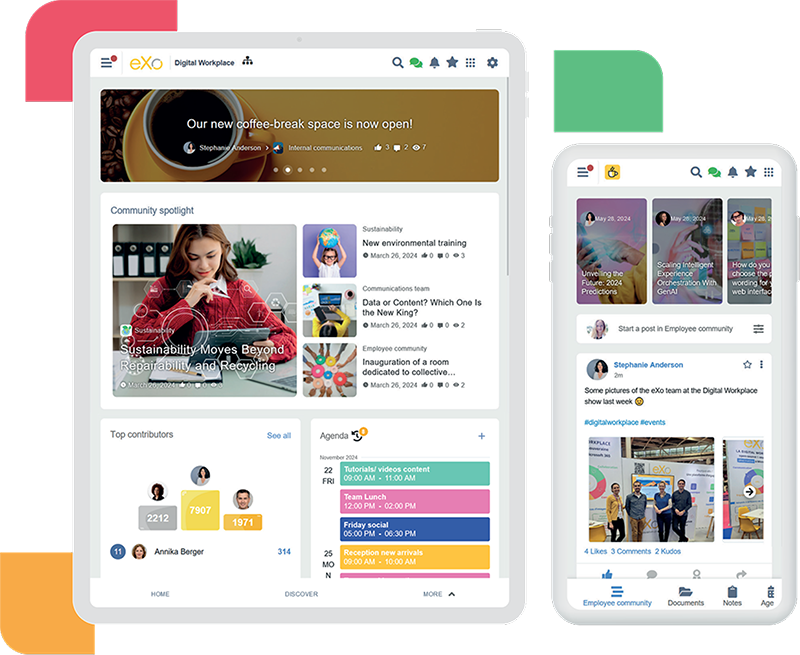
For organizations looking to create a seamless, engaging, and productive onboarding experience, eXo Platform stands out as one of the most complete employee onboarding solutions available in 2026.
Unlike traditional onboarding software that focuses primarily on administrative tasks, eXo Platform approaches onboarding as part of a broader digital workplace experience.
Rather than introducing employees to a temporary onboarding portal that they stop using after a few weeks, eXo provides the same environment employees will use every day for communication, collaboration, knowledge sharing, and community engagement.
This unique approach eliminates the fragmentation that often characterizes employee onboarding. Instead of switching between multiple applications to find documents, communicate with colleagues, access training resources, or complete tasks, employees can perform all these activities within a single integrated platform.
As a result, onboarding becomes a natural extension of the employee experience rather than an isolated HR process.
Organizations can create dedicated onboarding environments tailored to specific departments, teams, locations, or employee groups.
These spaces can include:
This structured approach ensures employees receive relevant information based on their role and responsibilities.
One of eXo Platform’s greatest strengths is its ability to foster meaningful workplace connections.
New hires can immediately join:
These communities help employees build relationships, learn organizational norms, and develop a sense of belonging from day one.
Access to information is essential for successful onboarding.
eXo Platform includes a robust knowledge management system featuring:
Instead of searching through emails or multiple systems, employees can quickly find the information they need through a unified knowledge hub.
Unlike many onboarding platforms that depend on external communication tools, eXo Platform includes native collaboration capabilities.
Features include:
This allows new hires to become active contributors immediately rather than passive recipients of onboarding information.
Employee engagement plays a critical role in onboarding success.
To encourage participation and motivation, eXo Platform offers:
These features transform onboarding into a more interactive and rewarding experience.
Administrative efficiency remains an important component of onboarding.
Organizations can automate:
Automation reduces manual work while ensuring consistency across onboarding programs.
Recent enhancements have introduced advanced AI capabilities that further improve onboarding and employee productivity.
AI-powered features include:
These capabilities help new hires find answers faster and reduce dependency on HR teams and managers.
✘ More comprehensive than organizations seeking only basic onboarding may require
✘ Initial configuration may take longer than lightweight HR-only solutions
✘ Advanced features may require planning and governance for optimal adoption
eXo Platform offers flexible pricing models designed to accommodate organizations of different sizes and deployment requirements.
Pricing typically varies depending on:
Unlike many onboarding tools that charge separately for communication, collaboration, knowledge management, and employee engagement capabilities, eXo Platform consolidates these functions within a single platform, often resulting in a lower total cost of ownership for organizations seeking a complete digital workplace solution.
For custom enterprise pricing and deployment options, organizations generally need to request a tailored quote based on their specific requirements.
eXo Platform is particularly well suited for:
eXo Platform earns its position as the best employee onboarding software in 2026 because it goes beyond onboarding itself. Rather than simply helping organizations complete onboarding tasks, it provides the digital environment where employees work, collaborate, communicate, learn, and engage every day.
By combining onboarding, employee communities, collaboration tools, knowledge management, workflow automation, engagement features, and AI-powered experiences into a single platform, eXo Platform delivers a holistic approach that helps organizations accelerate productivity, strengthen company culture, and improve employee retention from day one.
The Modern Intranet: From
corporate website to digital hub
Employee engagement has become a central concern for organizations of all sizes. It is widely recognized as a key driver of performance, retention, and alignment — especially in increasingly distributed and fast-moving work environments.
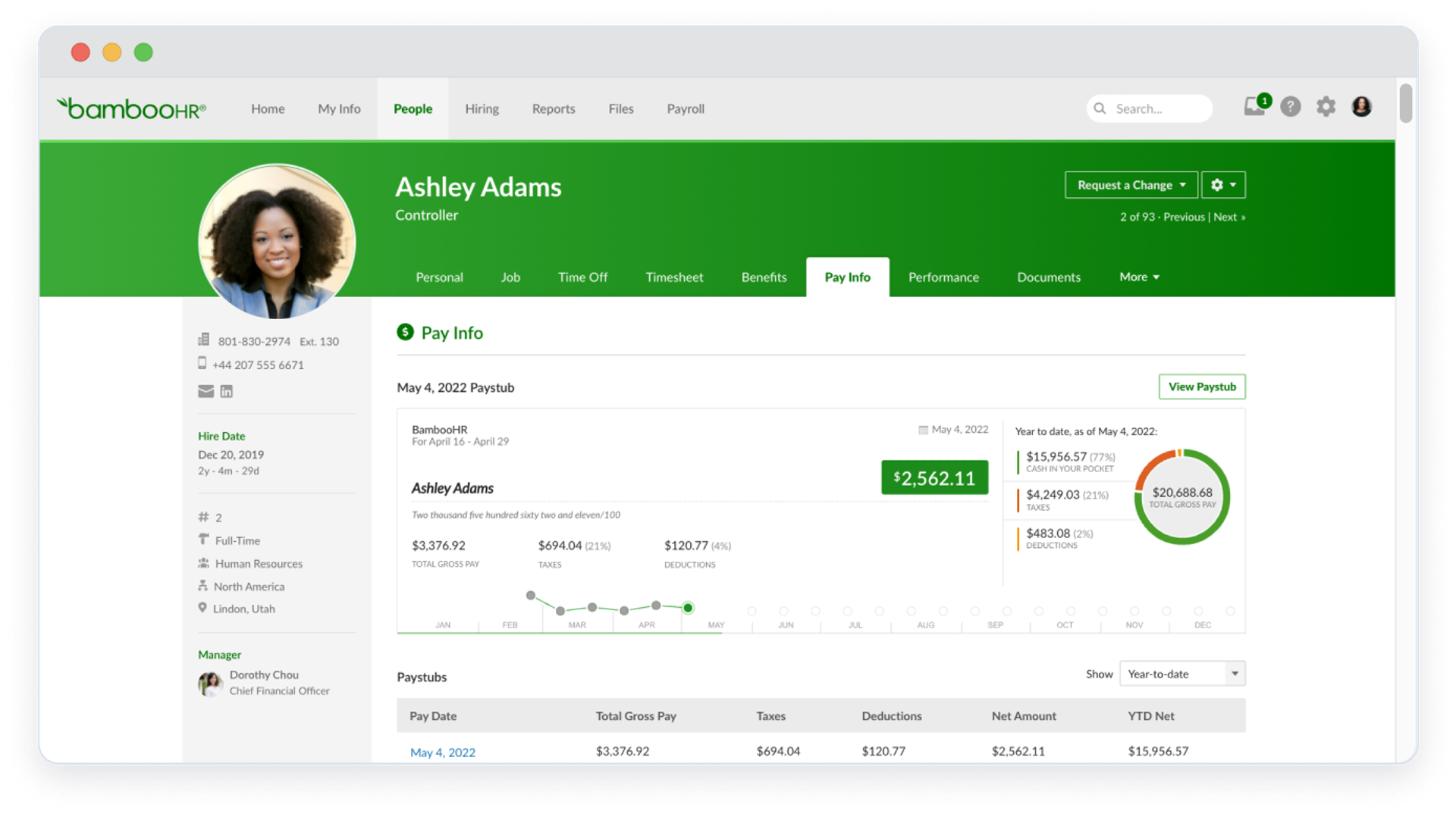
BambooHR is a popular HR software solution designed for small and medium-sized businesses (SMBs) to simplify employee onboarding and HR management. It helps organizations replace manual paperwork with digital workflows, making it easier to manage employee records, onboarding documents, and HR processes.
The platform focuses on improving administrative efficiency by helping HR teams collect employee information, manage documents, and organize onboarding tasks. Its simple interface makes it easy for growing companies to adopt and use.
BambooHR uses custom pricing based on company size, features selected, and business needs. Organizations need to request a quote to get specific pricing details.
BambooHR is best suited for:
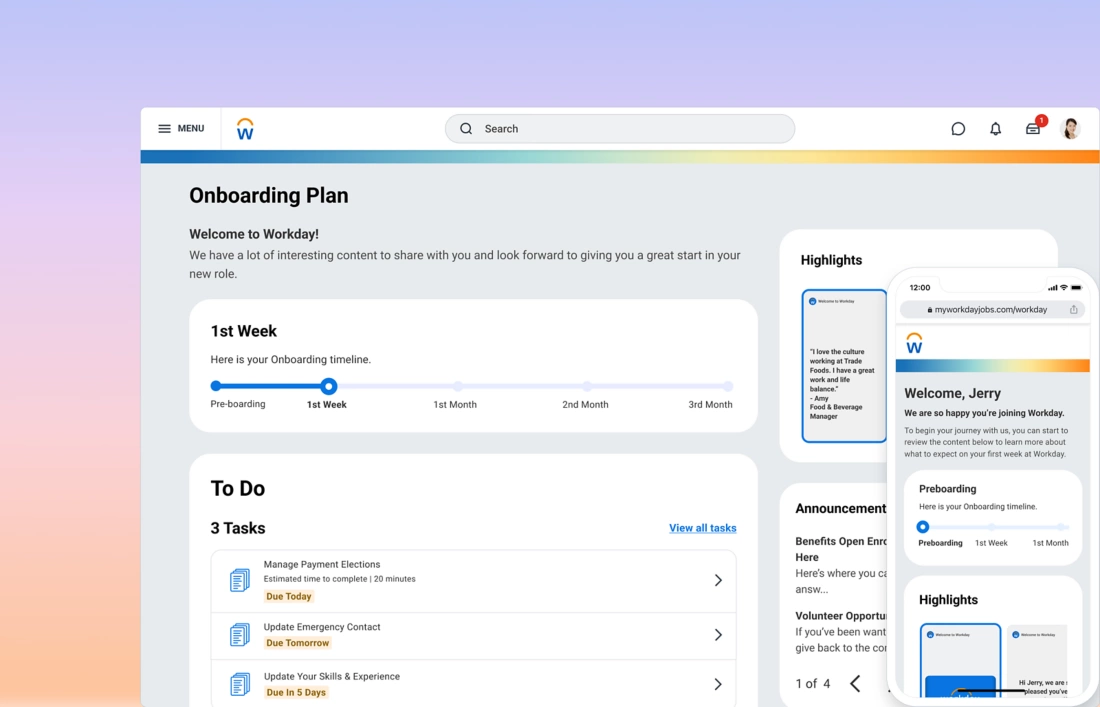
Workday is an enterprise-grade HR platform designed for large organizations that need to manage human resources, workforce planning, finance, and analytics in one system.
Its onboarding capabilities help global companies standardize hiring processes, manage compliance requirements, and connect employee information across complex organizational structures. Workday is built for scale and is best suited for organizations with large, distributed, and international workforces.
Workday uses custom pricing based on organization size, selected modules, and business requirements. Companies need to contact Workday for a tailored quote.
Workday is best suited for:
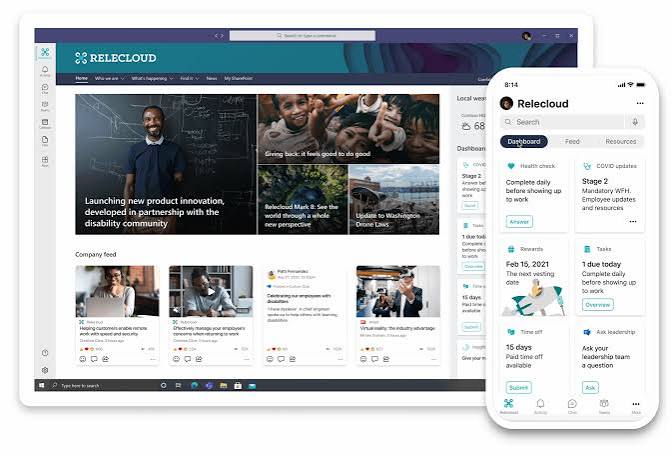
Microsoft Viva is an employee experience platform designed for organizations using the Microsoft 365 ecosystem. It helps improve communication, learning, knowledge sharing, and employee engagement by connecting these experiences with tools such as Microsoft Teams, Outlook, and SharePoint.
Rather than being a dedicated onboarding platform, Microsoft Viva enhances onboarding by integrating employee resources and activities into the existing Microsoft workplace environment.
Microsoft Viva is offered as an add-on to Microsoft 365 subscriptions. Pricing depends on the selected Viva modules and licensing requirements.
Microsoft Viva is best suited for:
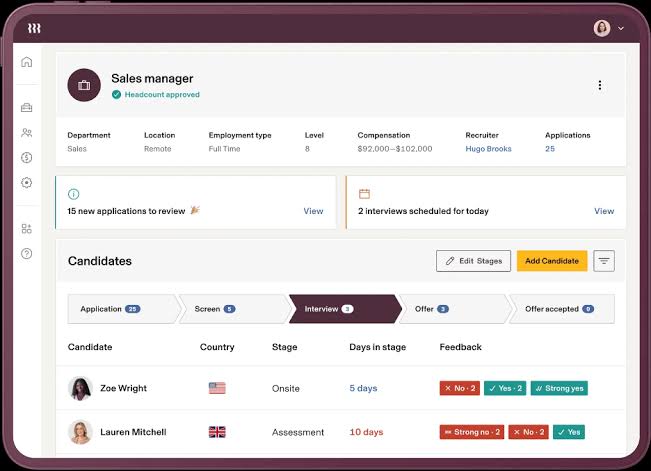
Rippling is an employee management platform focused on simplifying the operational side of onboarding. It helps organizations automate tasks related to employee setup, including IT access, devices, payroll, and system permissions.
Rather than focusing primarily on engagement or learning, Rippling helps companies ensure employees have the tools and resources they need to start working quickly.
Rippling uses a modular pricing model based on the features and services selected. Pricing varies depending on the number of employees and required HR, IT, and finance modules.
Rippling is best suited for:
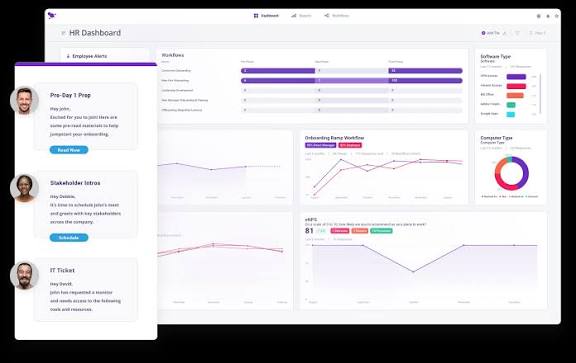
Enboarder is an employee onboarding platform focused on creating engaging and personalized onboarding experiences. Instead of concentrating mainly on administrative tasks, it helps organizations build meaningful employee journeys through communication, manager involvement, and structured onboarding activities.
The platform is designed for companies that want new hires to feel connected, supported, and engaged throughout the onboarding process.
Enboarder uses custom pricing based on company size, onboarding requirements, and subscription needs.
Enboarder is best suited for:
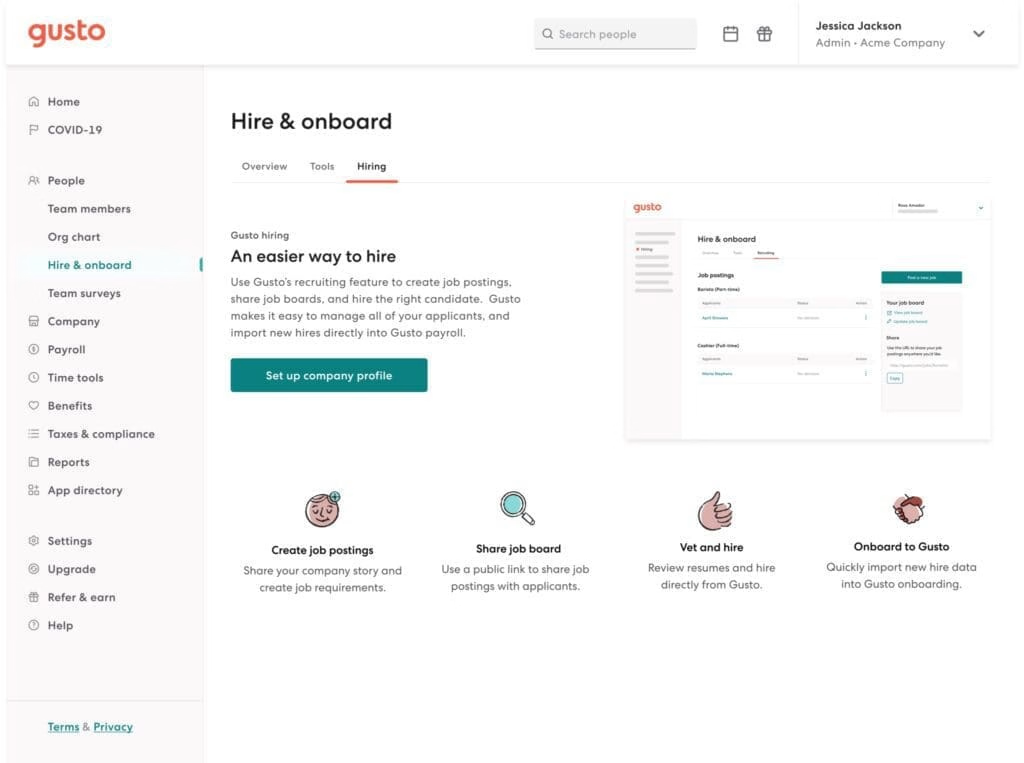
Gusto is an HR and payroll platform designed primarily for small businesses that want to simplify employee onboarding, payroll, benefits, and basic HR administration.
Its onboarding capabilities focus on making the hiring process easier by helping businesses collect employee information, complete required paperwork, and connect new hires with payroll and benefits systems. Gusto is best known for its simplicity and ease of use rather than advanced enterprise onboarding experiences.
Gusto offers subscription-based pricing with different plans based on business needs and selected features. Costs vary depending on the number of employees and included HR, payroll, and benefits services.
Gusto is best suited for:
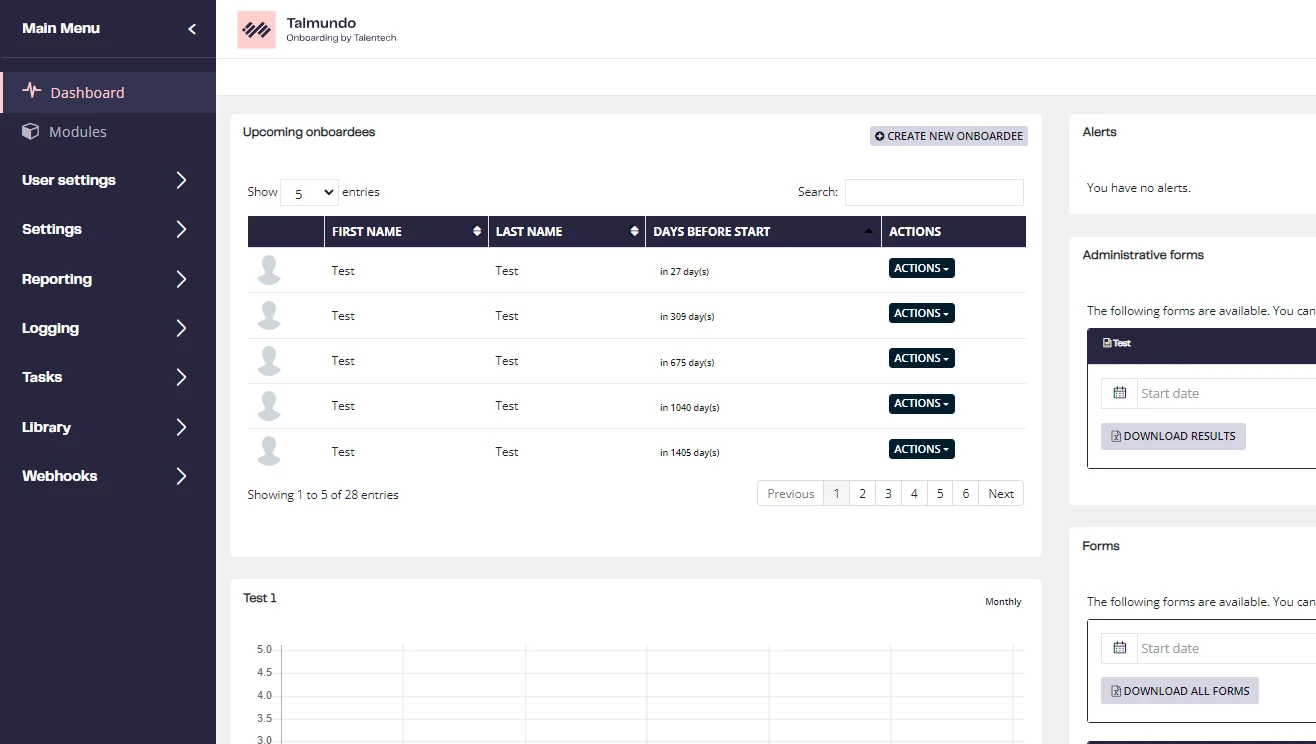
Talmundo is an employee onboarding platform designed to help organizations create structured, consistent, and engaging onboarding experiences. It guides new hires through organized workflows, communication activities, and onboarding tasks to improve the overall employee experience.
The platform focuses on simplifying onboarding processes and helping companies create a smoother transition for new employees.
Talmundo uses subscription-based pricing based on company size, onboarding requirements, and selected features.
Talmundo is best suited for:
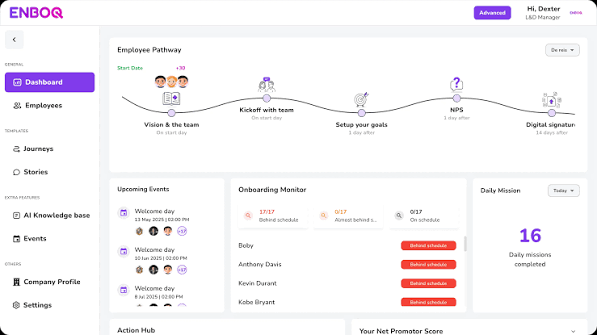
ENBOQ is an employee onboarding solution designed to simplify onboarding workflows while helping organizations improve consistency, compliance, and employee readiness.
The platform helps HR teams automate onboarding tasks, manage documents, and track completion progress with less manual effort.
ENBOQ uses customized pricing based on company size, onboarding requirements, and usage needs.
ENBOQ is best suited for:
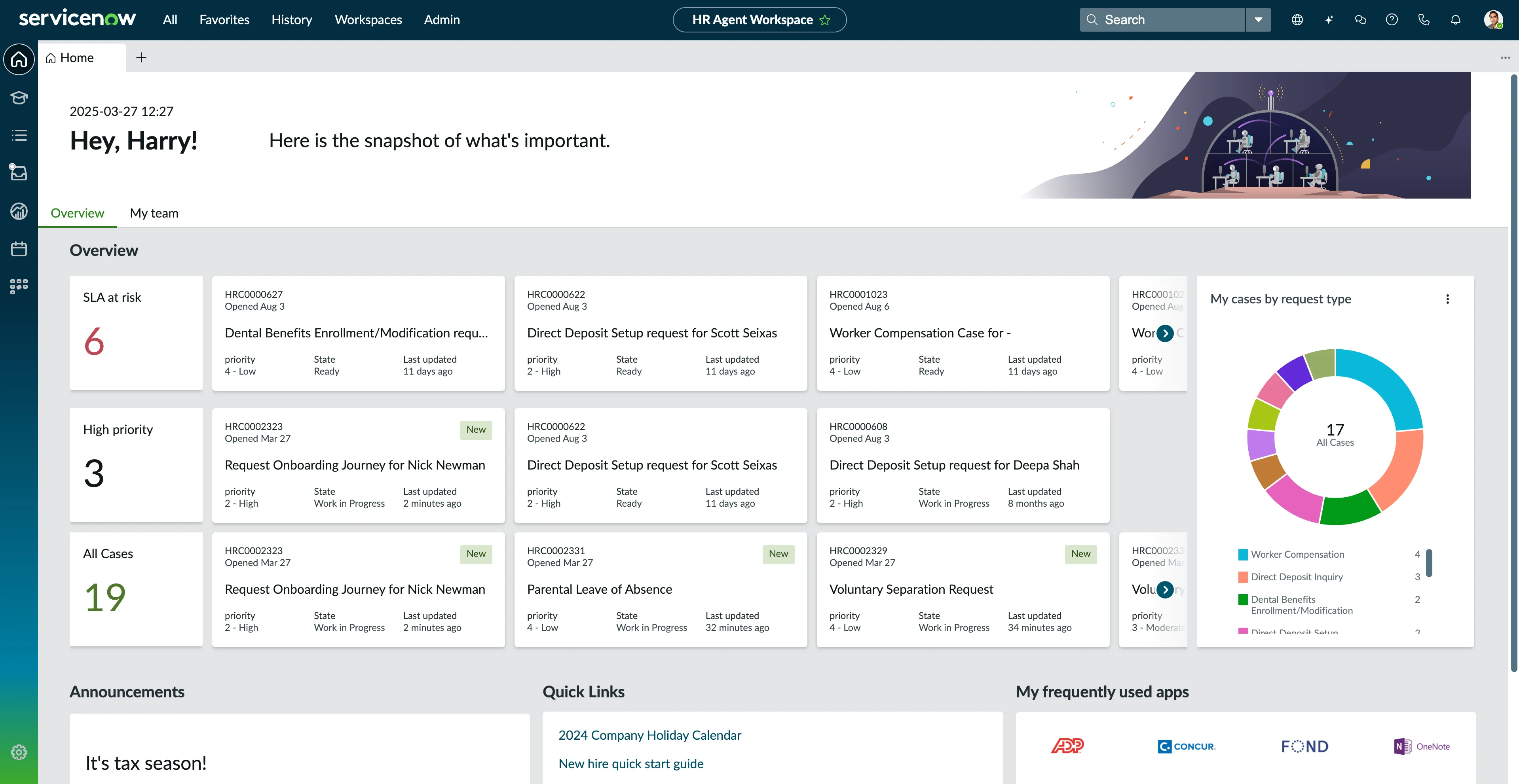
ServiceNow HR Service Delivery (HRSD) is an enterprise workflow automation platform designed to streamline HR operations, including employee onboarding. It helps large organizations standardize HR processes, manage requests, and automate workflows across departments.
The platform focuses primarily on operational efficiency, governance, and process management rather than employee engagement and experience.
ServiceNow HR Service Delivery uses enterprise pricing based on selected modules, organization size, and implementation requirements.
ServiceNow HR Service Delivery is best suited for:
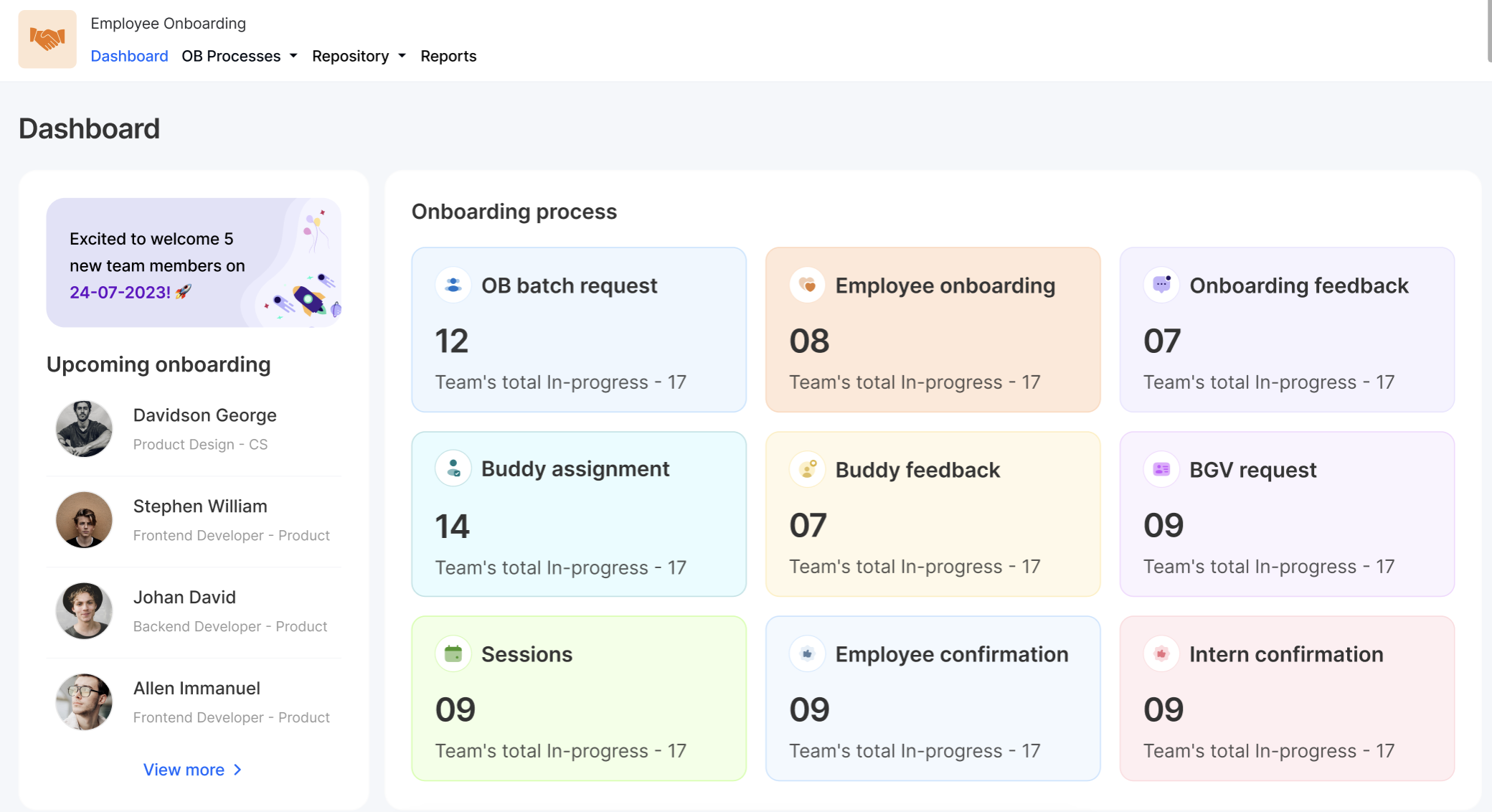
Kissflow is a workflow automation platform that helps organizations create customized HR onboarding processes using no-code tools. It allows teams to design, automate, and manage workflows without requiring advanced technical skills.
The platform is useful for organizations that need flexible onboarding processes tailored to their specific business requirements.
Kissflow offers subscription-based pricing with different plans based on features, workflow requirements, and usage levels.
Kissflow is best suited for:
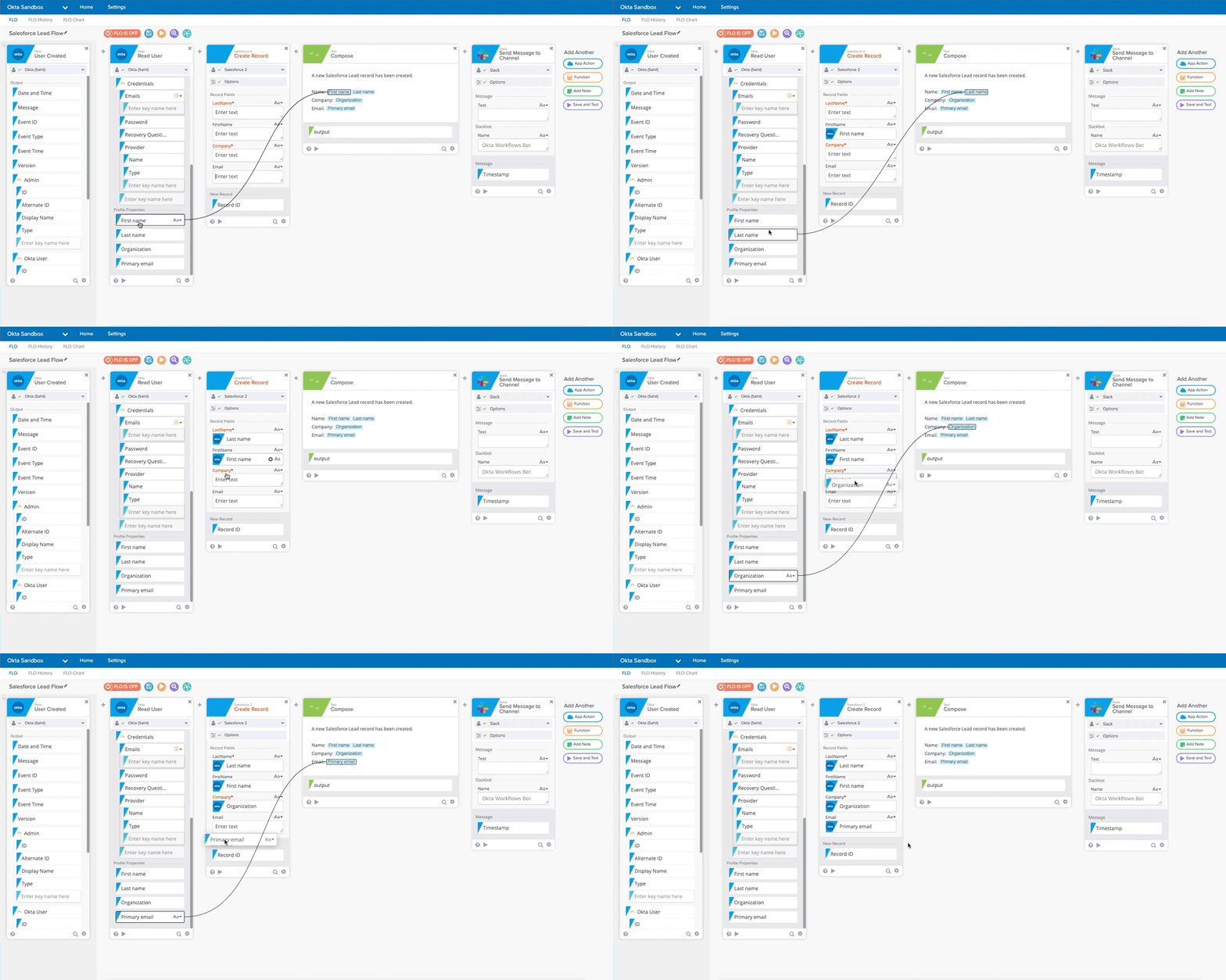
Okta Lifecycle Management is an identity and access management solution focused on automating employee access throughout the workforce lifecycle. During onboarding, it helps ensure new employees receive the right applications, permissions, and resources securely and efficiently.
The platform primarily supports IT and security operations rather than employee engagement or onboarding experiences.
Okta Lifecycle Management uses an enterprise licensing model based on factors such as number of users, integrations, and organizational requirements.
Okta Lifecycle Management is best suited for:
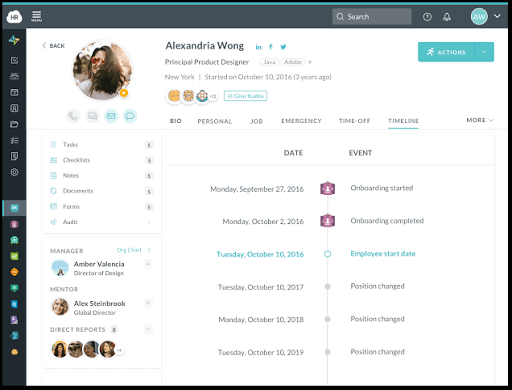
HR Cloud is an employee onboarding and HR management platform designed to help organizations automate onboarding processes, improve employee engagement, and simplify HR administration.
The platform focuses on creating smoother onboarding experiences by combining digital workflows, employee communication, document management, and HR process automation.
HR Cloud uses customized pricing based on company size, selected features, and onboarding requirements.
HR Cloud is best suited for:
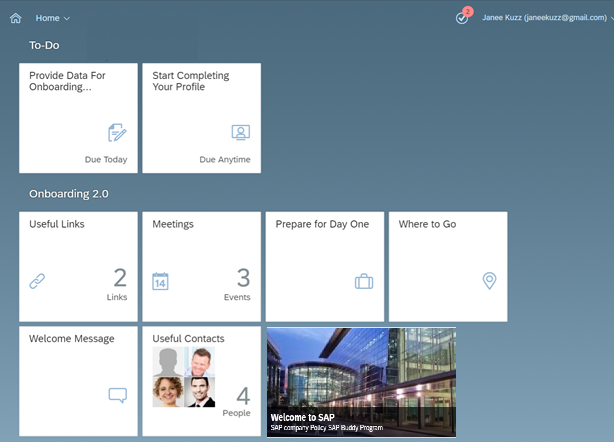
SAP SuccessFactors is an enterprise Human Capital Management (HCM) platform designed to support large organizations with employee management, talent development, workforce planning, and HR operations.
Its onboarding capabilities help organizations create structured onboarding processes, manage employee data, support compliance requirements, and connect new hires with broader HR systems. It is particularly suited for global enterprises with complex workforce needs.
SAP SuccessFactors uses customized enterprise pricing based on selected modules, number of employees, deployment requirements, and organizational needs.
SAP SuccessFactors is best suited for:
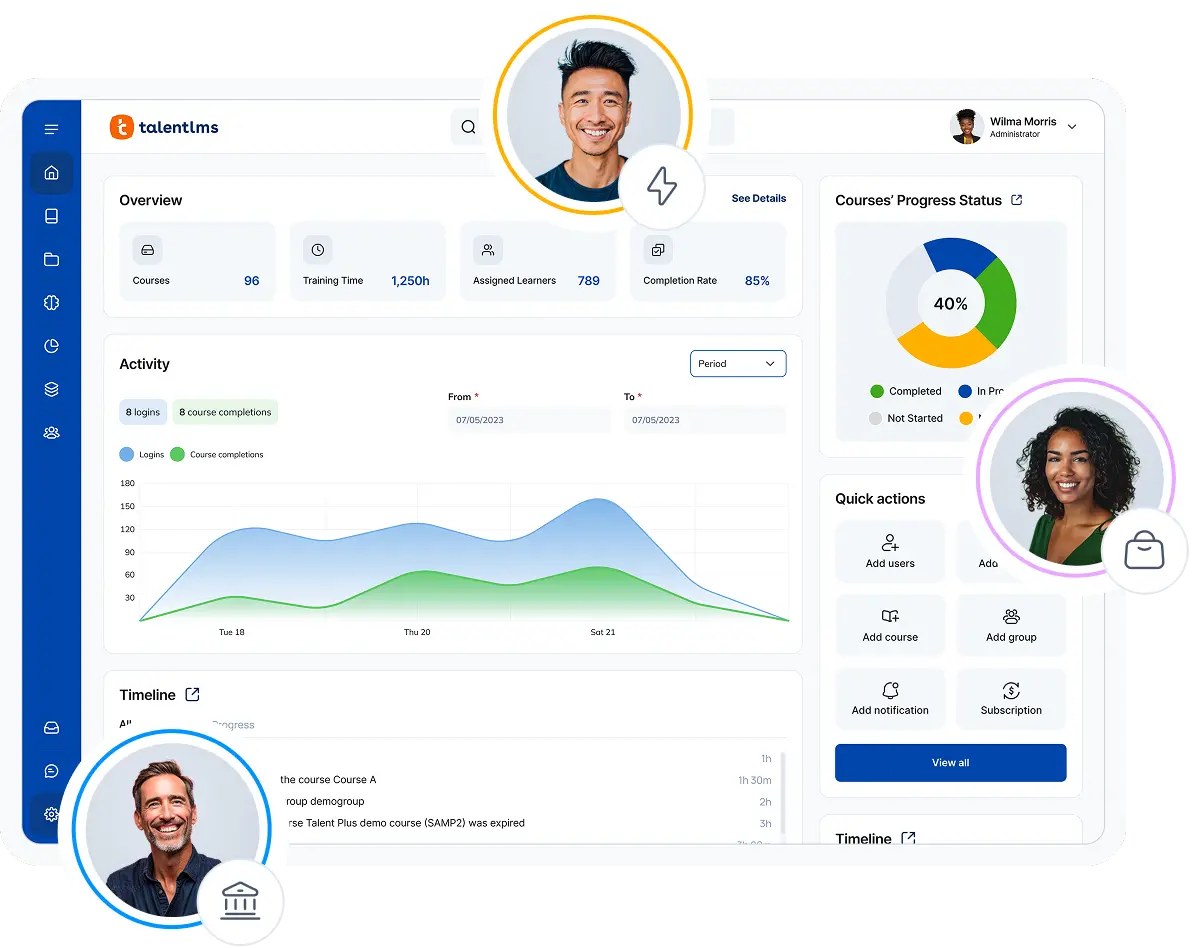
Learning Management Systems (LMS) such as TalentLMS, Docebo, Moodle, and Cornerstone Learning focus on employee training and skill development during onboarding.
These platforms help organizations deliver structured learning programs, compliance training, certifications, and role-based education to help employees build the skills they need.
LMS platforms typically use subscription-based pricing based on the number of users, selected features, and organizational requirements.
Learning platforms are best suited for:
Across the onboarding landscape, from employee experience platforms like Enboarder and Talmundo to workflow, identity, HR, and learning solutions such as ServiceNow, Kissflow, Okta, and LMS platforms, one key pattern emerges: most tools address only specific parts of the onboarding journey.
Some platforms focus on engagement and communication, others on workflow automation, IT access management, HR administration, or employee training. Each solution provides value within its area, but organizations often need to combine multiple systems to create a complete onboarding experience.
Modern workplaces increasingly require a more connected approach, one that brings together communication, collaboration, knowledge sharing, learning, and employee engagement in a single environment. Digital workplace platforms such as eXo Platform help organizations move beyond fragmented onboarding processes by creating a unified employee experience that supports new hires from their first day and throughout their journey within the organization.
Choosing the right employee onboarding software in 2026 depends largely on what an organization wants to achieve. While all the platforms reviewed can improve parts of the onboarding process, they are built around different priorities.
Some solutions focus mainly on HR administration, helping companies automate forms, employee records, compliance documents, and workflows. Others specialize in employee engagement, creating personalized journeys and helping new hires build relationships. Enterprise platforms concentrate on global workforce management, governance, and complex processes, while IT-focused solutions automate access, devices, and security.
However, the biggest challenge for modern organizations is that onboarding is no longer just an administrative event that ends after paperwork is completed. Employees need continuous access to communication channels, company knowledge, collaboration tools, learning resources, and communities long after their first weeks.
This is where digital workplace platforms create a different approach. Instead of treating onboarding as a temporary process, they transform it into the beginning of a complete employee experience.
| Software | Main Focus | Best For | Key Strengths | Main Limitations | Overall Position |
| eXo Platform | Digital workplace, employee experience, collaboration, knowledge sharing | Mid-sized companies, enterprises, hybrid and remote organizations | Combines onboarding, communication, communities, collaboration, knowledge management, workflows, engagement, and AI-powered experiences in one platform | Requires thoughtful configuration due to its broad capabilities | ⭐ Best overall choice for organizations seeking a complete employee experience platform |
| BambooHR | HR administration and employee records | Small and medium-sized businesses | Simple onboarding workflows, document management, employee self-service, HR automation | Limited collaboration, engagement, and knowledge-sharing capabilities | Excellent HR onboarding solution for SMBs |
| Workday | Enterprise HCM and workforce management | Large enterprises and multinational organizations | Global HR management, compliance, analytics, workforce planning | Complex implementation and higher cost | Strong enterprise HR platform |
| Microsoft Viva | Employee experience inside Microsoft 365 | Organizations already using Microsoft tools | Strong integration with Teams, Outlook, SharePoint, learning, and communication | Depends heavily on Microsoft ecosystem and is not a dedicated onboarding platform | Best for Microsoft-based organizations |
| Rippling | HR, IT, and employee operations automation | Fast-growing companies and technology businesses | Automated account setup, device management, software provisioning | Limited employee engagement and knowledge-sharing features | Best for operational onboarding automation |
| Enboarder | Employee experience and engagement journeys | Companies prioritizing connection and culture | Personalized onboarding journeys, manager involvement, employee engagement | Requires additional HR and workplace tools | Strong engagement-focused onboarding solution |
| Gusto | Payroll and basic HR onboarding | Small businesses and startups | Easy employee setup, payroll integration, compliance support | Limited customization and employee experience features | Best for simple HR onboarding needs |
| Talmundo | Structured onboarding journeys | Mid-sized organizations | Organized onboarding workflows, communication, and employee milestones | Limited advanced HR and workplace capabilities | Good dedicated onboarding tool |
| ENBOQ | Workflow automation and compliance onboarding | HR teams needing structured processes | Checklists, document management, progress tracking | Limited collaboration and engagement features | Suitable for process-focused onboarding |
| ServiceNow HR Service Delivery | Enterprise workflow automation | Large enterprises with complex processes | HR workflows, automation, service management, integrations | Requires technical expertise and implementation resources | Best for enterprise process automation |
| Kissflow | No-code workflow automation | Organizations with customized processes | Flexible workflow creation and automation | Limited employee experience capabilities | Good for custom onboarding workflows |
| Okta Lifecycle Management | Identity and access management | Security-focused enterprises | Automated access provisioning and security controls | Not designed for employee engagement or onboarding experience | Best IT onboarding complement |
| HR Cloud | HR onboarding and employee management | Small and medium businesses | Digital onboarding, compliance, employee workflows | Limited enterprise scalability | Good dedicated onboarding platform |
| SAP SuccessFactors | Enterprise HCM ecosystem | Global enterprises using SAP | Global HR management, analytics, talent management, compliance | Complex deployment and administration | Strong enterprise HR foundation |
| TalentLMS / Docebo / Moodle / Cornerstone Learning | Learning and employee training | Organizations focused on training and compliance | Learning paths, certifications, skill development | Does not cover the full onboarding journey | Best as a learning component of onboarding |
Solutions such as BambooHR, Gusto, HR Cloud, SAP SuccessFactors, and Workday are designed primarily to simplify HR operations.
They are particularly effective for:
These tools are valuable for organizations that want to reduce manual HR work. However, they often provide limited support for employee connection, collaboration, and long-term engagement.
Platforms such as eXo Platform and Enboarder focus on the human side of onboarding.
They help organizations create:
This approach reflects the reality of modern workplaces where successful onboarding depends not only on completing tasks but also on helping employees understand the company culture and become productive faster.
Solutions like ServiceNow HR Service Delivery and Kissflow focus on process automation.
They are ideal for organizations that need:
Their limitation is that automation alone does not always create an engaging employee experience.
Tools such as Rippling and Okta Lifecycle Management solve a critical onboarding challenge: ensuring employees receive the correct systems, applications, and permissions.
They help organizations:
However, they mainly support operational readiness rather than employee integration.
LMS solutions including TalentLMS, Docebo, Moodle, and Cornerstone Learning are excellent for delivering onboarding training.
They support:
However, training represents only one part of onboarding. Employees also need communication, collaboration, and access to organizational knowledge.
The comparison between employee onboarding platforms reveals an important shift in how organizations think about welcoming and integrating new employees.
For many years, onboarding software was primarily designed to solve administrative challenges: collecting documents, managing tasks, completing compliance steps, and ensuring that new hires had the necessary accounts and equipment before starting their role.
These capabilities remain essential. HR teams need efficient workflows, managers need visibility into onboarding progress, and IT teams need reliable processes for providing access to systems and resources.
However, the modern workplace has introduced a new challenge.
Successful onboarding is no longer only about completing tasks. It is about helping employees quickly understand their role, connect with colleagues, discover company knowledge, adopt workplace tools, and become productive within a supportive environment.
This evolution is changing the role of employee onboarding software. Organizations are increasingly moving beyond isolated onboarding solutions toward connected digital workplace environments where onboarding becomes the first stage of a complete employee journey.
Instead of treating onboarding as a temporary process that ends after the first weeks, modern organizations are creating experiences that continue throughout the employee lifecycle.
Platforms that combine onboarding workflows with collaboration, knowledge sharing, communication, and engagement capabilities reflect this new approach. Solutions such as eXo Platform demonstrate how onboarding can become part of a broader digital workplace experience rather than a separate HR process.
One of the biggest challenges with traditional onboarding ecosystems is fragmentation.
In many organizations, the employee experience is spread across multiple disconnected systems:
Although each tool may perform its specific function effectively, the overall onboarding journey can become confusing for new employees.
A new hire may receive instructions through one platform, search for company information in another, communicate with teammates through a third tool, and complete training somewhere else entirely.
This creates unnecessary complexity at the exact moment when employees need clarity and guidance.
A unified digital workplace approach changes this experience by bringing essential resources together in one connected environment.
From their first day, employees can access:
Rather than simply completing onboarding steps, employees immediately become part of the organization’s digital ecosystem.
This approach helps transform onboarding from a checklist-based process into an interactive experience where employees can learn, collaborate, and build relationships naturally.
Artificial intelligence is becoming an important element of modern employee experiences.
However, the value of AI does not come from adding another standalone chatbot or separate assistant. The greatest impact comes when intelligence is integrated directly into the employee workflow.
An AI-enabled workplace can help new employees by reducing the time spent searching for information and helping them understand how the organization operates.
Examples of AI-supported onboarding experiences include:
The advantage of integrated AI is that employees receive support where they already work.
Instead of leaving the platform to search for answers or contact multiple departments, new hires can access relevant guidance directly within their workplace environment.
This creates a smoother learning experience and accelerates the transition from new employee to productive team member.
Onboarding is not only about providing information. It is about helping employees understand how an organization works.
New hires need to discover company values, meet colleagues, understand team structures, and build connections. These elements are difficult to achieve through documents and automated workflows alone.
A modern digital workplace supports this human side of onboarding by connecting people, information, and collaboration.
Employees can:
This creates a more natural onboarding experience where employees actively participate in company life instead of simply receiving information.
A platform approach such as eXo Platform reflects this evolution by combining collaboration, knowledge management, communication, and employee engagement within the same environment where daily work happens.
The result is an onboarding experience that does not feel separate from the workplace itself. Employees begin using the same environment for onboarding, collaboration, and long-term productivity.
One of the most underestimated challenges in onboarding is digital adoption.
Organizations often provide employees with many workplace applications, but employees still need to understand where information is located, how tools connect together, and how to use them effectively.
A successful onboarding experience should therefore help employees learn through interaction rather than relying only on manuals, documentation, or training sessions.
A modern digital workplace supports adoption through:
The workplace itself becomes a guide.
Instead of asking employees to memorize different systems and processes, the platform helps them discover the right information and features at the right moment.
This reduces frustration, shortens the learning curve, and allows employees to focus faster on meaningful work.
Employee experience must also be balanced with security, governance, and operational requirements.
For enterprises, public organizations, and regulated industries, choosing an onboarding and digital workplace solution requires more than usability. Organizations need control over their data, deployment options, customization, and governance.
Modern platforms should support requirements such as:
This flexibility allows organizations to create digital environments that match their operational needs instead of adapting their processes to rigid software limitations.
Solutions such as eXo Platform follow this approach by providing organizations with deployment flexibility and customization options while maintaining a consistent employee experience.
Implementing employee onboarding software successfully is not only a technology decision. It is an organizational transformation.
The objective is not simply to replace manual tasks with automation. The real goal is to create a smoother employee journey where HR, IT, managers, and employees work together through a connected experience.
A structured implementation approach helps organizations maximize the value of their investment.
Before introducing automation, organizations should understand their existing onboarding process.
This means mapping the complete employee journey:
The purpose is to identify:
Automation works best when it improves a clearly understood process rather than simply digitizing inefficient workflows.
Every organization has different onboarding priorities.
Some companies focus on reducing administrative workload, while others prioritize employee engagement, faster productivity, or stronger cultural integration.
Common objectives include:
Clear objectives help organizations select the right platform and measure the impact of their onboarding strategy.
Selecting onboarding software requires looking beyond basic automation features.
Organizations should evaluate:
Some platforms specialize in HR administration. Others focus on IT automation or training.
However, organizations increasingly need solutions that connect these experiences instead of creating additional disconnected systems.
A digital workplace platform provides a stronger foundation because onboarding becomes naturally connected to everyday employee activities.
Automation should focus first on activities that consume time without creating significant employee value.
Examples include:
By automating repetitive processes, HR and IT teams can spend more time supporting employee engagement and relationship building.
The employee experience begins before the official start date.
A strong preboarding process creates a positive first impression and helps new employees arrive prepared.
Organizations can automate:
This ensures that employees feel connected before they officially join.
The strongest onboarding programs do not stop after orientation.
Successful organizations continue supporting employees through their first months with:
This long-term approach improves engagement and helps employees build stronger connections with the organization.
Onboarding should be treated as an evolving experience.
Organizations should monitor indicators such as:
These insights allow organizations to improve workflows and create better employee experiences over time.
Employee onboarding software has entered a new phase.
The future is no longer defined only by automated forms, task lists, and compliance workflows. The most successful onboarding experiences combine automation with connection, knowledge, collaboration, and culture.
Traditional HR systems, IT automation tools, and learning platforms continue to provide valuable capabilities. However, when these solutions operate independently, employees often experience unnecessary complexity during one of the most important moments of their relationship with the organization.
The next generation of onboarding is moving toward unified digital workplace environments where employees can discover information, communicate with colleagues, collaborate on projects, and engage with company culture from their first day.
This approach transforms onboarding from a short administrative process into the foundation of the entire employee journey.
Platforms such as eXo Platform illustrate this evolution by bringing together collaboration, knowledge sharing, employee communities, and workplace engagement within one connected environment.
Ultimately, successful onboarding is not measured only by how quickly paperwork is completed or accounts are created.
It is measured by how quickly employees feel welcomed, confident, connected, and ready to contribute.
The organizations that succeed in 2026 and beyond will be those that stop viewing onboarding as a simple operational task and start treating it as the first chapter of a complete employee experience.

Download the eXo Platform Datasheet and discover all the features and benefits

Download the eXo Platform Datasheet and discover all the features and benefits
This FAQ section summarizes the most common questions about employee onboarding software, combining practical clarity with modern HR best practices. It is designed to help HR teams, managers, and digital workplace leaders quickly understand the essentials of building an effective onboarding experience.
At its core, employee onboarding is the structured process of integrating a new hire into an organization, but in practice, it is far more than a simple administrative step or a first-day orientation.
Employee onboarding software is a digital solution that centralizes and automates the process of integrating new hires into an organization. It helps HR teams, managers, IT departments, and employees manage tasks such as document collection, payroll information, equipment setup, training, team introductions, and preboarding in one structured environment.
Employee onboarding is one of the most decisive stages of the entire employee lifecycle. It is the point where expectations become reality, where motivation is either strengthened or weakened, and where long-term engagement is often quietly shaped. While it may look like an operational HR step on the surface, employee onboarding has a direct and measurable impact on business performance, retention, productivity, and employer reputation.
Employee onboarding software matters because it transforms onboarding from a fragmented administrative process into a structured, engaging, and consistent employee experience. By bringing communication, training, collaboration, compliance, knowledge access, and onboarding tasks into one platform, it helps organizations accelerate productivity, strengthen engagement, reduce administrative workload, and improve long-term employee retention.
Orientation and onboarding are often used interchangeably, but they are not the same.
Orientation is a short-term introduction, usually lasting a few hours or a couple of days. It focuses on immediate administrative essentials such as completing paperwork, reviewing company policies, and explaining basic tools. In simple terms, orientation answers: “What do I need to know to get started?”
Onboarding, on the other hand, is a long-term integration process that can last several weeks or even months. It goes far beyond paperwork and system access. It includes cultural integration, role clarity, relationship building, training, and continuous feedback.
If orientation is the welcome session, onboarding is the full journey that helps a new employee become confident, productive, and fully integrated into the organization.
There is no universal timeline, but modern best practices clearly show that onboarding should not end after the first week or even the first month.
Most effective onboarding programs follow a structured 30-60-90 day model, with clear milestones for learning, contribution, and autonomy. However, research and real-world practice show that full productivity in many roles can take 6 to 12 months.
Despite this, many organizations still end onboarding too early, sometimes within just a few weeks. This creates a gap where employees are expected to perform without sufficient support.
A strong onboarding strategy extends beyond initial training and includes ongoing check-ins, development conversations, and cultural reinforcement throughout the first year.
An effective onboarding process is not defined by the number of documents or training sessions, it is defined by clarity, structure, and human experience.
The most successful onboarding programs combine four essential elements:
A clear structure with defined milestones, so employees always know what comes next
Efficient administrative processes that remove friction and reduce manual work
Strong human connection through managers, mentors, and team interactions
Accessible self-service resources that allow employees to learn independently at their own pace
When these elements work together, onboarding becomes a seamless experience rather than a fragmented set of tasks.
Organizations that achieve this balance often see significantly higher retention and faster productivity among new hires, because employees feel both supported and empowered from day one.
Yes, onboarding can be fully digital, and in many modern organizations, it already is.
Digital onboarding leverages integrated systems such as HR platforms, learning tools, collaboration environments, and automated workflows to manage everything from documentation to training delivery.
Administrative tasks like contracts, payroll setup, and equipment provisioning are often fully automated using HR automation tools, while training and communication are delivered through structured digital environments.
However, while the operational side can be fully digitized, the most effective onboarding strategies still include a human layer. Cultural integration, mentorship, and relationship building remain critical and are often supported through internal communication platforms such as chat systems, virtual meetings, and social collaboration spaces.
The most successful organizations combine both: digital efficiency with human connection.
Measuring onboarding success requires tracking both operational performance and employee experience. A strong onboarding strategy uses multiple KPIs to understand what is working and what needs improvement. On the performance side, key indicators include time-to-productivity, training completion rates, and early retention. These metrics show how quickly employees are becoming effective contributors. On the experience side, organizations track engagement levels, feedback scores, and new hire satisfaction. Metrics such as onboarding eNPS help capture how employees feel
More advanced organizations also analyze behavioral data from Employee Experience Platforms (EXP), including how often employees use onboarding tools, search knowledge bases, or engage with learning content. Finally, feedback loops play a critical role. Regular check-ins at 30, 60, and 90 days help identify friction points early and ensure continuous improvement of the onboarding process.
A weak onboarding process often reveals itself quickly through employee behavior and performance indicators.
Common warning signs include:
When these issues appear consistently, they usually point to deeper structural problems such as fragmented systems, lack of clear onboarding pathways, or insufficient cultural integration.
Poor onboarding is rarely a single failure, it is usually the result of missing structure and disconnected experiences.
( Your e-mail address will not be published)

I am a Digital Marketing specialist specialized in SEO at eXo Platform. Passionate about new technologies and Digital Marketing. With 10 years' experience, I support companies in their digital communication strategies and implement the tools necessary for their success. My approach combines the use of different traffic acquisition levers and an optimization of the user experience to convert visitors into customers. After various digital experiences in communication agencies as well as in B2B company, I have a wide range of skills and I am able to manage the digital marketing strategy of small and medium-sized companies.