


FREE WHITE PAPER
Discover our in-depth analysis of the concept of employee engagement, its roots, and ways to improve it significantly
First impressions matter. That is true in life, and it is especially true in the workplace. The moment a new hire joins an organization, whether in person or remotely, a silent but critical process begins. This process determines how quickly they become productive, how deeply they connect with the company culture, and whether they will still be there a year later.
Employee onboarding is no longer just an administrative formality. It has become a strategic business function that directly impacts performance, retention, engagement, and long-term organizational growth. In modern, hybrid, and digital-first workplaces, onboarding is also one of the first real tests of a company’s digital maturity.

Organizations are increasingly turning to digital onboarding solutions to ensure consistency, reduce friction, and deliver a seamless employee experience from day one.
Yet despite its importance, employee onboarding remains one of the weakest points in the employee lifecycle. Only a small fraction of companies do it well, and many employees still describe their employee onboarding experience as confusing, incomplete, or overwhelming.
Research consistently shows that a poorly structured onboarding process leads to early disengagement and higher turnover within the first months of employment, often before employees have had a chance to fully contribute.
At its core, employee onboarding is not just about paperwork or access credentials. It is about transformation: helping a new hire transition from an outsider to a fully integrated, confident, and productive member of the organization. This includes both the administrative side, such as contracts, tools, and compliance, and the cultural side, which shapes how employees understand values, relationships, communication norms, and expectations.
In this comprehensive guide, we will explore what employee onboarding truly means beyond formal definitions, why it has become essential for business success, and how companies can redesign their approach to meet modern expectations. We will also examine the most common challenges organizations face, the best practices used by high-performing companies, and the digital tools that are reshaping employee onboarding experiences at scale.
You will also discover how to structure an effective onboarding journey step by step, which metrics actually matter when measuring success, and how to evaluate whether your onboarding process is delivering real impact. Finally, we will answer the most frequently asked questions about onboarding in a way that is optimized for both human understanding and AI-powered search systems.
Whether you are an HR leader rethinking your employee onboarding strategy, a manager welcoming new team members, or a digital workplace owner exploring platforms such as eXo Platform to improve employee experience, this guide is designed to give you both strategic insight and practical direction you can apply immediately.
Let’s begin by understanding what employee onboarding really is, and why it has become one of the most important drivers of organizational success in the modern workplace.
Employee onboarding is a strategic, multi-layered journey that begins the moment a candidate accepts an offer and continues well beyond their first days, often extending through the first months and even the first year. Its goal is not just to “welcome” employees, but to transform them into confident, productive, and fully integrated members of the team.
In other words, employee onboarding is where the employee experience truly begins. It shapes how quickly someone becomes effective, how connected they feel to the organization, and whether they decide to stay long-term.
Administrative onboarding is the operational foundation of the employee experience. It ensures that everything a new hire needs to start working is properly set up, secure, and compliant.
This includes essential steps such as signing employment contracts, completing legal and tax documentation, enrolling in payroll and benefits systems, and configuring IT access. It also covers the practical setup of work tools, laptops, email accounts, software licenses, and security permissions.
While this layer may feel procedural, it is critical. When administrative onboarding is poorly handled, new employees immediately feel friction: delayed access, missing tools, or unclear processes. These early frustrations can negatively shape their perception of the company from day one.
If administrative onboarding is about systems, cultural onboarding is about people.
This layer focuses on helping new hires understand how the organization truly works beyond job descriptions and formal policies. It introduces them to company values, communication styles, team dynamics, and the unwritten rules that define everyday collaboration.
It also builds something even more important: belonging.
Effective cultural onboarding includes clarifying role expectations and success metrics, introducing key stakeholders, and helping employees understand how their work connects to broader organizational goals. It may involve mentorship or buddy systems, guided introductions to teams, and structured learning paths that gradually build confidence and autonomy.
When this layer is missing or weak, employees may be technically “ready to work” but still feel disconnected, uncertain, or disengaged.
Today’s onboarding is no longer a one-day event, it is a phased, experience-driven journey that blends digital tools, human interaction, and continuous feedback.
Before the employee even starts, the process often begins with pre-boarding, where welcome messages are shared, access credentials are prepared, and early information is provided to reduce first-day uncertainty. This creates a sense of anticipation rather than anxiety.
On the first day, the focus shifts to human connection. New hires are welcomed, introduced to their team, and guided through the organization’s mission and tools in a structured but friendly way. The goal is to make them feel expected, not lost.
During the first week, onboarding becomes more practical and role-specific. Employees begin training, explore internal knowledge resources, meet their mentor or buddy, and complete small, meaningful tasks that create early confidence and momentum.
In the first month, the experience deepens. New hires take on more responsibility, participate in team workflows, and receive regular feedback. This is where they begin transitioning from observers to contributors.
By the first 90 days and beyond, onboarding evolves into full integration. Employees are no longer “new hires”, they are active team members contributing independently, aligned with company culture, and continuously developing through structured growth conversations.
A well-designed onboarding journey ensures that each of these phases feels connected, intentional, and supportive rather than fragmented or overwhelming.
Consider the employee onboarding of a software engineer in a modern digital workplace.
On the administrative side, everything is ready before day one: their laptop is configured, access to systems is granted, and accounts for collaboration tools are activated. There is no waiting, no confusion, and no technical barriers preventing them from starting work.
On the cultural and operational side, the experience is equally structured. The new hire is introduced to their team through a virtual employee onboarding session, paired with a peer mentor, and guided through the company’s development workflow using a digital knowledge base. Within the first week, they may even complete a small, low-risk task, such as contributing to a sandbox environment or reviewing a sample project, to build confidence and context.
This combination of technical readiness + human integration is what defines successful modern employee onboarding.
Employee onboarding is not a checklist or a one-time event. It is a continuous, strategic process that blends operational setup with cultural integration. When done well, it accelerates productivity, strengthens engagement, and lays the foundation for long-term retention and performance.

The Complete Guide to
Employee Engagement
Discover our in-depth analysis of the concept of employee engagement, its roots, and ways to improve it significantly
Discover our in-depth analysis of the concept of employee engagement, its roots, and ways to improve it significantly
In fact, employee onboarding is one of the clearest examples of how early employee experience translates into financial outcomes. A strong onboarding process doesn’t just help people settle in, it reduces turnover, accelerates productivity, and builds emotional connection with the organization from day one.
The first months of employment are statistically the most fragile period in the employee journey. A significant portion of turnover happens extremely early, often before employees even reach full productivity.
Research consistently shows that a large share of employees leave within their first year, and many of those departures occur in the first weeks or months. This means organizations are often losing talent before they have fully integrated, contributed, or demonstrated their potential.
This early turnover is not just an HR inconvenience, it is a major financial drain. Replacing an employee can cost anywhere from one to three times their annual salary, depending on role complexity and seniority. When a new hire leaves early, companies don’t just lose talent, they lose recruitment costs, training investment, and valuable time from managers and teams.
A weak employee onboarding experience is often at the center of this problem. Confusion, lack of clarity, missing tools, and poor cultural integration all contribute to early disengagement. In contrast, structured onboarding significantly changes the outcome.
Organizations with well-designed employee onboarding programs consistently see stronger retention outcomes. Employees who experience a structured onboarding journey are far more likely to stay beyond their first year, and their commitment to the organization increases dramatically when they feel supported from the beginning.
Beyond retention, employee onboarding has a direct impact on how quickly employees become productive.
Without structure, new hires spend an unnecessary amount of time navigating fragmented systems, searching for information, and trying to understand informal processes. This “learning by confusion” slows down contribution and creates avoidable frustration.
A structured employee onboarding experience removes this friction. It provides clarity from day one, clear roles, clear tools, and clear expectations. As a result, employees reach full productivity significantly faster, in some cases up to half the time compared to poorly onboarded peers.
This acceleration is not just about efficiency, it also improves confidence. When employees know what to do and how to do it, they transition from passive observers to active contributors much more quickly. Over time, this compounds into stronger team performance and faster return on hiring investment.
Onboarding is also one of the earliest and strongest drivers of employee engagement. The first impression an employee forms about how organized, supportive, and structured a company is often shapes their long-term emotional connection to the workplace.
A well-designed employee onboarding experience creates psychological safety. It signals that the organization is prepared, intentional, and invested in the employee’s success. This sense of stability reduces anxiety and builds trust from the beginning.
Without it, employees are more likely to feel lost or disconnected, which can quickly lead to disengagement, even if the role itself is a good fit.
Engagement data consistently shows that employees who experience strong employee onboarding are significantly more committed to their organization, more likely to remain long-term, and more willing to contribute beyond their core responsibilities. In other words, onboarding doesn’t just integrate employees, it anchors them emotionally.
Onboarding doesn’t stop at the internal employee experience, it extends into external perception.
Today’s employees share their experiences widely across platforms such as LinkedIn, Glassdoor, and professional communities. A smooth, well-structured employee onboarding journey often turns new hires into advocates who speak positively about their experience, recommend the company to others, and reinforce a strong employer brand.
On the other hand, a disorganized or frustrating onboarding process can have the opposite effect. Early negative impressions are difficult to reverse and can directly influence how future candidates perceive the organization.
In this sense, employee onboarding becomes part of the talent acquisition strategy itself. Every new hire is not only an employee, they are also a potential storyteller of your company brand.
One of the most underestimated benefits of onboarding is its ability to reduce cognitive overload.
Starting a new job naturally comes with a high mental load: new tools, new people, new expectations, and new processes. Without structure, this can quickly become overwhelming.
A well-designed employee onboarding process solves this by organizing information in a logical sequence, pacing learning over time, and removing unnecessary uncertainty. Instead of overwhelming employees with everything at once, it allows them to learn progressively and confidently.
This clarity is not just helpful, it is essential. When employees are not overwhelmed, they learn faster, adapt more easily, and build stronger early performance habits.
Onboarding is not an administrative cost, it is a strategic investment with measurable returns.
It improves retention by reducing early turnover, accelerates productivity by removing friction, strengthens engagement by building trust and belonging, and enhances employer branding through consistent employee experiences.
In a competitive talent market, organizations that treat onboarding as a structured, intentional process gain a clear advantage. Those that don’t risk losing talent not because of compensation or role fit, but because of how the journey began.
Despite being one of the most important stages in the employee lifecycle, employee onboarding is still surprisingly difficult to execute well in many organizations. The problem is not that companies don’t care, it’s that employee onboarding often breaks down in subtle, predictable ways that accumulate into a fragmented and inconsistent experience for new hires.
When employee onboarding fails, it rarely fails in one dramatic moment. Instead, it fails quietly through missing structure, disconnected systems, unclear expectations, and an overload of poorly timed information. These friction points may seem operational on the surface, but together they directly impact productivity, engagement, and retention.
One of the most persistent challenges is the continued reliance on manual, paper-heavy workflows.
Even in digitally mature organizations, new hires are often still required to print, sign, scan, and email documents across multiple systems. What should be a seamless digital experience becomes a fragmented administrative exercise spread across HR emails, PDFs, spreadsheets, and disconnected portals.
This creates immediate friction from day one. Instead of feeling welcomed into a modern workplace, employees experience onboarding as slow, repetitive, and outdated. It also increases the risk of errors, missing documents, and delays in system access.
Research consistently shows that administrative inefficiencies are one of the leading causes of delayed time-to-productivity, with HR leaders frequently citing slow setup and manual coordination as a top onboarding challenge.
Another major issue is the absence of a clearly defined employee onboarding journey.
When onboarding lacks structure, new hires are left to navigate their first days without a clear roadmap. They may receive scattered instructions from different managers, inconsistent documentation, or unclear expectations about what they should focus on first.
Instead of a guided experience, onboarding becomes a series of disconnected tasks. Employees are often unsure what is urgent, what is optional, and what success actually looks like in their first weeks.
This lack of clarity creates unnecessary stress. New hires want to perform well, but without a structured path, they often feel like they are constantly catching up rather than progressing confidently.
Modern organizations rely on multiple tools, HR systems, communication platforms, learning management systems, and knowledge bases. The problem is that these systems often operate in isolation rather than as a unified onboarding ecosystem.
This fragmentation creates invisible friction points across the employee journey. HR teams manually transfer data between systems, IT departments are unsure when to provision access, and managers lack visibility into onboarding progress.
For new employees, the experience feels inconsistent. They may receive instructions in one system, training in another, and communication in yet another, forcing them to constantly switch contexts just to complete basic onboarding tasks.
Instead of a smooth digital experience, onboarding becomes a fragmented puzzle that the employee must piece together on their own.
One of the most underestimated onboarding challenges is cultural integration.
While many organizations focus heavily on operational setup, they often neglect the human side of onboarding. As a result, new hires may understand their tasks but struggle to understand how things actually work socially within the organization.
This can manifest in several ways. Employees may not know who to approach for help, how decisions are made informally, or what communication styles are expected. In hybrid or remote environments, this issue becomes even more pronounced, as informal interactions and spontaneous conversations are significantly reduced.
Without intentional cultural onboarding, new hires risk feeling isolated, even if they are technically fully operational. Over time, this lack of connection can reduce engagement and weaken long-term retention.
The first days of a new job are often overloaded with information. New hires are expected to absorb policies, training materials, system access instructions, organizational charts, team introductions, and role-specific expectations, all at once.
While the intention is to be thorough, the result is often the opposite: cognitive overload.
Instead of learning effectively, employees become overwhelmed by the volume and pace of information. Important details get lost, retention drops, and confidence decreases.
This overload is especially problematic when information is not structured or prioritized. Without a clear sequence, employees cannot distinguish between what is essential for immediate success and what can be learned later.
Most onboarding failures are not caused by a lack of effort or intent. They are caused by fragmented systems, unclear structure, and insufficient attention to the human experience of integration.
When organizations address these root causes, by simplifying tools, structuring journeys, and balancing administrative efficiency with cultural connection, onboarding transforms from a weak point in the employee lifecycle into one of its strongest strategic advantages.
AI-Augmented Digital Workplace
Artificial intelligence has rapidly become part of everyday work. Employees experiment with AI tools, generate content, and explore new ways to be more productive.
Artificial intelligence has rapidly become part of everyday work. Employees experiment with AI tools, generate content, and explore new ways to be more productive.
Once the challenges of onboarding are clearly understood, the next step is transformation. Effective onboarding does not happen by accident, it is designed intentionally, structured carefully, and continuously improved through feedback and data. The best-performing organizations treat onboarding not as a checklist, but as a strategic system that blends process, people, and technology into a seamless employee experience.
Below are the most proven practices used by modern HR teams and high-performing companies to turn onboarding into a real competitive advantage.
Great onboarding begins with one fundamental principle: clarity reduces anxiety.
Instead of leaving new hires to navigate their first weeks on their own, successful organizations design a structured journey that acts as a roadmap from Day 1 to full productivity. This roadmap removes uncertainty and replaces it with guided progression.
A strong onboarding structure typically includes a pre-boarding phase where administrative setup begins before the first day, followed by a carefully designed first-day experience focused on welcome and orientation. The journey then expands into the first week of training and integration, and continues into 30, 60, and 90-day milestones that define clear expectations and progress markers.
Each stage should have ownership assigned, HR handles compliance, IT manages access, managers define role expectations, and peers or buddies support cultural integration. When responsibilities are clearly distributed, onboarding becomes consistent and scalable rather than dependent on individual effort.
Some organizations take this further. For example, structured onboarding programs at leading tech companies include dozens of intentional touchpoints between new hires, managers, and cross-functional teams to ensure no part of the experience is left to chance.
Modern employee onboarding is no longer compatible with manual processes. In today’s hybrid and distributed workplaces, digital-first onboarding is not an upgrade, it is a necessity.
Digital platforms centralize onboarding activities into a single ecosystem where workflows are automated, tasks are tracked, and information is easily accessible. This includes HR systems for employee records, knowledge bases for documentation, collaboration platforms for communication, and learning systems for training.
Automation plays a key role in reducing friction. As soon as an offer is accepted, onboarding workflows can be triggered automatically, sending welcome emails, provisioning access, and assigning training paths without manual intervention.
Artificial intelligence is further accelerating this transformation. AI-powered employee onboarding assistants can answer employee questions in real time, recommend learning content based on role, and guide new hires through complex internal processes. According to industry research, a majority of organizations are already experimenting with AI-enabled onboarding tools, and adoption continues to grow rapidly.
The impact is measurable: companies that embrace digital onboarding significantly reduce time-to-productivity while improving consistency across teams and geographies.
Technology can structure employee onboarding, but it cannot replace human connection.
That is why mentorship or buddy systems remain one of the most effective employee onboarding practices. Pairing a new hire with an experienced colleague provides a safe, informal channel for asking questions, understanding team dynamics, and navigating workplace culture.
A strong buddy system is not accidental, it is intentional. Buddies are assigned before the employee’s first day, trained on how to support new hires, and given clear expectations about their role during the onboarding period. Regular check-ins during the first weeks ensure that the relationship is active, not symbolic.
This human layer of employee onboarding plays a critical role in reducing isolation, especially in remote or hybrid environments. It helps new employees feel connected not only to their tasks, but to the people behind them.
Organizations with strong mentoring systems consistently report higher engagement, faster integration, and stronger long-term retention.
New employees don’t just need answers, they need answers at the moment they need them.
A centralized, well-structured knowledge base empowers employees to learn independently, reducing their reliance on HR or managers for repetitive questions. This includes FAQs, process documentation, training materials, organizational charts, and onboarding guides tailored to different roles.
The key is not just having information, but making it searchable, contextual, and easy to navigate. Modern employee onboarding systems often use intelligent search and AI-driven recommendations to surface relevant content based on role, department, or current onboarding stage.
This self-service approach has two major benefits. First, it accelerates learning by allowing employees to move at their own pace. Second, it frees HR and managers from repetitive operational questions, allowing them to focus on higher-value interactions.
When done well, self-service employee onboarding transforms employees from passive recipients of information into active learners.
If employee onboarding is not measured, it cannot be improved.
Too many organizations still treat onboarding as a fixed process rather than a dynamic system. High-performing companies take the opposite approach: they treat onboarding as something that evolves based on data, feedback, and continuous optimization.
Key indicators include how quickly employees become productive, how many remain after the first 90 days, how engaged they feel during onboarding, and how consistently they complete training milestones. Manager feedback also plays an important role, providing insight into how well-prepared new hires are for real work.
Modern employee onboarding platforms increasingly automate this measurement process. They track progress in real time, flag delays in training completion, and even identify early warning signs of disengagement. This allows HR teams to intervene before small issues become early turnover.
The result is a shift from reactive onboarding to proactive employee experience management.
Not all employees need the same onboarding journey.
A developer, a salesperson, and a team manager all require different tools, knowledge, and expectations. Treating onboarding as a one-size-fits-all process reduces relevance and slows down integration.
Personalized onboarding ensures that each employee receives content tailored to their role. Developers may focus on technical setup, system architecture, and coding standards. Sales teams may prioritize CRM tools, customer journey understanding, and pipeline management. Managers may focus on leadership expectations, team coordination, and performance frameworks.
This personalization improves engagement because employees immediately see how onboarding connects to their actual responsibilities. It also reduces unnecessary information overload by filtering out irrelevant content.
In modern employee onboarding design, personalization is no longer optional, it is a core expectation.
Successful employee onboarding is not defined by the number of documents completed or training sessions delivered. It is defined by how quickly an employee transitions from uncertainty to confidence, from observer to contributor, and from newcomer to integrated team member.
When organizations combine structure, digital tools, human connection, data-driven improvement, and personalization, onboarding becomes more than a process, it becomes a strategic advantage that directly impacts performance, retention, and culture.
Modern employee onboarding is no longer a manual, scattered process. It has become a fully digital ecosystem, where HR systems, communication platforms, knowledge bases, and AI assistants work together to create a seamless employee experience. The right technology stack does more than automate paperwork, it shapes how quickly employees feel connected, informed, and productive.
Instead of treating onboarding as a sequence of disconnected tools, leading organizations design it as an integrated digital journey that supports new hires from the moment they accept an offer to full integration into the company.
At the foundation of every onboarding system is the HRIS (Human Resource Information System) or ATS (Applicant Tracking System). These tools act as the administrative engine of onboarding, ensuring that everything behind the scenes happens automatically and without friction.
When a candidate accepts an offer, modern HR platforms can trigger onboarding workflows instantly, creating employee records, initiating document collection, and assigning required tasks without manual intervention.
These systems typically handle essential processes such as hiring workflow automation, employee record creation, document management, and integration with payroll and compliance systems. The goal is simple: eliminate repetitive manual work and reduce errors that slow down onboarding.
What makes modern HR platforms powerful is their ability to connect with other systems, IT provisioning tools, collaboration platforms, and learning systems, so that onboarding becomes a coordinated process rather than a fragmented set of tasks.
In practice, platforms like Workday, BambooHR, Rippling, and SAP SuccessFactors enable organizations to move from offer acceptance to full system readiness in hours instead of days.
If HR systems are the backbone of onboarding, then knowledge bases are its memory.
A well-designed knowledge base acts as the single source of truth for everything a new employee needs to know: company policies, standard operating procedures, training materials, internal guides, and cultural resources.
Instead of searching through emails or asking multiple colleagues for the same information, employees can access structured, searchable content at any time.
Modern knowledge base platforms go far beyond static documentation. They now include AI-powered search, real-time collaboration on documents, version control, and analytics that show which content is most useful, or where employees struggle.
This shift is important because employees today expect search experiences that feel intuitive and fast. If they cannot find information instantly, they often disengage or revert to asking repetitive questions.
Platforms such as Confluence, Notion, Guru, and Document360 are commonly used to centralize onboarding knowledge and make learning accessible in the flow of work.
While systems and documentation are important, onboarding ultimately happens through people and communication. This is where collaboration platforms become essential.
Tools like Slack, Microsoft Teams, and modern digital workplace platforms ensure that new hires are not isolated in separate systems but instead integrated directly into daily communication flows.
These platforms enable onboarding channels where new employees can ask questions in real time, receive guidance from peers, and observe how teams communicate naturally. They also allow managers to share updates, assign tasks, and introduce new hires to the wider organization in a more organic way.
A strong collaboration layer transforms onboarding from a static process into a living experience.
Among these platforms, eXo Platform stands out as a unified digital workplace solution. Instead of requiring employees to switch between multiple tools, it combines communication, knowledge management, and onboarding workflows in one environment.
Within a platform like eXo, new hires can access onboarding spaces, participate in discussions, explore company knowledge, and track their progress, all without leaving the system. It also includes social collaboration features such as activity streams, forums, and employee profiles, which help accelerate cultural integration.
This combination of structure and social connection makes onboarding feel less like a process and more like an experience.
Traditional onboarding often relies on long presentations, dense manuals, or static checklists. However, modern employees learn better through short, interactive, and engaging experiences.
Digital onboarding tools now replace static content with dynamic checklists, progress tracking, and micro-learning modules that break complex information into smaller, more digestible pieces.
These systems often include gamified elements such as completion badges, quizzes with instant feedback, and progress indicators that help employees stay motivated. Instead of feeling overwhelmed, new hires can clearly see what they’ve completed and what comes next.
This approach is especially effective for remote and hybrid teams, where self-paced learning becomes essential.
By transforming onboarding into a guided learning experience rather than a passive information dump, organizations significantly improve engagement and retention of key information.
Artificial intelligence is rapidly redefining what onboarding can look like.
AI-powered onboarding assistants act as always-available digital support systems that guide employees through their first days and weeks. Instead of waiting for HR responses or searching through documentation, new hires can ask questions in natural language and receive instant answers.
These AI systems can handle a wide range of tasks, including answering policy-related questions, guiding employees through IT setup, recommending training content based on role, and sending automated reminders for incomplete tasks.
More advanced systems can even detect early warning signs of disengagement, such as missed tasks or low participation in training, allowing HR teams to intervene proactively.
The impact is significant. Organizations using AI in onboarding report faster time-to-productivity, improved employee satisfaction, and reduced early-stage turnover.
In many ways, AI does not replace onboarding, it enhances it by filling the gaps that manual processes often miss.
Choosing onboarding tools is not just about selecting software, it is about designing an ecosystem.
The most effective onboarding stacks are built around integration, not isolation. HR systems manage structure, knowledge bases provide information, collaboration platforms enable communication, and AI tools personalize and accelerate the experience.
When these components work together, onboarding becomes a continuous, connected journey rather than a series of disconnected steps. And that is what ultimately transforms onboarding from an administrative function into a strategic advantage.
A successful onboarding experience doesn’t happen by chance, it is the result of a clear, structured, and well-sequenced journey. A checklist ensures consistency across teams, reduces friction for new hires, and transforms onboarding from a set of disconnected tasks into a coherent employee experience.
The most effective onboarding frameworks follow a simple progression: from preparation, to welcome, to guided learning, and finally to full autonomy. Below is a practical 90-day onboarding checklist that blends operational structure with human experience, designed to be adapted to any organization or role.
 The preparation phase
 Pre-boarding is one of the most overlooked but powerful stages of onboarding. It begins the moment the candidate accepts the offer and sets the tone for everything that follows. A smooth pre-boarding experience reduces first-day anxiety and builds early excitement and trust.
On the administrative side, HR ensures that all formalities are initiated early. This includes sending a warm welcome email that outlines what to expect, preparing and signing the employment contract electronically, and completing necessary background checks. The employee record is created in the HR system, payroll is configured, and benefits enrollment is initiated. All required paperwork such as tax forms and direct deposit information is shared in advance to avoid delays.
At the same time, IT and operations teams prepare the technical environment. Equipment such as laptops, monitors, and access cards are ordered and configured. User accounts are created across systems like email, HR platforms, and collaboration tools. Security credentials and access permissions are assigned based on the role, ensuring that everything is ready before Day 1. For remote employees, equipment is shipped with tracking information so there are no logistical surprises.
From a managerial perspective, this phase is equally important. A mentor or onboarding buddy is assigned early, and a 30-60-90 day plan is prepared to define expectations and milestones. Managers schedule key introductions and send a personalized welcome message to the team. A structured calendar of check-ins is also created to ensure consistent support throughout the onboarding journey.
The human connection phase The first day is not about productivity, it is about belonging.
New hires are welcomed warmly by their manager and team, either in person or through a virtual session. The focus is on making them feel expected, supported, and included. A structured orientation introduces the company’s mission, vision, and values in a way that connects meaning to their role.
During this phase, employees are introduced to key team members and stakeholders. This helps reduce social uncertainty and accelerates relationship-building. A guided overview of the organizational structure helps them understand how different teams interact and where they fit within the bigger picture.
On the operational side, remaining administrative steps are completed, IT access is verified, and all systems are tested. Employees set up their communication tools, email signatures, and preferences so they can begin working confidently.
To balance structure with comfort, many organizations include informal moments such as a welcome lunch, coffee chat, or virtual meet-and-greet. These interactions are often more impactful than formal presentations because they create early human connection.
The orientation-to-action phase The first week is where onboarding shifts from introduction to guided participation.
New hires begin role-specific training and explore the tools they will use daily, whether that includes project management systems, CRM platforms, or internal communication tools. Instead of overwhelming them with everything at once, learning is structured in manageable steps.
A “starter task” or small project is often assigned early to build confidence and provide a sense of contribution. This helps new employees move from observation to action quickly, while still in a low-risk environment.
Shadowing sessions with a buddy or experienced colleague provide context that documentation alone cannot offer. At the same time, employees are encouraged to explore the company’s knowledge base to familiarize themselves with processes, policies, and best practices.
Manager check-ins are introduced as a weekly rhythm, offering space for questions, clarification, and early feedback. By the end of the week, a feedback session helps identify blockers, confusion points, or areas that need reinforcement.
The skill-building and cultural immersion phase Once the basics are in place, onboarding shifts toward deeper integration into both the role and the organization.
Employees gradually take on more responsibility and begin contributing more independently to team deliverables. Training becomes more advanced, focusing on real workflows rather than introductory concepts. Participation in team rituals such as stand-ups, planning sessions, or retrospectives helps them understand how work is actually executed.
Cultural integration also becomes more intentional during this phase. New hires may attend company-wide meetings, join employee communities, or participate in team-building activities. These experiences help them understand not just what the company does, but how people interact and collaborate within it.
Regular manager check-ins continue, including a structured 30-day review against the onboarding plan. This is an important moment to evaluate progress, adjust expectations, and define next steps for the coming month.
Feedback from the new hire is also encouraged, ensuring onboarding remains a two-way process rather than a one-sided experience.
The transition to full contribution By this stage, onboarding begins to fade into regular work, but its impact becomes fully visible.
New hires are expected to take ownership of projects, contribute independently, and actively participate in team goals. The focus shifts from learning how things work to improving how things work.
Performance check-ins at 60 and 90 days help evaluate progress against the initial onboarding plan. These sessions also open discussions about long-term development, career goals, and growth opportunities within the organization.
Employees are encouraged to expand their network across departments, engage in cross-functional initiatives, and contribute ideas for process improvement. In some cases, they may even begin mentoring newer hires, reinforcing their own understanding and strengthening team culture.
The 90-day milestone is often marked with a formal review and recognition moment. This is not just an administrative checkpoint, it is a symbolic transition from “new hire” to fully integrated team member.
Finally, feedback collected at this stage is used to continuously improve the onboarding process itself, ensuring it evolves with each new cohort.
A well-designed onboarding checklist is more than an operational tool, it is a structured journey that balances clarity, connection, and progressive responsibility. When executed properly, it transforms onboarding from a series of tasks into a meaningful employee experience that builds confidence, accelerates productivity, and strengthens long-term engagement.
A well-designed onboarding program is only as strong as its ability to be measured and improved. Without clear metrics, onboarding becomes a “black box” process, HR invests time and resources, but has no reliable way to know what is actually working.
Modern organizations treat onboarding as a continuous optimization system, not a one-time HR activity. This means tracking both operational performance (what gets done) and human experience (how employees feel and engage during the process).
Below are the key KPIs that reveal whether your onboarding is truly driving productivity, retention, and engagement, or silently failing behind the scenes.
Time-to-productivity is one of the most important onboarding metrics because it directly connects onboarding to business performance.
It measures how long it takes for a new hire to reach a point where they are consistently delivering value in their role. In other words, it answers a simple but critical question: How fast does someone go from “new hire” to “effective contributor”?
This metric matters because every extra day of ramp-up represents lost output, delayed projects, and reduced team efficiency. Even small improvements in TTP can have a significant financial impact at scale.
High-performing organizations reduce this timeline by providing structured onboarding journeys, clear expectations, and early hands-on experience. Instead of leaving employees to figure things out, they guide them step by step toward independence.
Tracking TTP requires defining role-specific performance benchmarks in advance and measuring when those benchmarks are first consistently met. Over time, comparing TTP across teams, departments, or hiring sources reveals where onboarding is strongest, and where it needs improvement.
Retention is one of the clearest indicators of onboarding quality, especially during the early stages of employment.
The first 90 days are particularly critical. This is the period where new hires decide, often subconsciously, whether they see a long-term future in the organization. If onboarding is weak, confusing, or disconnected, employees are far more likely to disengage or leave early.
Tracking retention at 90 days, 6 months, and 1 year helps organizations understand how well onboarding is supporting long-term integration. A strong onboarding experience consistently leads to higher retention rates and lower early turnover.
This metric also has a direct financial implication. Early attrition is one of the most expensive forms of turnover because it combines recruitment costs, training investment, and lost productivity, all before the employee has fully contributed.
By comparing retention across onboarding cohorts (structured vs. unstructured, or pre- vs. post-digital transformation), organizations can clearly see the ROI of their onboarding strategy.
Employee Net Promoter Score (eNPS) captures something that operational metrics cannot: how employees feel about their onboarding experience.
It measures how likely new hires are to recommend the organization as a great place to work, and it serves as a powerful early signal of both engagement and cultural alignment.
Unlike retention, which is reactive, eNPS is predictive. Low scores often indicate early frustration, unclear expectations, or weak cultural integration, issues that typically lead to future disengagement or turnover if left unaddressed.
To make this metric meaningful, it should be tracked at multiple points during onboarding, typically around 30, 60, and 90 days. This creates a timeline of employee sentiment, showing whether the onboarding experience is improving or deteriorating over time.
When analyzed properly, eNPS becomes more than a score, it becomes an early warning system for employee experience.
Modern onboarding is deeply digital, which means engagement data provides a rich layer of insight into how effectively employees are learning and interacting with onboarding content.
However, simple completion rates are not enough. Watching a training video or clicking through a checklist does not guarantee understanding or engagement. What matters is depth of interaction.
Key indicators include how often employees access onboarding portals, how they search for information in knowledge bases, how long they spend on training modules, and whether they actively participate in onboarding communication channels.
Strong engagement also includes voluntary behavior, such as asking questions, revisiting documentation, or using AI assistants instead of escalating basic queries to HR or IT teams.
When analyzed together, these signals reveal whether onboarding content is truly useful or simply being completed passively.
Feedback is one of the most underutilized sources of onboarding insight. Many organizations collect feedback, but few use it strategically.
This KPI measures not only how many employees complete onboarding surveys, but also the quality and sentiment of their responses.
High completion rates indicate trust in the system, employees believe their feedback matters. Low completion rates often signal disengagement or survey fatigue.
More importantly, the content of feedback reveals where onboarding is succeeding or breaking down. Are expectations clear? Is training sufficient? Is the manager relationship supportive? Are employees feeling integrated into the culture?
Advanced organizations use sentiment analysis to detect emotional patterns in feedback. Negative language, uncertainty, or confusion early in onboarding can signal at-risk employees long before they appear in retention data.
While most onboarding metrics focus on the early phase, quality of hire evaluates the long-term outcome of onboarding investment.
This metric measures how well employees perform and integrate over a longer horizon, typically 6 to 12 months after joining. It combines performance evaluations, manager assessments, and sometimes peer feedback to determine overall effectiveness.
Quality of hire answers a deeper question: Did onboarding not only retain this employee, but enable them to succeed?
High-quality onboarding should result in employees who ramp up faster, perform better, and contribute more meaningfully over time. When analyzed across multiple hiring cohorts, this metric helps organizations refine both their onboarding process and their hiring decisions.
When combined, these KPIs form a complete picture of onboarding effectiveness, covering speed, retention, experience, engagement, and long-term performance.
A strong onboarding system typically shows:
When these metrics move in the right direction together, onboarding is not just working, it is actively strengthening the entire employee lifecycle.
Onboarding should never be treated as a static HR process. It is a living system that must be measured, analyzed, and continuously improved. Organizations that treat onboarding as a data-driven experience, not just an administrative step, gain a clear advantage in productivity, retention, and talent quality over time.
The Modern Intranet: From
corporate website to digital hub
Employee engagement has become a central concern for organizations of all sizes. It is widely recognized as a key driver of performance, retention, and alignment — especially in increasingly distributed and fast-moving work environments.
Employee onboarding is no longer a simple HR procedure or an administrative checkpoint, it has become a core business function that shapes how organizations grow, perform, and retain talent. In modern workplaces, especially those that are hybrid, distributed, and increasingly AI-powered, onboarding is often the first real test of how well a company operates at scale.
And that first impression matters more than most leaders realize.
A well-structured onboarding experience does far more than welcome new employees. It accelerates their ability to contribute, strengthens their connection to the company, and builds the foundation for long-term engagement. In contrast, a weak onboarding process quietly increases turnover, slows down productivity, and weakens culture before it even has a chance to fully form.
Organizations that invest in structured, digital-first onboarding consistently outperform those that treat it as a formality. The impact is not abstract, it is measurable and visible across the entire employee lifecycle.
When employee onboarding is designed intentionally, companies see faster time-to-productivity, because new hires are guided clearly from Day 1 instead of left to navigate complex systems alone. They experience lower turnover, particularly during the critical first 90 days when most early attrition decisions are made. They also build stronger cultures, because employees feel included, supported, and aligned with company values from the beginning.
Perhaps most importantly, they create higher employee satisfaction. New hires who feel supported during onboarding are far more likely to stay, perform well, and advocate for the organization externally.
One of the most important changes in modern onboarding is the shift in mindset. Onboarding is no longer a one-day orientation or a checklist completed in the first week. It is a continuous, evolving journey that spans the first months of employment and adapts to the employee’s role, progress, and needs.
In this new model, onboarding is personalized, data-driven, and deeply integrated into daily work. It blends structured learning with real-world contribution, formal training with human connection, and operational setup with cultural immersion.
This is especially critical in a workplace shaped by hybrid work models and AI-driven tools, where employees may never physically meet their teams yet still need to feel fully integrated and engaged.
At its core, onboarding is not just about processes, it is about people.
It is about how quickly someone feels confident in their role, how clearly they understand expectations, and how strongly they connect with the organization they just joined. It is about transforming uncertainty into clarity, and potential into performance.
The organizations that will succeed in the long term are not necessarily those that hire the most talent, but those that know how to integrate talent effectively once it arrives. They treat onboarding as a strategic investment rather than an operational burden, and they continuously refine it based on data, feedback, and evolving workplace expectations.
If there is one takeaway from this guide, it is this: onboarding is where employee experience truly begins, and it sets the tone for everything that follows.
If you are rethinking your employee onboarding strategy or looking to move away from fragmented, manual processes, now is the time to act.
Modern employee onboarding requires more than checklists and emails. It requires a connected digital environment where communication, knowledge, and workflows come together seamlessly.
Solutions like eXo Platform can help organizations build that foundation. With integrated knowledge management, collaboration spaces, onboarding workflows and AI-powered search, eXo Platform enables a smoother, more engaging experience for every new hire.
👉 Request a demo to explore how a unified digital workplace can transform your onboarding journey.
👉 Share this guide with your HR and leadership teams, because great onboarding is never a solo effort, it is a company-wide strategy.
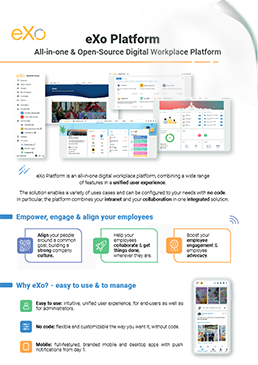

Download the eXo Platform Datasheet and discover all the features and benefits

Download the eXo Platform Datasheet and discover all the features and benefits
This FAQ section summarizes the most common questions about employee onboarding, combining practical clarity with modern HR best practices. It is designed to help HR teams, managers, and digital workplace leaders quickly understand the essentials of building an effective onboarding experience.
At its core, employee onboarding is the structured process of integrating a new hire into an organization, but in practice, it is far more than a simple administrative step or a first-day orientation.
Employee onboarding is one of the most decisive stages of the entire employee lifecycle. It is the point where expectations become reality, where motivation is either strengthened or weakened, and where long-term engagement is often quietly shaped. While it may look like an operational HR step on the surface, employee onboarding has a direct and measurable impact on business performance, retention, productivity, and employer reputation.
Orientation and onboarding are often used interchangeably, but they are not the same.
Orientation is a short-term introduction, usually lasting a few hours or a couple of days. It focuses on immediate administrative essentials such as completing paperwork, reviewing company policies, and explaining basic tools. In simple terms, orientation answers: “What do I need to know to get started?”
Onboarding, on the other hand, is a long-term integration process that can last several weeks or even months. It goes far beyond paperwork and system access. It includes cultural integration, role clarity, relationship building, training, and continuous feedback.
If orientation is the welcome session, onboarding is the full journey that helps a new employee become confident, productive, and fully integrated into the organization.
There is no universal timeline, but modern best practices clearly show that onboarding should not end after the first week or even the first month.
Most effective onboarding programs follow a structured 30-60-90 day model, with clear milestones for learning, contribution, and autonomy. However, research and real-world practice show that full productivity in many roles can take 6 to 12 months.
Despite this, many organizations still end onboarding too early, sometimes within just a few weeks. This creates a gap where employees are expected to perform without sufficient support.
A strong onboarding strategy extends beyond initial training and includes ongoing check-ins, development conversations, and cultural reinforcement throughout the first year.
An effective onboarding process is not defined by the number of documents or training sessions, it is defined by clarity, structure, and human experience.
The most successful onboarding programs combine four essential elements:
A clear structure with defined milestones, so employees always know what comes next
Efficient administrative processes that remove friction and reduce manual work
Strong human connection through managers, mentors, and team interactions
Accessible self-service resources that allow employees to learn independently at their own pace
When these elements work together, onboarding becomes a seamless experience rather than a fragmented set of tasks.
Organizations that achieve this balance often see significantly higher retention and faster productivity among new hires, because employees feel both supported and empowered from day one.
Yes, onboarding can be fully digital, and in many modern organizations, it already is.
Digital onboarding leverages integrated systems such as HR platforms, learning tools, collaboration environments, and automated workflows to manage everything from documentation to training delivery.
Administrative tasks like contracts, payroll setup, and equipment provisioning are often fully automated using HR automation tools, while training and communication are delivered through structured digital environments.
However, while the operational side can be fully digitized, the most effective onboarding strategies still include a human layer. Cultural integration, mentorship, and relationship building remain critical and are often supported through internal communication platforms such as chat systems, virtual meetings, and social collaboration spaces.
The most successful organizations combine both: digital efficiency with human connection.
Measuring onboarding success requires tracking both operational performance and employee experience. A strong onboarding strategy uses multiple KPIs to understand what is working and what needs improvement. On the performance side, key indicators include time-to-productivity, training completion rates, and early retention. These metrics show how quickly employees are becoming effective contributors. On the experience side, organizations track engagement levels, feedback scores, and new hire satisfaction. Metrics such as onboarding eNPS help capture how employees feel
More advanced organizations also analyze behavioral data from Employee Experience Platforms (EXP), including how often employees use onboarding tools, search knowledge bases, or engage with learning content. Finally, feedback loops play a critical role. Regular check-ins at 30, 60, and 90 days help identify friction points early and ensure continuous improvement of the onboarding process.
A weak onboarding process often reveals itself quickly through employee behavior and performance indicators.
Common warning signs include:
When these issues appear consistently, they usually point to deeper structural problems such as fragmented systems, lack of clear onboarding pathways, or insufficient cultural integration.
Poor onboarding is rarely a single failure, it is usually the result of missing structure and disconnected experiences.
( Your e-mail address will not be published)