Top AI-Powered Collaboration Platforms: The Complete Guide to Smarter Teamwork in 2026

Artificial intelligence is no longer just an enhancement to workplace productivity, it has become the foundation of the modern digital workplace and a driving force behind AI-powered collaboration.

As organizations navigate increasingly complex hybrid work environments, global teams and accelerating business demands, collaboration itself is being transformed by AI-powered collaboration platforms that unify communication, project management, automation, knowledge sharing and intelligent assistance into a single ecosystem.

Top AI-Powered Collaboration Platforms

Content

The workplace of today looks dramatically different from just a few years ago. Traditional collaboration once revolved around email threads, shared folders and disconnected productivity tools.

Today, businesses operate in dynamic environments where employees collaborate more effectively through AI-powered collaboration platforms that automate workflows, generate content, analyze data, surface relevant knowledge and streamline work across multiple systems. This shift marks the evolution from isolated productivity to AI-powered collaboration, where intelligent capabilities are embedded directly into the collaborative workspace to improve teamwork, coordination and decision-making.

At the center of this transformation is the rise of Agentic AI, enabling AI-powered collaboration platforms to go beyond simple predictive assistance. Instead of merely helping users draft messages or summarize documents, these platforms intelligently coordinate workflows, manage repetitive processes, surface contextual knowledge and streamline enterprise collaboration at scale.

As a result, organizations are no longer searching for standalone AI tools; they are investing in integrated AI-powered collaboration platforms where information, communication, knowledge and automation flow seamlessly across the organization within a unified digital workplace.

However, the rapid adoption of workplace technologies has also created a new challenge: fragmentation. Employees frequently switch between messaging apps, project trackers, document editors, meeting platforms and AI assistants that often operate in silos.

This digital overload reduces efficiency and limits the true potential of AI-driven productivity. The most valuable collaboration platforms today are therefore those capable of centralizing workspaces, preserving organizational context and enabling smooth interactions between human teams and AI systems.

For enterprises, choosing the right AI-powered collaboration platform has become far more than a simple IT decision. It is now a strategic investment that directly influences productivity, operational agility, employee engagement, innovation capacity, data governance and long-term digital sovereignty. Businesses require secure, intelligent and scalable AI-powered collaboration platforms that support distributed workforces while strengthening collaboration continuity, organizational knowledge and enterprise productivity.

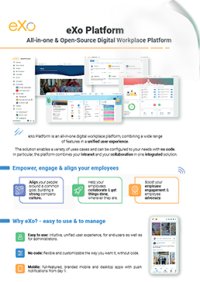
Among the growing ecosystem of AI-powered collaboration platforms, solutions such as eXo Platform are gaining significant attention for combining social collaboration, employee engagement, knowledge management, enterprise communication, workflow automation and AI-powered productivity within a unified digital workplace.

Rather than relying on disconnected tools, modern platforms increasingly aim to create centralized hubs where communication, collaboration, knowledge, automation and enterprise intelligence coexist to deliver a truly AI-powered collaborative experience.

This article explores the 18 top AI-powered collaboration platforms shaping the future of work. From enterprise communication suites and AI-powered project management systems to intelligent digital workplaces, collaborative knowledge hubs and AI-powered collaboration tools, these platforms are redefining how organizations improve teamwork, centralize knowledge, automate workflows and operate more efficiently in the age of artificial intelligence.

🤔 What is AI-Powered Collaboration?

AI-powered collaboration refers to the integration of artificial intelligence into modern workplace environments to improve how teams communicate, collaborate, manage projects and make decisions.

Unlike traditional productivity software that simply provides tools for human users, AI-powered collaboration platforms enhance collaboration by understanding context, automating tasks, generating insights and supporting employees in real time throughout their daily workflows.

AI is no longer just a standalone chatbot or a separate automation tool used occasionally by employees. It has become deeply integrated into the digital platforms teams rely on every day, including messaging apps, document workspaces, project management tools, intranets and virtual meeting environments. These intelligent capabilities help organizations manage knowledge, streamline workflows, improve communication and reduce the repetitive administrative tasks that often slow teams down.

Modern AI-powered collaboration platforms leverage technologies such as Large Language Models (LLMs), machine learning, predictive analytics and Agentic AI to create smarter, more connected work environments. Their role extends far beyond simple assistance. They can summarize meetings, generate reports, recommend next actions, automate repetitive workflows, organize knowledge bases, detect project risks and orchestrate complex cross-platform processes with minimal manual intervention.

At the core of AI-powered collaboration is the shift from isolated productivity toward collaborative intelligence, where AI capabilities are embedded directly into the collaborative workspace to enhance teamwork, efficiency, knowledge sharing and innovation. Rather than replacing employees, AI-powered collaboration enables teams to focus on strategic thinking, creativity, problem-solving and decision-making by automating repetitive and time-consuming tasks.

Today, AI-powered collaboration typically operates through three major interaction models:

  • Human-to-Human (H2H): AI enhances communication and teamwork through features such as real-time translation, smart scheduling, automatic meeting summaries, intelligent search and personalized content recommendations.
  • Human-to-AI (H2AI): Employees use AI-powered collaboration tools to create project plans, draft documents, generate presentations, analyze data, automate workflows and accelerate daily work within their collaborative environment.
  • AI-to-AI (AI2AI): Intelligent services and Agentic AI coordinate processes behind the scenes by synchronizing information, automating approvals, connecting enterprise systems and supporting end-to-end business workflows.

As organizations continue adopting hybrid and distributed work models, AI-powered collaboration platforms are becoming essential components of the modern digital workplace. Businesses increasingly rely on these platforms not only to improve productivity, but also to centralize knowledge, reduce operational complexity, strengthen employee engagement, accelerate innovation and create a more connected, intelligent and collaborative workplace.

book-employee-engagement-recognition-in-the-workplace-white-paper
FREE WHITE PAPER
Employee Engagement & Recognition in the Workplace
Employee engagement has become a central concern for organizations of all sizes. It is widely recognized as a key driver of performance, retention, and alignment — especially in increasingly distributed and fast-moving work environments.
cta-rectangle-orange
FREE WHITE PAPER
Employee engagement has become a central concern for organizations of all sizes. It is widely recognized as a key driver of performance, retention, and alignment — especially in increasingly distributed and fast-moving work environments.

🎁 What Are the Benefits of AI-Powered Collaboration for Businesses?

AI-powered collaboration is transforming the way businesses operate by enhancing human collaboration with the speed, automation and intelligence of modern AI technologies. As AI-powered collaboration platforms become more deeply integrated into digital workplaces, organizations across all industries are experiencing measurable improvements in productivity, communication, operational efficiency, knowledge sharing and employee engagement.

Unlike traditional automation tools that perform isolated tasks, modern AI-powered collaboration platforms embed intelligent capabilities directly into workplace environments. They streamline workflows, centralize organizational knowledge, automate repetitive work and help teams collaborate more efficiently across departments, locations and business functions.

1. 🚀 Increased Productivity and Operational Efficiency

One of the biggest advantages of AI-powered collaboration is the significant boost in productivity. AI-powered collaboration platforms automate repetitive and time-consuming tasks such as scheduling meetings, organizing documents, generating reports, updating project statuses, taking meeting notes and managing administrative workflows.

By reducing the amount of manual work employees handle every day, businesses free up valuable time for higher-value activities like innovation, strategic planning, customer relationships and creative problem-solving. Managers also benefit from reduced operational overhead, allowing them to focus more on leadership and business growth rather than routine coordination tasks.

AI-powered collaboration also reduces what many organizations call “swivel chair work” 🔄 , the constant switching between multiple disconnected tools to manually transfer information. Intelligent automation synchronizes data across platforms automatically, creating smoother and faster workflows.

2. 🧠 Smarter Knowledge Management

Modern organizations generate enormous amounts of information across emails, chats, documents, cloud drives, meetings and internal systems. One of the most common workplace challenges is locating the right information quickly.

AI-powered collaboration platforms solve this problem by centralizing organizational knowledge and making it instantly searchable through context-aware AI capabilities. Instead of wasting time searching through scattered conversations and files, employees can retrieve relevant answers, documents and insights within seconds.

This dramatically reduces the so-called “search tax” 🔍 , where employees lose productivity simply trying to find information. More advanced platforms can even retain organizational memory by understanding company terminology, previous decisions, workflows and historical discussions, making future collaboration faster, more connected and more intelligent.

Platforms such as eXo Platform and Notion are increasingly recognized for combining knowledge management, collaboration, employee engagement and AI-powered productivity within unified digital workplaces.

3. 💬 Improved Communication and Team Alignment

AI-powered collaboration helps businesses improve communication, especially in remote and hybrid work environments where teams operate across different locations and time zones.

AI-powered features such as automatic meeting summaries, real-time translations, smart notifications, conversation highlights, contextual search and personalized recommendations help employees stay aligned without requiring constant live meetings or lengthy email chains. These capabilities summarize project discussions, capture action items automatically and ensure important information remains accessible to everyone involved.

This creates more efficient communication flows while reducing misunderstandings and information gaps between departments and distributed teams.

4. 📊 Faster and More Informed Decision-Making

AI-powered collaboration platforms give leaders access to real-time analytics and intelligent insights that support faster and more informed decision-making.

By analyzing workflows, project timelines, team performance and operational data, AI capabilities identify bottlenecks, resource constraints, productivity trends and potential risks before they become major problems. They also transform conversations, reports and meeting transcripts into concise executive summaries, allowing managers to make decisions more quickly and with greater clarity.

Some advanced AI capabilities are even designed to identify overlooked risks, surface alternative perspectives and strengthen decision-making rather than simply generating responses. This helps reduce groupthink and encourages more balanced strategic thinking across the organization.

5. 😊 Enhanced Employee Experience

Another major benefit of AI-powered collaboration is its positive impact on employee experience and workplace satisfaction. Many modern AI-powered collaboration platforms integrate employee engagement tools such as recognition systems, communities, collaborative spaces, personalized AI assistance and social communication features.

By simplifying workflows and reducing repetitive administrative tasks, AI-powered collaboration enables employees to focus on more meaningful and rewarding work. Teams often experience lower stress levels, improved collaboration and greater workplace flexibility, particularly in hybrid work environments.

AI-powered capabilities can also provide personalized assistance tailored to employee roles, responsibilities and work habits, creating a more adaptive and supportive digital workplace experience.

6. ⚙️ Smarter Automation and Workflow Orchestration

Modern AI-powered collaboration platforms are moving beyond basic automation toward intelligent workflow orchestration. Businesses can automate approvals, onboarding, reminders, task assignments, customer interactions and cross-functional business processes through integrated AI capabilities.

In more advanced environments, Agentic AI coordinates workflows behind the scenes by synchronizing information, connecting enterprise systems, automating approvals and streamlining business processes across departments. This allows organizations to scale operations while reducing delays, manual intervention and process inefficiencies.

7. 🔐 Security, Governance and Context Awareness

As AI becomes more integrated into enterprise operations, security and governance have become essential priorities. Advanced AI-powered collaboration platforms ensure that AI capabilities respect organizational permissions and access rights.

This means AI-powered features only access information employees are authorized to view, helping businesses maintain compliance, protect sensitive data and preserve digital trust across teams.

At the same time, these platforms provide contextual awareness that generic AI tools often lack. Instead of generating disconnected responses, they understand organizational structure, company language, historical decisions, enterprise knowledge and workflow context, allowing them to deliver more accurate, personalized and strategically aligned assistance.

8. 🌟 A Competitive Advantage for Modern Businesses

As digital transformation continues to reshape the workplace, AI-powered collaboration is becoming a major competitive advantage. Organizations that adopt AI-powered collaboration platforms to strengthen teamwork, automate workflows, centralize knowledge and improve operational agility are better positioned to innovate faster, enhance employee engagement, increase productivity and scale more effectively in an increasingly digital economy.

🪄 How AI Agents Power the Modern Collaborative Workspace

One of the most significant developments in workplace technology is the rise of AI agents, intelligent systems that do far more than answer questions or generate content.

Unlike traditional AI assistants that require constant prompts and supervision, modern AI agents can reason, plan and execute multi-step tasks autonomously. Embedded within AI-powered collaboration platforms, they enhance teamwork by automating workflows, coordinating processes and improving productivity across the digital workplace.

These Agentic AI capabilities are transforming AI-powered collaboration by streamlining workflows rather than simply supporting isolated tasks. Integrated directly into collaboration platforms, project management tools, digital workplaces and communication hubs, AI agents understand context, monitor ongoing activities and automate actions while respecting organizational permissions and governance policies.

🤖 From AI Assistants to Intelligent Collaboration

The evolution from basic AI tools to intelligent AI agents marks a major shift in AI-powered collaboration. Early AI solutions primarily focused on answering questions, generating text, or performing isolated tasks. Today’s AI agents enable AI-powered collaboration platforms to orchestrate complex workflows involving multiple systems, people and business processes.

For example, during a team meeting, an AI-powered collaboration platform can do much more than transcribe the discussion. It can automatically identify action items, assign tasks to the appropriate team members, create project updates, schedule follow-up meetings, draft recap emails and link relevant documents , all while employees remain focused on the conversation itself.

This ability to combine understanding, reasoning and automation enables organizations to streamline coordination work that traditionally consumed a significant portion of employees’ time.

⚙️ Automating Everyday Workflows

AI agents are becoming a core capability of AI-powered collaboration platforms by handling routine yet essential tasks across departments.

These intelligent capabilities can:

  • 📅 Schedule and coordinate meetings automatically
  • 📝 Generate project summaries and meeting recaps
  • 📊 Create reports and performance dashboards
  • 📈 Analyze team productivity and workflow trends
  • 🔄 Recommend process improvements and workflow optimizations
  • 🎧 Support customer service and employee help desks
  • 📚 Organize and surface enterprise knowledge
  • ✅ Track project milestones and task dependencies
  • 🔔 Send reminders, notifications and follow-ups
  • 🚀 Automate onboarding and employee workflows

By automating these repetitive activities, AI-powered collaboration enables businesses to reduce operational friction and allows employees to focus on higher-value work such as innovation, relationship building and strategic decision-making.

🔗 Connecting Teams, Systems and Information

One of the greatest strengths of AI-powered collaboration platforms is their ability to connect multiple business systems through intelligent AI capabilities. Rather than operating inside a single application, AI agents connect communication tools, project management systems, document repositories, CRM platforms and enterprise applications into unified workflows.

When a new event occurs , such as a customer signing a contract, a support ticket being escalated, or a project reaching a critical milestone , the platform can automatically trigger the next steps. AI capabilities create tasks, notify stakeholders, generate documentation, update records and coordinate activities between departments with minimal manual intervention.

This seamless flow of information eliminates silos and creates a more connected digital workplace where collaboration becomes faster, smarter and more efficient.

🌍 Supporting Hybrid and Distributed Workforces

As organizations continue to embrace hybrid and remote work models, AI-powered collaboration platforms play an increasingly important role in maintaining alignment across distributed teams.

AI capabilities automatically capture meeting outcomes, summarize conversations, translate discussions in real time and provide updates to employees working in different locations or time zones. This ensures that everyone remains informed and aligned, regardless of when or where they work.

By strengthening organizational knowledge and preserving workplace context, AI-powered collaboration platforms help teams maintain continuity while reducing communication gaps across distributed work environments.

🚀 From Systems of Record to Systems of Action

Traditional workplace platforms were primarily designed as systems of record , places where information was stored and retrieved. AI-powered collaboration platforms are transforming these environments into systems of action, where work is not only documented but also intelligently automated.

Instead of simply displaying information, embedded AI capabilities monitor workflows, identify opportunities for improvement, coordinate activities across teams and automate routine business processes.

This shift enables organizations to move faster, reduce manual effort and scale operations more effectively without increasing administrative complexity.

🌟 Building the AI-Powered Workplace

The growing adoption of AI agents is redefining AI-powered collaboration. Organizations are no longer relying solely on employees to manage every workflow manually. Instead, they are deploying AI-powered collaboration platforms where intelligent automation enhances teamwork, accelerates workflows, centralizes knowledge and improves productivity across the organization.

Platforms such as Microsoft integrate AI across workplace applications to improve collaboration and workflow coordination, while Slack leverages AI-powered capabilities to summarize conversations and streamline teamwork. Meanwhile, eXo Platform combines collaboration, social networking, intranet capabilities, employee engagement, knowledge management, workflow automation and AI-powered productivity within a unified digital workplace ecosystem.

As AI technology continues to evolve, AI agents will increasingly serve as the intelligence behind AI-powered collaboration platforms, enabling organizations to work smarter, faster and more efficiently while keeping people at the center of collaboration.

book-workplace-cta
FREE WHITE PAPER

Types of Digital workplace solutions

Digital workplace is a buzzword these days. Actually different people use it to mean different things. So what is a digital workplace?

cta-rectangle-orange
FREE WHITE PAPER
Digital workplace is a buzzword these days. Actually different people use it to mean different things. So what is a digital workplace?

👨🏻‍💻 How Do Businesses Use AI-Powered Collaboration to Improve Teamwork?

AI-powered collaboration is reshaping how teams work together by making communication more efficient, knowledge more accessible and workflows more connected. Rather than functioning as a standalone AI tool, intelligent AI capabilities are embedded directly into AI-powered collaboration platforms, helping employees collaborate more effectively while reducing manual effort and operational friction.

Organizations across industries are leveraging AI-powered collaboration to strengthen teamwork, improve productivity and ensure employees remain aligned regardless of location, department, or time zone. From automating routine coordination tasks to facilitating cross-functional collaboration, AI-powered collaboration platforms have become essential components of the modern digital workplace.

1. 🌍 Remote and Hybrid Team Collaboration

As remote and hybrid work models become the norm, businesses are using AI-powered collaboration platforms to keep distributed teams connected and productive.

AI-powered collaboration tools support real-time messaging, video conferencing, document sharing and virtual workspaces while automatically generating meeting summaries, capturing action items and highlighting key decisions. Employees who miss meetings can quickly catch up through AI-generated recaps, reducing the need for repetitive updates and follow-up sessions.

Real-time translation capabilities further enhance communication between global teams, helping organizations overcome language barriers and foster seamless collaboration across regions.

2. 📚 Enterprise Knowledge Sharing and Management

One of the most valuable benefits of AI-powered collaboration is transforming fragmented company knowledge into a centralized and searchable resource.

In many organizations, critical information is scattered across emails, chat conversations, documents, shared drives and employee expertise. This often creates “tribal knowledge” , valuable information that exists only in the minds of certain employees.

AI-powered collaboration platforms help capture, organize and surface this knowledge automatically. Intelligent search, contextual recommendations and AI-powered assistance allow employees to find accurate information instantly, reducing time spent searching while ensuring organizational knowledge remains accessible across the enterprise.

This creates a more informed workforce while preserving organizational memory as teams grow and evolve.

3. ⚙️ Project Management and Workflow Automation

Businesses increasingly rely on AI-powered collaboration platforms to simplify project management and eliminate administrative overhead.

Modern platforms automatically assign tasks, monitor deadlines, update project statuses, track dependencies and generate progress reports. Embedded AI capabilities identify bottlenecks, recommend workflow improvements and alert managers when projects are at risk of delays.

By automating routine project administration, organizations improve efficiency, strengthen collaboration and accelerate project delivery.

4. 🔄 Cross-Functional Collaboration

Many organizations struggle with disconnected departments operating in separate systems and workflows. AI-powered collaboration platforms help bridge these gaps by creating seamless information flows between teams such as Sales, Marketing, HR, Operations, Customer Support and Engineering.

AI capabilities automatically transfer context between connected applications, ensuring information flows naturally throughout business processes without requiring employees to manually copy and share updates across platforms.

For example, when a new customer signs a contract, the platform can automatically notify relevant teams, create onboarding tasks, update CRM records, generate documentation and coordinate next steps across departments. This intelligent automation reduces silos and improves organizational alignment.

5. 🎯 Employee Engagement and Workplace Communities

AI-powered collaboration also plays an important role in fostering stronger workplace cultures and improving employee engagement.

Modern AI-powered collaboration platforms integrate social collaboration features such as employee recognition programs, community spaces, discussion forums, social feeds, surveys and personalized AI-powered assistance. These capabilities help employees feel more connected, informed and engaged regardless of their location.

AI can further personalize the employee experience by recommending relevant content, highlighting community activities and providing tailored support based on individual roles and interests.

This contributes to stronger workplace relationships, improved morale and a greater sense of belonging across the organization.

6. 📊 AI-Assisted Decision-Making

Organizations are increasingly using AI-powered collaboration to support faster and more informed decision-making.

AI-powered analytics continuously analyze operational data, team performance metrics, project progress and collaboration patterns. These intelligent capabilities identify trends, forecast potential delays, evaluate resource utilization and highlight emerging risks before they impact business outcomes.

Executives and managers benefit from AI-generated insights, dashboards and summaries that transform complex information into actionable recommendations, enabling faster and more confident decision-making.

7. 🎥 Intelligent Meeting Lifecycle Management

Meetings remain a central part of workplace collaboration, but AI-powered collaboration platforms are transforming how organizations manage them.

Instead of simply recording discussions, embedded AI capabilities can support the entire meeting lifecycle. They schedule meetings, prepare agendas, capture notes, identify decisions, extract action items, assign responsibilities and generate follow-up summaries automatically.

Employees joining meetings late can receive real-time catch-up summaries, while project teams can instantly access task logs and meeting outcomes without manual documentation.

This transforms meetings from isolated events into connected workflows that improve collaboration, accountability and execution.

🚀 Creating Smarter, More Connected Teams

The most successful organizations are no longer using AI merely as a productivity tool , they are adopting AI-powered collaboration platforms that strengthen teamwork across the enterprise. By improving communication, automating workflows, organizing knowledge, enhancing employee engagement and enabling data-driven decisions, AI-powered collaboration helps teams work more efficiently and effectively together.

As AI capabilities continue to evolve, AI-powered collaboration platforms will become the foundation of the modern digital workplace, enabling organizations to create smarter, more connected and more productive teams while keeping people at the center of collaboration.

🏆 Best AI-Powered Collaboration Platforms for Enterprise Teams

The rapid evolution of artificial intelligence is transforming workplace collaboration, enabling organizations to work smarter, automate routine tasks and improve communication across distributed teams. Today’s leading AI-powered collaboration platforms go far beyond traditional messaging and project management tools. They combine AI-powered assistance, workflow automation, knowledge management, analytics, employee engagement and intelligent collaboration capabilities to create more connected, productive and efficient digital workplaces.

For enterprises, choosing the right AI-powered collaboration platform has become a strategic decision. The ideal solution should not only improve team productivity but also strengthen knowledge sharing, streamline workflows, enhance employee experience, centralize collaboration and maintain strong security and governance standards.

To help you navigate an increasingly competitive market, we’ve selected the 18 best AI-powered collaboration platforms based on their AI capabilities, enterprise readiness, integration ecosystem, collaboration features, workflow automation, security model, scalability and overall value for modern organizations.

Whether you’re looking for an AI-powered digital workplace, an intelligent intranet, a collaborative knowledge management solution, or advanced AI-powered collaboration tools, these platforms help organizations improve teamwork, automate business processes and create more connected workplaces.

Let’s start with one of the most comprehensive AI-powered collaboration platforms available today.

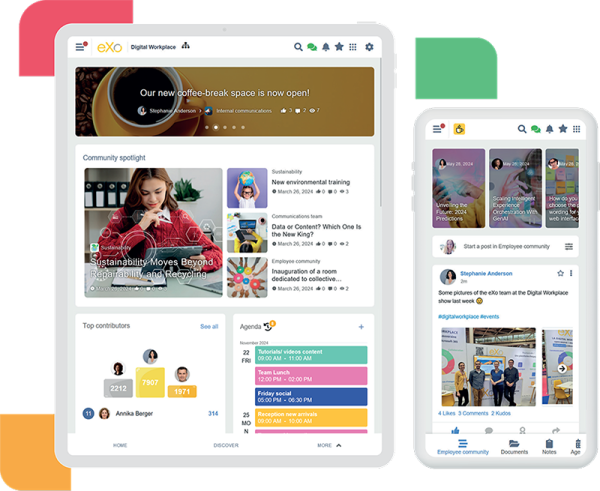
1. eXo Platform: Best Overall AI-Powered Collaboration Platform for Enterprise Teams

eXo-Platform-intranet-sotware-2025

🔎Overview

Among the growing number of AI-powered collaboration platforms, eXo Platform stands out as one of the most comprehensive AI-powered digital workplace solutions available for enterprise organizations. While many collaboration tools focus on a single area such as messaging, document management, or project tracking, eXo Platform brings together communication, collaboration, knowledge management, employee engagement, social networking, workflow automation and AI-powered productivity within a single unified environment.

Designed for enterprises, public institutions and organizations undergoing digital transformation, eXo Platform addresses one of the biggest workplace challenges: fragmentation. Instead of forcing employees to switch between multiple disconnected applications, the platform centralizes communication, teamwork, knowledge, projects, communities and enterprise content into a unified AI-powered collaboration platform.

What truly differentiates eXo Platform is its AI-first approach. Rather than adding AI as a standalone feature, the platform embeds intelligent AI capabilities throughout the entire digital workplace, enabling AI-powered collaboration by helping employees communicate, collaborate, create content, search enterprise knowledge and automate workflows more efficiently while maintaining full control over corporate data.

⭐ Key AI Features

  • 🤖 AI-powered collaboration assistant
  • 🔍 Permission-aware semantic enterprise search
  • 📝 AI content generation and document summarization
  • 🌐 Automatic translation and multilingual collaboration
  • ⚡ AI-powered workflow automation and task orchestration
  • 📚 Enterprise knowledge management and collaborative wikis
  • 🏢 Enterprise social intranet
  • 👥 Community collaboration spaces
  • 🎯 Employee engagement and recognition
  • 🏆 Gamification and reward systems
  • 💬 Secure enterprise communication
  • 📅 Intelligent task and project management
  • 🔗 Enterprise MCP Server for AI integrations
  • 🧠 Multi-LLM support for public and private AI models
  • ☁️ Cloud, private cloud, or on-premise deployment

🚀 Why eXo Platform Stands Out

The biggest strength of eXo Platform is its all-in-one architecture. While many organizations rely on a combination of chat applications, project management software, document repositories, intranet solutions, employee engagement platforms and collaboration tools, eXo Platform consolidates these capabilities into a single AI-powered collaboration platform.

This unified architecture creates a major advantage for AI-powered collaboration. Because communication, documents, tasks, communities, enterprise knowledge and workflows all exist within the same ecosystem, embedded AI capabilities can understand relationships between information and deliver more contextual, accurate and actionable assistance across the digital workplace.

Another major differentiator is eXo Platform’s commitment to digital sovereignty and enterprise security. Organizations can deploy the platform on-premise, in private cloud environments, or through secure hosting providers while maintaining full control over their data. Its permission-aware AI framework ensures that AI capabilities only access content users are authorized to view, making the platform particularly attractive for regulated industries.

The platform’s Multi-LLM architecture also gives organizations the flexibility to integrate multiple public and private AI models without becoming dependent on a single AI vendor, ensuring long-term flexibility and future-proof AI-powered collaboration.

💼 Best Use Cases

eXo Platform is particularly well-suited for:

  • Enterprise AI-powered collaboration
  • AI-powered digital workplaces
  • Corporate intranets
  • Employee engagement initiatives
  • Knowledge-sharing communities
  • Internal communication platforms
  • Remote and hybrid workforce management
  • Government organizations
  • Financial institutions
  • Healthcare organizations
  • Large enterprises requiring strict governance
  • Organizations replacing fragmented collaboration tools with a unified AI-powered collaboration platform

✅ Pros

  • Comprehensive all-in-one AI-powered collaboration platform
  • AI integrated across the entire digital workplace
  • Strong focus on privacy, governance and security
  • Open-source architecture
  • Supports cloud, private cloud and on-premise deployments
  • Advanced enterprise knowledge management
  • Built-in employee engagement and recognition
  • Multilingual collaboration
  • Permission-aware AI and enterprise search
  • Eliminates fragmented collaboration tools

❌ Cons

  • More comprehensive than small teams may require
  • Initial implementation may require planning for large enterprises
  • Some advanced features have a learning curve
  • Less widely known than larger consumer-focused platforms

💰 Pricing

eXo Platform offers multiple deployment and licensing options depending on organizational requirements, including cloud, private cloud and on-premise environments.

For the most current pricing and enterprise plans, organizations should contact eXo Platform directly for a customized quote based on user count, deployment model and support requirements.

🎯 Final Verdict

For organizations seeking a secure, scalable and fully integrated AI-powered collaboration platform, eXo Platform is one of the strongest solutions available. Its combination of collaboration, knowledge management, employee engagement, workflow automation, enterprise communication and governance-first AI architecture makes it a compelling choice for organizations looking to consolidate their workplace technology stack while building a modern AI-powered digital workplace.

book-AI-Augmented-Digital-Workplace
FREE WHITE PAPER

AI-Augmented Digital Workplace

Artificial intelligence has rapidly become part of everyday work. Employees experiment with AI tools, generate content, and explore new ways to be more productive.

cta-rectangle-orange
FREE WHITE PAPER

Artificial intelligence has rapidly become part of everyday work. Employees experiment with AI tools, generate content, and explore new ways to be more productive.

2. Slack

🔎Overview

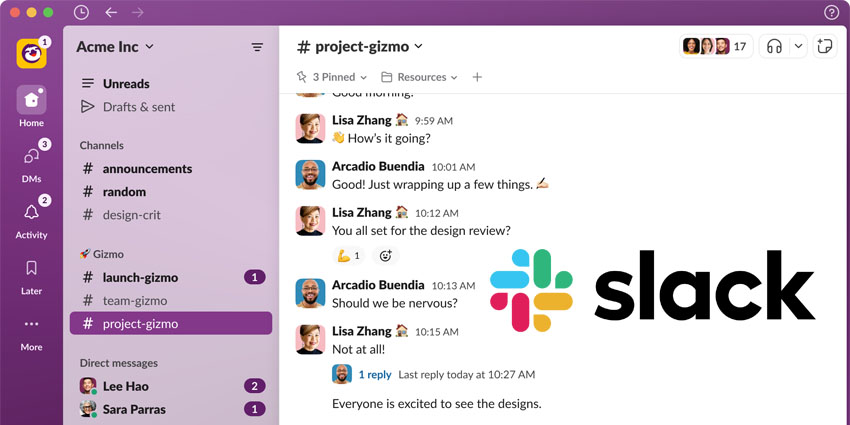
Slack has long been one of the most popular workplace communication platforms, helping teams collaborate through real-time messaging, channels and integrations. Over the years, it has evolved far beyond a chat application, becoming a leading AI-powered collaboration platform that connects people, conversations, workflows and business applications within a single digital workspace.

With the introduction of Slack AI and enhanced automation capabilities, the platform now delivers AI-powered collaboration by helping employees stay informed, reduce information overload and automate routine tasks. Rather than spending time searching through lengthy conversations or manually coordinating workflows, teams can rely on AI-powered capabilities to surface key information, summarize discussions and streamline daily operations.

For organizations that depend heavily on communication and fast decision-making, Slack remains one of the strongest AI-powered collaboration tools available for improving teamwork and workplace productivity.

⭐ Key AI Features

  • 🤖 Slack AI assistant
  • 📝 AI-generated channel recaps
  • 💬 One-click thread summarization
  • 🔍 Natural language AI-powered search
  • ⚡ Smart workflow automation
  • 🔄 No-code workflow builder
  • 📅 Automated scheduling and calendar integration
  • 📧 AI-assisted email drafting
  • 📢 Channel-based collaboration
  • 🔗 Thousands of third-party integrations
  • 👥 Enterprise messaging and team communication
  • 🎯 Intelligent notifications and recommendations
  • 📊 Cross-platform workflow orchestration

💼 Best For

Slack is particularly well-suited for:

  • Fast-growing companies
  • Remote and hybrid teams
  • Technology companies
  • Sales and customer success teams
  • Agile project teams
  • Cross-functional collaboration
  • Organizations relying heavily on real-time communication
  • Businesses seeking extensive third-party integrations
  • Teams looking to automate repetitive communication workflows

✅ Pros

  • User-friendly and intuitive interface
  • Excellent real-time communication capabilities
  • Powerful AI-generated conversation summaries
  • Strong workflow automation features
  • Extensive app integration ecosystem
  • Reduces information overload through AI-powered recaps
  • Easy deployment and adoption
  • Supports both small teams and large enterprises
  • Highly customizable collaboration environment
  • Strong mobile and desktop experience

❌ Cons

  • Can become overwhelming with large numbers of channels
  • Important information may still get buried in conversations
  • Advanced AI features may require premium plans
  • Less focused on knowledge management than comprehensive AI-powered digital workplace platforms
  • Organizations often require additional tools for document management, knowledge management and intranet capabilities

💰 Pricing

Slack offers multiple pricing tiers, including a free plan for small teams and paid plans with advanced collaboration, security, workflow automation and AI capabilities.

Pricing typically includes:

  • Free Plan
  • Pro Plan
  • Business+ Plan
  • Enterprise Grid

For the latest pricing and AI feature availability, visit the official Slack website.

🎯 Final Verdict

Slack remains one of the best AI-powered collaboration platforms for organizations that prioritize communication and teamwork. Its combination of AI-powered conversation summaries, intelligent search, workflow automation and extensive integrations makes it a highly effective solution for distributed and fast-moving teams.

While it does not provide the fully unified AI-powered digital workplace experience offered by platforms such as eXo Platform, Slack excels as an AI-powered collaboration hub that enables teams to communicate faster, stay aligned, automate everyday work and improve collaboration directly where conversations take place.

3. Google Workspace

🔎Overview

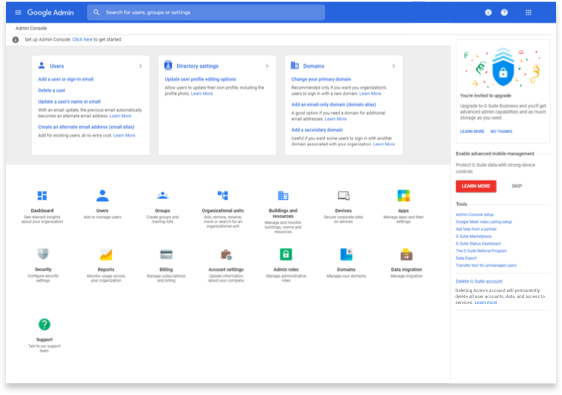
Google Workspace has evolved into one of the most powerful AI-powered productivity and collaboration ecosystems available today. By integrating Gemini AI directly into applications such as Gmail, Docs, Sheets, Meet, Slides and Drive, Google has transformed its productivity suite into a leading AI-powered collaboration platform that helps teams create content, collaborate in real time, analyze data and automate everyday work.

Unlike communication-focused platforms that revolve primarily around chat, Google Workspace centers its AI-powered collaboration experience around documents, meetings, knowledge creation and cloud collaboration. AI capabilities are embedded directly into the tools employees use every day, allowing teams to draft content, summarize meetings, generate reports, analyze spreadsheets and create presentations without leaving their workflows.

For organizations already invested in Google’s ecosystem, Google Workspace delivers one of the most seamless AI-powered collaboration experiences available, combining productivity, communication and cloud collaboration within a unified environment.

⭐ Key AI Features

  • 🤖 Gemini AI integrated across Workspace applications
  • ✍️ “Help Me Write” for Gmail and Google Docs
  • 📄 AI-powered document generation and editing
  • 📊 Gemini in Sheets for data analysis and formula creation
  • 🎥 AI-generated video creation with Google Vids
  • 📅 Smart scheduling and calendar assistance
  • 🎙️ AI meeting summaries in Google Meet
  • 📝 Automatic note-taking during meetings
  • 👥 Real-time collaborative editing
  • ☁️ Cloud-based file sharing and collaboration
  • 📈 AI-powered presentation generation in Slides
  • 🔍 Intelligent search across Workspace content
  • 🌐 Multilingual content support and translation
  • 📹 “Take Notes for Me” and “Attend for Me” capabilities in Meet

💼 Best For

Google Workspace is particularly well-suited for:

  • Cloud-native organizations
  • Remote and hybrid teams
  • Startups and growing businesses
  • Marketing and creative teams
  • Educational institutions
  • Consulting firms
  • Small and medium-sized enterprises
  • Organizations already using Gmail and Google Drive
  • Teams requiring real-time document collaboration

✅ Pros

  • AI integrated across the entire Workspace ecosystem
  • Excellent real-time collaboration capabilities
  • User-friendly and intuitive interface
  • Powerful AI-powered document and content generation
  • Strong meeting productivity features
  • Cloud-first architecture
  • Seamless file sharing and collaborative editing
  • Advanced spreadsheet analysis with Gemini
  • Tight integration between Gmail, Docs, Sheets, Slides, Meet and Drive
  • Accessible from virtually any device

❌ Cons

  • Less focused on enterprise social collaboration and employee engagement
  • Advanced AI features may require premium plans
  • Limited on-premise deployment options
  • Organizations with strict data sovereignty requirements may prefer self-hosted alternatives
  • Project management capabilities are not as extensive as dedicated AI-powered collaboration platforms

💰 Pricing

Google Workspace is available through multiple subscription plans, including:

  • Business Starter
  • Business Standard
  • Business Plus
  • Enterprise Plans

AI capabilities powered by Gemini may require specific Workspace plans or add-ons depending on the organization’s requirements.

For the latest pricing and feature availability, visit the official Google Workspace website.

🎯 Final Verdict

Google Workspace is one of the best AI-powered collaboration platforms for organizations that prioritize cloud productivity, document collaboration and seamless teamwork. Its deep Gemini integration transforms everyday applications such as Gmail, Docs, Sheets, Slides, Meet and Drive into intelligent collaboration tools that accelerate content creation, simplify meetings, improve knowledge sharing and enhance productivity.

While it does not provide the comprehensive AI-powered digital workplace, enterprise social collaboration and employee engagement capabilities available in platforms such as eXo Platform, Google Workspace remains a leading choice for organizations seeking an AI-powered collaboration suite built around cloud-native productivity and real-time collaboration.

4. Microsoft Loop

🔎Overview

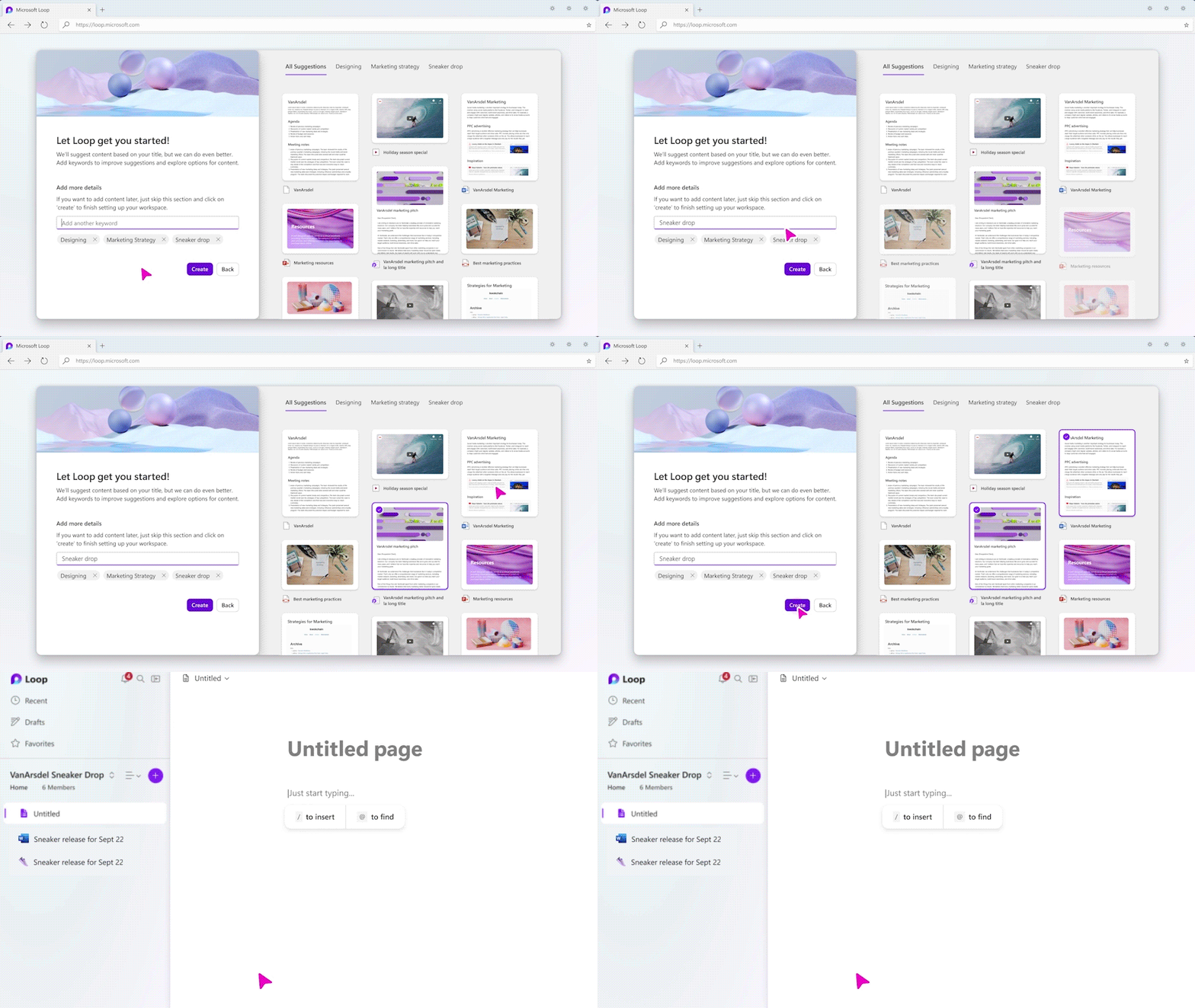
Microsoft Loop is Microsoft’s next-generation AI-powered collaboration workspace designed to bring people, content and tasks together across the Microsoft 365 ecosystem. Built around flexible and portable collaboration components, Loop enables teams to co-create content in real time while keeping information synchronized across applications such as Teams, Outlook, Word, OneNote and SharePoint.

Powered by Microsoft 365 Copilot, Loop embeds AI directly into the collaboration experience, helping teams generate content, organize projects, summarize information, automate routine work and improve productivity. Its modular approach enables employees to collaborate seamlessly across multiple Microsoft applications without losing context, making it a strong AI-powered collaboration platform for organizations already invested in the Microsoft ecosystem.

⭐ Key AI Features

  • 🤖 Microsoft 365 Copilot integration
  • 📝 AI-powered content generation and editing
  • 🏗️ Automatic workspace creation from project files
  • 🔄 Dynamic Loop Components synchronized across Microsoft applications
  • 👥 Real-time collaborative workspaces
  • 📊 AI-assisted project organization
  • 📁 Integration with SharePoint and OneDrive
  • 💬 Seamless collaboration within Teams and Outlook
  • ⚡ Context-aware content recommendations
  • 📅 Task and project synchronization

💼 Best For

Microsoft Loop is particularly well-suited for:

  • Large enterprises using Microsoft 365
  • Teams heavily invested in Teams and Outlook
  • Organizations managing cross-functional projects
  • Enterprise collaboration environments
  • Knowledge workers requiring real-time co-authoring
  • Organizations seeking AI-powered collaboration within the Microsoft ecosystem

✅ Pros

  • Deep Microsoft ecosystem integration
  • Flexible and modular AI-powered collaboration workspace
  • Real-time synchronization across Microsoft applications
  • Strong AI-powered content assistance
  • Familiar experience for Microsoft users
  • Effective for cross-department collaboration
  • Tight integration with Microsoft 365 Copilot

❌ Cons

  • Primarily valuable within the Microsoft ecosystem
  • Some AI features continue to evolve
  • Less mature than dedicated project management platforms
  • Limited value for organizations outside Microsoft 365
  • Less focused on enterprise social collaboration, employee engagement and knowledge management than comprehensive AI-powered digital workplace platforms

💰 Pricing

Microsoft Loop is included with various Microsoft 365 subscription plans, while advanced AI capabilities require eligible Microsoft 365 Copilot licenses.

For the latest pricing and Copilot availability, refer to the official Microsoft 365 pricing plans.

🎯 Final Verdict

Microsoft Loop is an innovative AI-powered collaboration platform that brings intelligent co-creation directly into the Microsoft ecosystem. By combining Microsoft 365 Copilot with flexible collaborative workspaces, Loop enables teams to connect conversations, documents, projects and tasks within a unified collaboration experience.

While it does not offer the complete AI-powered digital workplace, enterprise social collaboration, employee engagement and knowledge management capabilities available in platforms such as eXo Platform, Microsoft Loop is an excellent choice for organizations looking to extend AI-powered collaboration across their existing Microsoft 365 environment.

5. Asana

🔎Overview

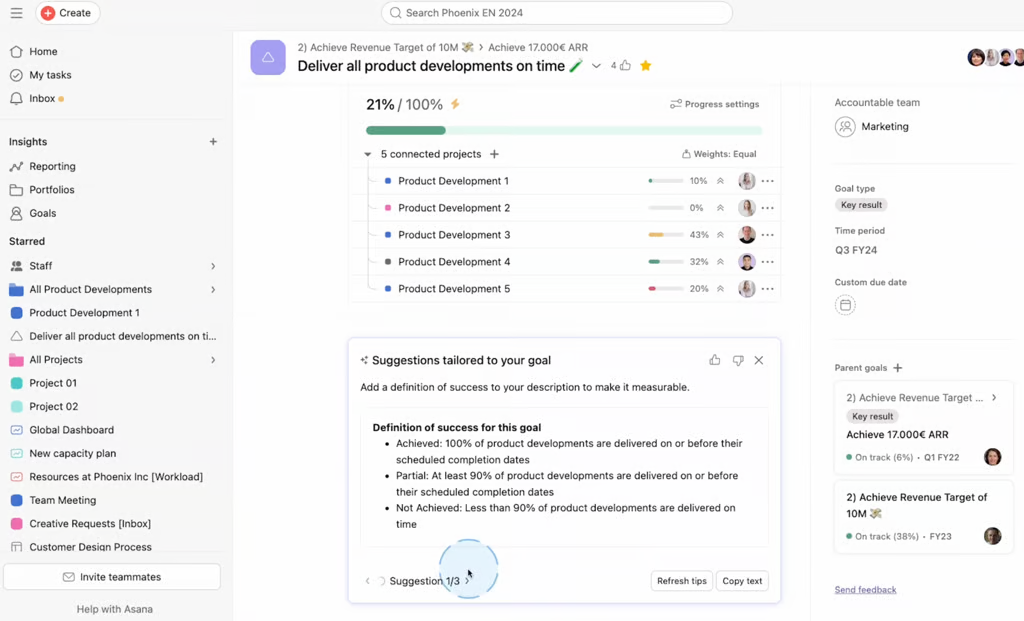
Asana has evolved from a traditional project management tool into a leading AI-powered work management and collaboration platform powered by Asana Intelligence. Designed to help organizations plan, coordinate and execute complex initiatives, Asana leverages AI to automate routine project management tasks, identify risks, optimize workflows and improve collaboration across teams.

Rather than simply tracking tasks, Asana enables AI-powered collaboration by helping teams understand project health, predict potential bottlenecks, prioritize work and align day-to-day activities with strategic business objectives. Its growing suite of AI capabilities allows organizations to manage projects more efficiently without requiring extensive prompt engineering or technical expertise.

⭐ Key AI Features

  • 🤖 Asana Intelligence
  • 📊 AI-generated project status reports
  • ⚠️ AI-powered project risk identification and analysis
  • 🎯 Goal and OKR tracking
  • 📝 Automated task recommendations
  • 📈 Resource allocation insights
  • 🔄 AI-powered workflow automation
  • 💡 Smart project planning assistance
  • 🔍 Natural language project queries
  • 👥 AI-powered work prioritization

💼 Best For

Asana is particularly well-suited for:

  • Project-driven organizations
  • Marketing teams
  • Product development teams
  • Operations departments
  • PMOs (Project Management Offices)
  • Organizations managing large-scale initiatives
  • Teams seeking AI-powered collaboration for project execution

✅ Pros

  • Excellent project visibility and planning capabilities
  • Strong AI-powered reporting and analytics
  • Effective workflow automation
  • User-friendly interface
  • Powerful goal tracking and alignment features
  • Scales well for large organizations
  • Strong support for cross-functional collaboration

❌ Cons

  • Less focused on enterprise communication and social collaboration
  • Can become expensive for larger teams
  • Requires structured project management processes
  • Limited document management and enterprise knowledge management capabilities
  • Organizations may need additional AI-powered collaboration tools for intranet, communication and employee engagement

💰 Pricing

Asana offers:

  • Personal (Free)
  • Starter
  • Advanced
  • Enterprise
  • Enterprise+

AI capabilities are available with selected paid plans and enterprise offerings.

For the latest pricing and feature availability, consult the official Asana pricing page.

🎯 Final Verdict

Asana is one of the strongest AI-powered collaboration platforms for project and work management available today. Its AI-powered capabilities automate reporting, identify risks, optimize workflows and align projects with strategic business goals, enabling organizations to improve productivity and collaboration at scale.

While it is primarily focused on project execution rather than providing a complete AI-powered digital workplace, enterprise communication, or knowledge management environment like eXo Platform, Asana remains an outstanding choice for organizations looking to strengthen AI-powered collaboration across project planning, execution and delivery.

6. Notion

🔎Overview

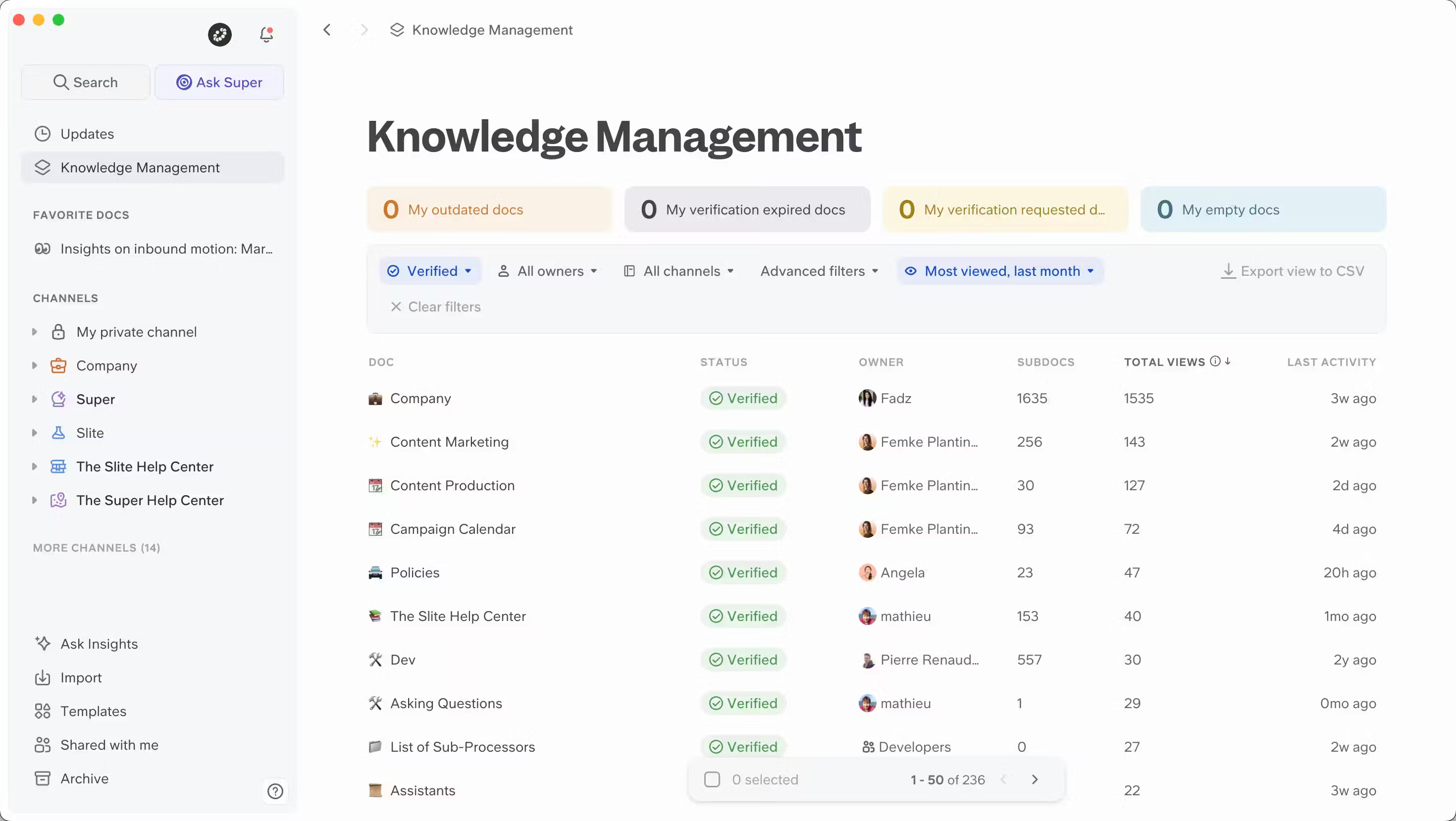
Notion has become one of the most popular AI-powered collaboration platforms for knowledge management, documentation and team organization. Combining flexible workspaces, databases, project tracking and AI-powered assistance, Notion helps organizations centralize information while making organizational knowledge more accessible, searchable and actionable.

With the introduction of Notion AI and its expanding developer ecosystem, the platform has evolved into an intelligent knowledge hub that strengthens AI-powered collaboration by connecting data sources, automating content management and transforming company documentation into an interactive digital workspace.

Its flexibility allows teams to build custom workflows, internal wikis, project trackers and enterprise knowledge bases while benefiting from AI-powered search, intelligent content generation, automated knowledge discovery and database automation.

⭐ Key AI Features

  • 🤖 Notion AI assistant
  • ✍️ AI-powered writing and editing
  • 🔍 Intelligent Q&A search across workspace content
  • 📚 Team wiki and enterprise knowledge management
  • 🗄️ AI-enhanced databases
  • 📝 Automated content summarization
  • ⚡ Database auto-population and metadata extraction
  • 🔗 Integration with external tools and data sources
  • 📊 Custom workspaces and dashboards
  • 🧠 AI-powered knowledge discovery

💼 Best For

Notion is particularly well-suited for:

  • Knowledge-intensive organizations
  • Startups and scale-ups
  • Product and engineering teams
  • Content and marketing teams
  • Internal documentation management
  • Companies building centralized knowledge bases
  • Organizations looking to strengthen AI-powered collaboration through knowledge management

✅ Pros

  • Highly flexible and customizable
  • Excellent enterprise knowledge management capabilities
  • Powerful AI-assisted writing and content creation
  • Strong AI-powered search functionality
  • Combines documentation, databases, tasks and collaboration in one platform
  • Suitable for both individuals and large enterprises
  • Excellent foundation for centralized organizational knowledge

❌ Cons

  • Can require significant setup and customization
  • Large workspaces may become complex to manage
  • Project management capabilities are less advanced than dedicated project management platforms
  • Some advanced AI features require paid plans
  • Less focused on enterprise communication, employee engagement and social collaboration than comprehensive AI-powered digital workplace platforms

💰 Pricing

Notion offers:

  • Free
  • Plus
  • Business
  • Enterprise

Notion AI is generally available as an add-on or included with selected plans depending on the subscription level.

For the latest pricing and AI feature availability, refer to the official Notion pricing page.

🎯 Final Verdict

Notion is one of the best AI-powered collaboration platforms for organizations focused on documentation, enterprise knowledge management and information sharing. Its combination of AI-assisted writing, intelligent search, databases, collaborative workspaces and customizable workflows makes it an excellent solution for organizations looking to build a centralized source of truth while improving AI-powered collaboration, knowledge sharing and overall productivity.

While it is not designed as a complete AI-powered digital workplace with integrated employee engagement, enterprise communication and social collaboration capabilities like eXo Platform, Notion remains one of the strongest AI-powered collaboration tools for knowledge-centric teams and organizations.

7. ClickUp

🔎Overview

ClickUp has evolved from a project management solution into a comprehensive AI-powered productivity and collaboration platform powered by ClickUp Brain, its AI engine designed to help teams plan, execute and optimize work more efficiently. Combining project management, documentation, communication, dashboards and AI-driven insights, ClickUp aims to serve as a centralized AI-powered collaboration workspace where teams can manage virtually every aspect of their operations.

What makes ClickUp particularly compelling is its vision of AI-powered collaboration as a proactive system rather than a passive assistant. Through AI-powered automation, intelligent recommendations and autonomous agents, the platform helps organizations reduce manual work, improve decision-making and accelerate project delivery.

⭐ Key AI Features

  • 🤖 ClickUp Brain AI assistant
  • 📝 AI writing and content generation
  • 📊 Intelligent project insights and reporting
  • 📋 Task summarization and prioritization
  • ⚡ Automated project updates
  • 🧠 Persistent AI memory and preferences
  • 🤖 AI-powered Super Agents
  • 📈 Project risk and workload analysis
  • 🔍 AI-powered search and knowledge retrieval
  • 🏗️ Dashboard and workflow generation
  • 🗄️ AI Custom Fields and data categorization

💼 Best For

  • Operations teams
  • Project-driven organizations
  • Product development teams
  • Marketing departments
  • Agencies managing multiple projects
  • Teams seeking an all-in-one AI-powered collaboration platform

✅ Pros

  • Comprehensive project and productivity platform
  • Powerful AI automation capabilities
  • Excellent customization options
  • Strong reporting and dashboard functionality
  • Supports complex workflows
  • AI helps identify risks and bottlenecks proactively

❌ Cons

  • Can feel overwhelming for new users
  • Significant learning curve due to feature depth
  • Interface may appear complex for smaller teams
  • Advanced AI features often require higher-tier plans
  • Less focused on enterprise social collaboration and knowledge management than full AI-powered collaboration platforms

💰 Pricing

ClickUp offers:

  • Free Forever
  • Unlimited
  • Business
  • Enterprise

Advanced AI functionality is available through ClickUp AI add-ons or selected plans.

🎯 Final Verdict

ClickUp is one of the most advanced AI-powered collaboration platforms for productivity and work management. For organizations seeking a powerful combination of project management, automation, reporting and intelligent assistance, ClickUp delivers exceptional value while enabling teams to execute work faster, more efficiently and in a more connected AI-powered collaboration environment.

8. Atlassian Rovo

🔎Overview

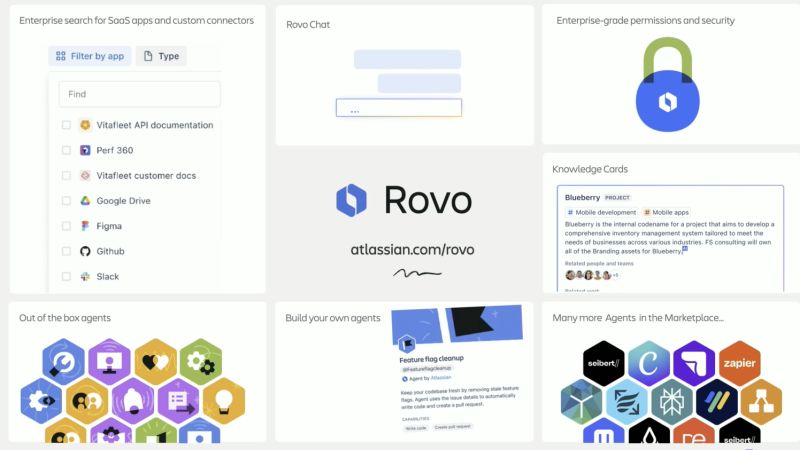
Atlassian Rovo is an enterprise-grade AI-powered collaboration solution designed to help organizations unlock knowledge, automate workflows and improve collaboration across their technology ecosystem. Built to work seamlessly with Jira, Confluence and other Atlassian products, Rovo acts as an intelligent layer that connects people, projects, documentation and enterprise knowledge.

Unlike general-purpose AI assistants, Rovo focuses on AI-powered collaboration for complex technical environments by surfacing relevant context, answering questions and automating repetitive tasks across development, operations and business workflows.

For organizations managing large volumes of technical documentation and project data, Rovo provides a powerful way to transform scattered information into actionable knowledge.

⭐ Key AI Features

  • 🤖 Atlassian Rovo AI assistant
  • 🔍 Enterprise-wide AI search
  • 📚 Knowledge discovery across tools
  • ⚡ Rovo Agents for workflow automation
  • 🏗️ Jira and Confluence integration
  • 🔗 Third-party application connectivity
  • 📊 Sprint and project intelligence
  • 📝 AI-generated documentation summaries
  • 🎨 Diagram and content generation
  • 🔒 Permission-aware information retrieval

💼 Best For

  • Software development teams
  • IT departments
  • DevOps teams
  • Engineering organizations
  • Agile enterprises
  • Businesses using Jira and Confluence

✅ Pros

  • Deep integration with Atlassian ecosystem
  • Powerful enterprise search capabilities
  • Strong technical documentation support
  • Permission-aware AI architecture
  • Excellent for software and IT teams
  • Helps reduce knowledge silos

❌ Cons

  • Most valuable for existing Atlassian customers
  • Less suited for non-technical organizations
  • Requires mature documentation practices
  • Enterprise-focused pricing

💰 Pricing

Rovo is available through Atlassian enterprise offerings, with pricing depending on products, user counts and deployment requirements.

🎯 Final Verdict

Atlassian Rovo is one of the most capable AI-powered collaboration solutions for software development and technical teams. Its combination of enterprise search, workflow automation and contextual knowledge discovery makes it a powerful AI-powered collaboration layer for organizations already operating within the Atlassian ecosystem.

9. Zoom Workplace

🔎Overview

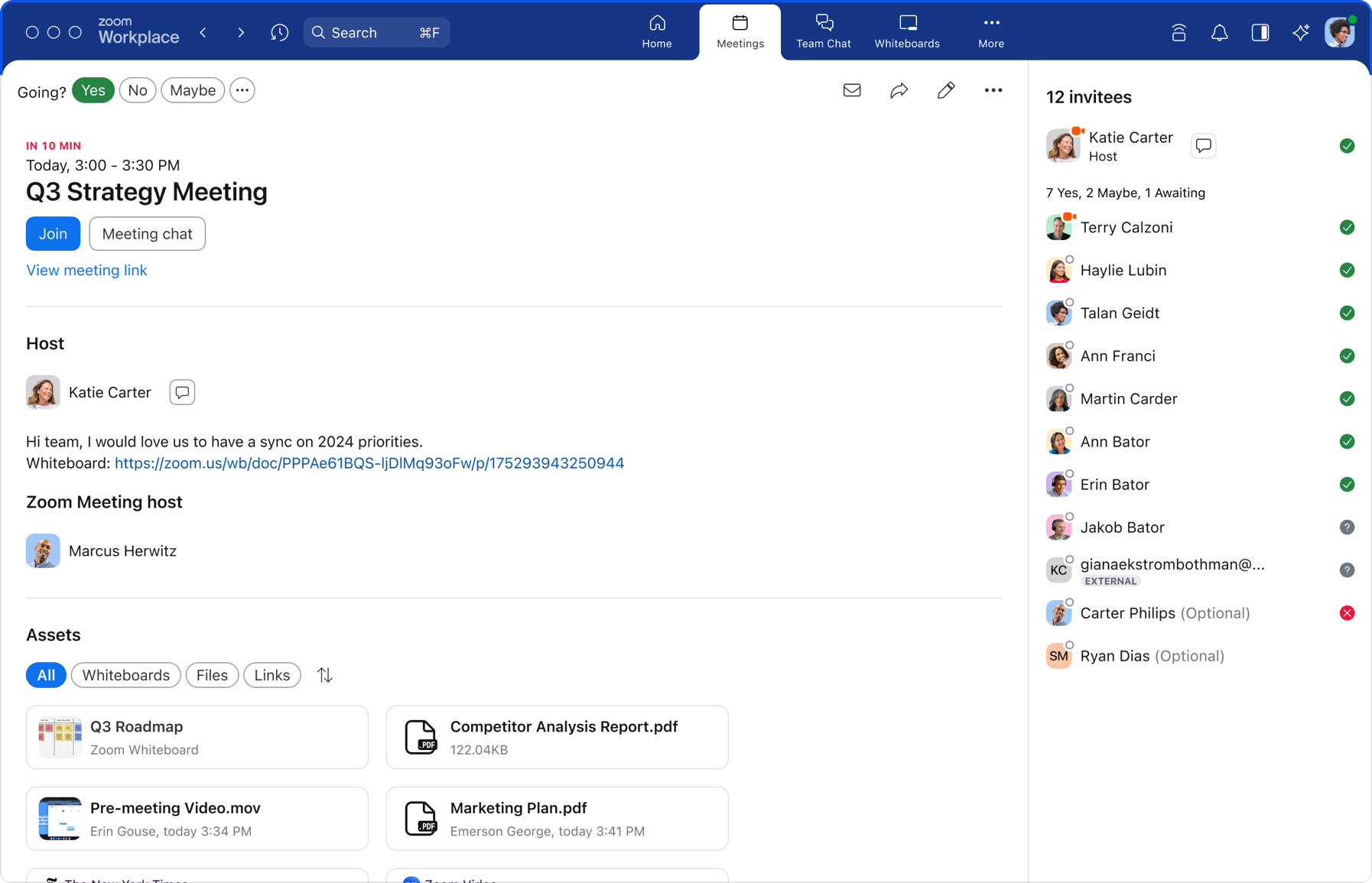
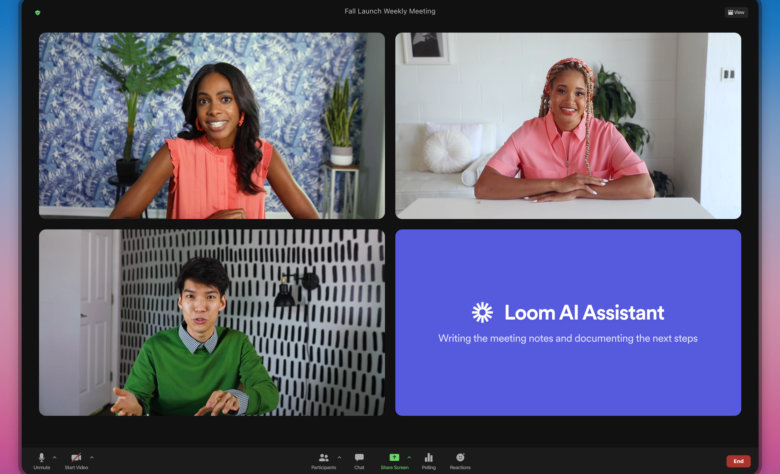
Zoom Workplace has expanded far beyond its origins as a video conferencing platform. Today, it stands as a unified AI-powered collaboration platform that combines meetings, team chat, collaboration tools, document creation and AI-powered assistance into a single workplace experience designed for hybrid and remote organizations.

At the center of this transformation is Zoom AI Companion, which enhances AI-powered collaboration by helping employees reduce meeting fatigue, improve productivity and streamline communication before, during and after meetings. By automating note-taking, summarization, action tracking and content creation, Zoom Workplace enables teams to spend less time managing meetings and more time acting on outcomes.

⭐ Key AI Features

  • 🤖 Zoom AI Companion
  • 🎙️ AI meeting assistants
  • 📝 Automatic meeting summaries
  • ⚡ Action item extraction
  • ⏰ “Catch Me Up” meeting recaps
  • 📚 Smart recordings with AI chapters
  • 🌐 Real-time translation and transcription
  • 💬 Integrated team chat
  • 🎨 Collaborative whiteboards
  • 📄 AI-generated documents and content
  • 📊 AI-powered meeting insights

💼 Best For

  • Remote-first organizations
  • Hybrid work environments
  • Global teams
  • Consulting firms
  • Professional services organizations
  • Businesses conducting frequent meetings
  • Teams seeking AI-powered collaboration around meetings

✅ Pros

  • Excellent meeting productivity features
  • Strong AI-powered summarization capabilities
  • Easy-to-use interface
  • High-quality video collaboration
  • Effective hybrid work support
  • Integrated communication ecosystem

❌ Cons

  • Collaboration features still evolving compared to full AI-powered collaboration platforms
  • Less comprehensive for project management
  • Some advanced AI features require premium plans
  • Primarily centered around meetings and communication rather than full digital workplace collaboration

💰 Pricing

Zoom Workplace is available through:

  • Basic
  • Pro
  • Business
  • Enterprise

AI Companion availability varies by plan and subscription level.

🎯 Final Verdict

Zoom Workplace is an excellent AI-powered collaboration platform for organizations looking to improve collaboration around meetings and hybrid work. Its AI-powered productivity features help reduce administrative work while ensuring teams stay aligned and informed regardless of location.

While it is not a full AI-powered digital workplace platform like eXo Platform, it remains a strong choice for organizations that prioritize meeting-centric collaboration and real-time communication.

10. Trello

🔎Overview

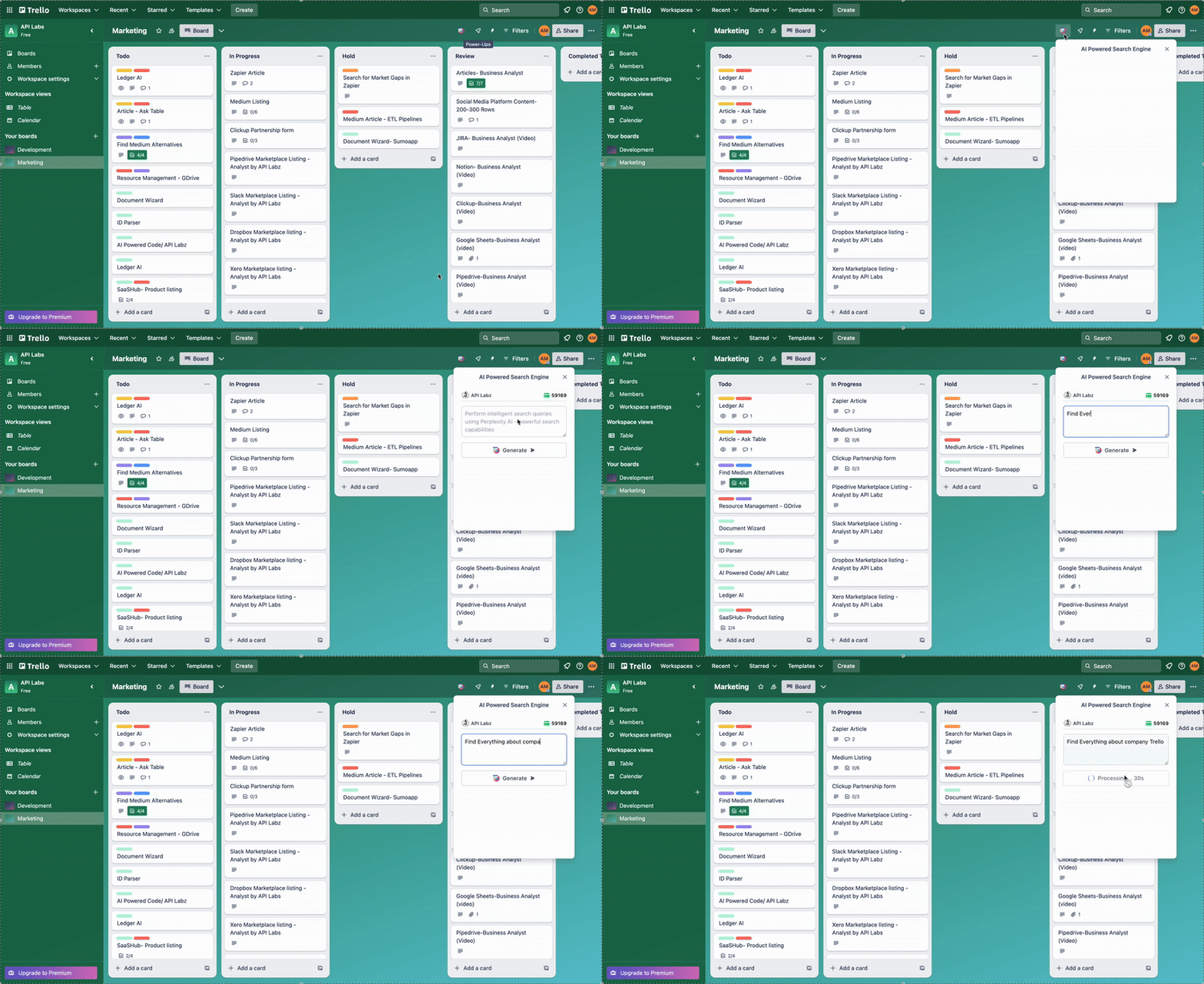
Trello remains one of the most accessible and intuitive AI-powered collaboration platforms for project management, helping teams organize work through its visual Kanban board system. With the introduction of AI-powered capabilities and enhanced automation, Trello has evolved into a smarter collaboration tool that helps teams manage projects, tasks and workflows with greater efficiency.

Its simplicity makes it particularly attractive for smaller teams, startups and organizations looking for a lightweight AI-powered collaboration solution without the complexity of enterprise-grade platforms.

⭐ Key AI Features

  • 🤖 AI-powered task generation
  • 📋 Smart card creation
  • 📝 AI content suggestions
  • ⚡ Butler workflow automation
  • 🔄 Automation templates
  • 🎯 Intelligent task organization
  • 📊 Productivity tracking
  • 💡 AI-generated project ideas
  • 📈 Workflow optimization recommendations
  • 🏗️ Visual project planning

💼 Best For

  • Small businesses
  • Startups
  • Agile teams
  • Marketing departments
  • Content creation teams
  • Teams preferring visual workflows
  • Organizations seeking lightweight AI-powered collaboration tools

✅ Pros

  • Extremely easy to use
  • Intuitive Kanban board interface
  • Quick setup and adoption
  • Effective workflow automation
  • Affordable pricing structure
  • Ideal for lightweight AI-powered project collaboration

❌ Cons

  • Limited advanced project management features
  • Less suitable for large enterprise environments
  • Basic reporting compared to competitors
  • Limited knowledge management capabilities
  • May require additional tools as teams scale

💰 Pricing

Trello offers:

  • Free
  • Standard
  • Premium
  • Enterprise

AI and advanced automation features vary depending on subscription plans.

🎯 Final Verdict

Trello is an excellent AI-enhanced collaboration platform for teams that value simplicity, flexibility and visual organization. While it does not provide the depth of full AI-powered collaboration platforms, its ease of use and growing AI capabilities make it a strong option for agile teams and growing businesses seeking streamlined collaboration.

11. Airtable

🔎Overview

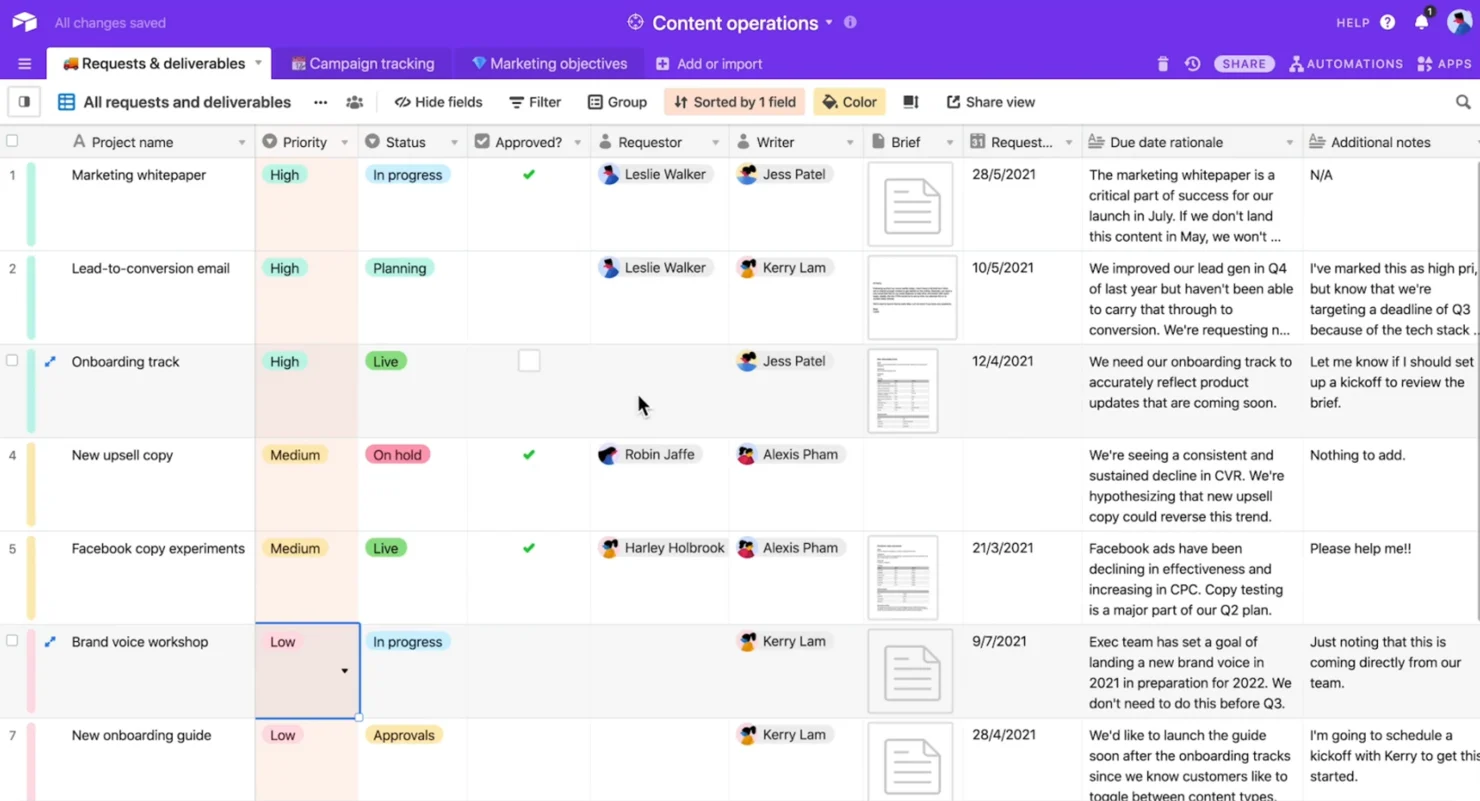
Airtable combines the flexibility of spreadsheets with the power of databases, creating a highly customizable AI-powered collaboration platform for teams managing projects, content, operations and business processes. With Airtable AI, organizations can automate data management, generate content, analyze records and streamline workflows directly within their collaborative databases.

Airtable is particularly valuable for AI-powered collaboration around structured data, enabling teams to work more efficiently while maintaining flexibility and ease of use.

⭐ Key AI Features

  • 🤖 Airtable AI assistant
  • 📝 AI content generation
  • 📊 Automated data categorization
  • 🔍 Intelligent record analysis
  • ⚡ Workflow automation
  • 📈 AI-powered reporting
  • 🏗️ Custom app building
  • 🔗 Integration with business tools

💼 Best For

  • Operations teams
  • Marketing departments
  • Content management teams
  • Product operations
  • Data-driven organizations
  • Teams requiring structured AI-powered collaboration

✅ Pros

  • Highly flexible platform
  • Powerful database capabilities
  • Strong automation features
  • Easy-to-build custom workflows
  • Excellent collaboration around structured data

❌ Cons

  • Requires setup and planning
  • Can become complex at scale
  • Less focused on communication and employee engagement
  • Not a full AI-powered digital workplace solution

💰 Pricing

  • Free
  • Team
  • Business
  • Enterprise Scale

🎯 Final Verdict

Airtable is an excellent AI-powered collaboration platform for organizations looking to combine collaboration, automation and structured data management within a single flexible system. It is especially strong for teams that need customizable workflows and data-driven collaboration.

12. Miro

🔎Overview

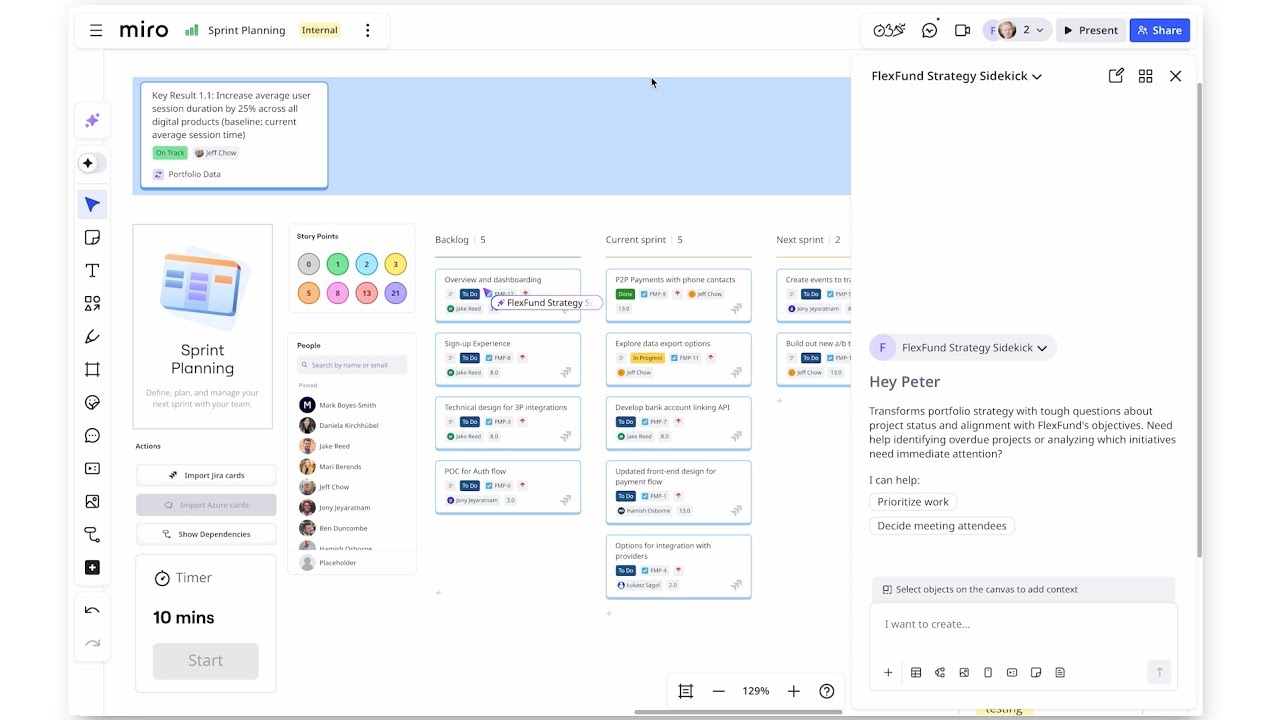
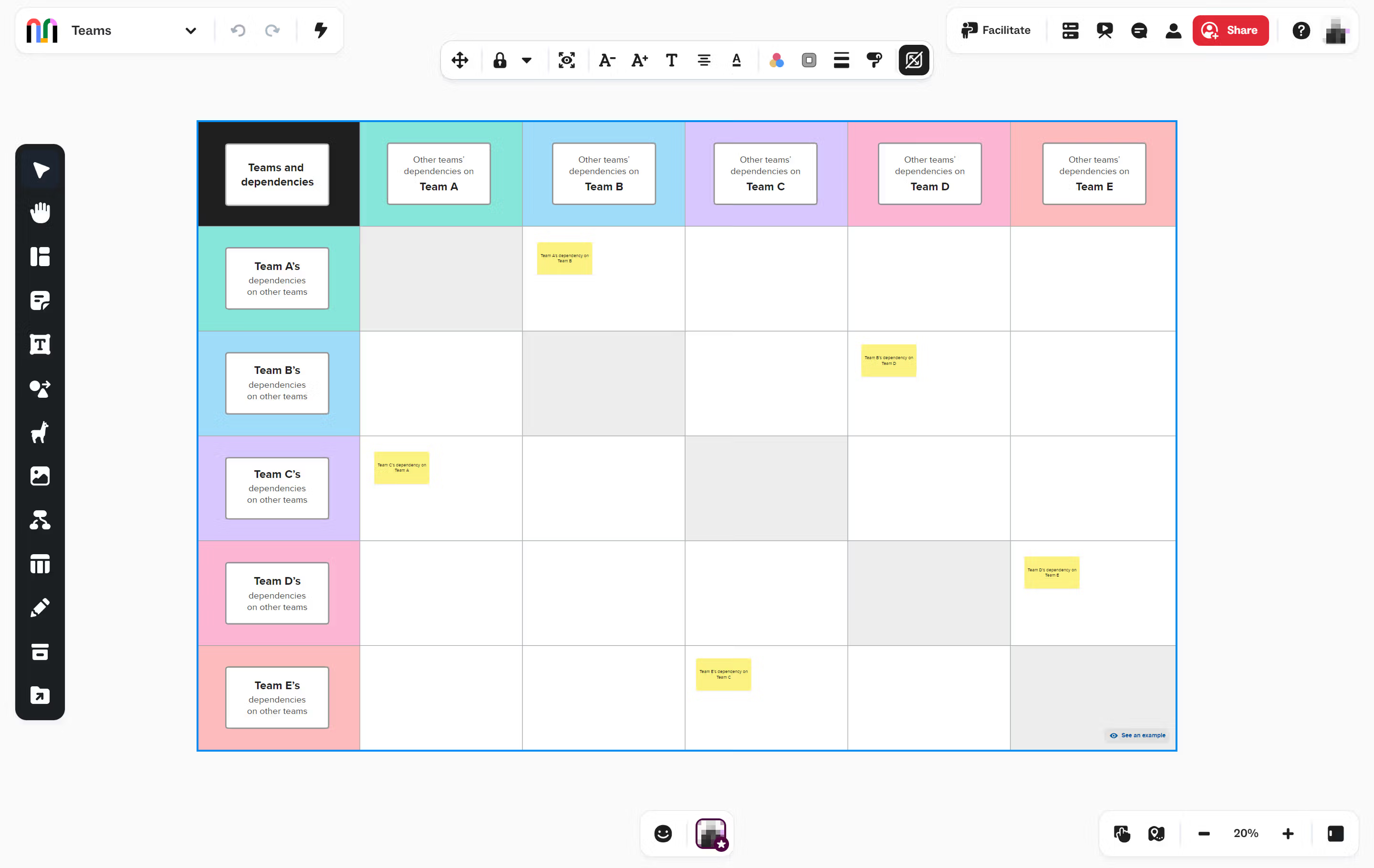
Miro has become the leading AI-powered visual collaboration platform for brainstorming, workshops, strategy sessions, product planning and innovation initiatives. Its AI capabilities help teams transform ideas into structured plans faster by generating diagrams, organizing concepts and automating workshop preparation.

As organizations increasingly embrace AI-powered collaboration, Miro serves as a digital canvas where humans and AI work together to solve problems, structure thinking and accelerate creativity in real time.

⭐ Key AI Features

  • 🤖 Miro AI assistant
  • 🧠 AI-powered brainstorming
  • 📋 Automatic workshop generation
  • 🎨 Diagram and flowchart creation
  • 📝 Meeting summarization
  • 📊 Idea clustering and categorization
  • 🔄 Content transformation
  • 👥 Interactive collaboration boards

💼 Best For

  • Product teams
  • Design teams
  • Innovation workshops
  • Strategy sessions
  • Agile organizations
  • Teams focused on AI-powered visual collaboration

✅ Pros

  • Excellent visual collaboration experience
  • Strong AI-powered brainstorming capabilities
  • AI accelerates ideation and planning processes
  • User-friendly interface
  • Great for remote workshops and facilitation

❌ Cons

  • Limited project management functionality
  • Large boards can become difficult to manage
  • Requires facilitation for complex workshops

💰 Pricing

  • Free
  • Starter
  • Business
  • Enterprise

🎯 Final Verdict

Miro is one of the best AI-powered collaboration platforms for teams that rely heavily on visual thinking, innovation and collaborative planning. Its AI capabilities make ideation and workshop execution faster, more structured and more effective.

13. Smartsheet

🔎Overview

Smartsheet combines spreadsheet familiarity with enterprise-grade project management, automation and AI-powered collaboration capabilities. Enhanced with AI-driven insights and workflow intelligence, it helps organizations manage large-scale initiatives while maintaining visibility across teams and departments.

The platform is widely used by enterprises that require structured planning, governance and AI-powered collaboration for execution and reporting.

⭐ Key AI Features

  • 🤖 AI-powered work insights
  • 📊 Automated reporting
  • ⚡ Workflow automation
  • 📈 Resource management analytics
  • 🔍 Project risk detection
  • 📝 Smart updates and summaries
  • 🎯 Portfolio management intelligence

💼 Best For

  • Enterprise PMOs
  • Operations teams
  • Construction projects
  • Large-scale business initiatives
  • Program management
  • Teams requiring structured AI-powered collaboration

✅ Pros

  • Enterprise-ready capabilities
  • Powerful reporting tools
  • Strong automation features
  • Excellent project visibility
  • Scales effectively for large organizations

❌ Cons

  • Less intuitive than newer collaboration platforms
  • Can feel spreadsheet-heavy
  • Advanced features require training

💰 Pricing

  • Pro
  • Business
  • Enterprise
  • Advanced Work Management

🎯 Final Verdict

Smartsheet is a strong AI-powered collaboration platform for organizations seeking enterprise-grade project execution, governance and portfolio management with AI-enhanced insights.

14. Coda

🔎Overview

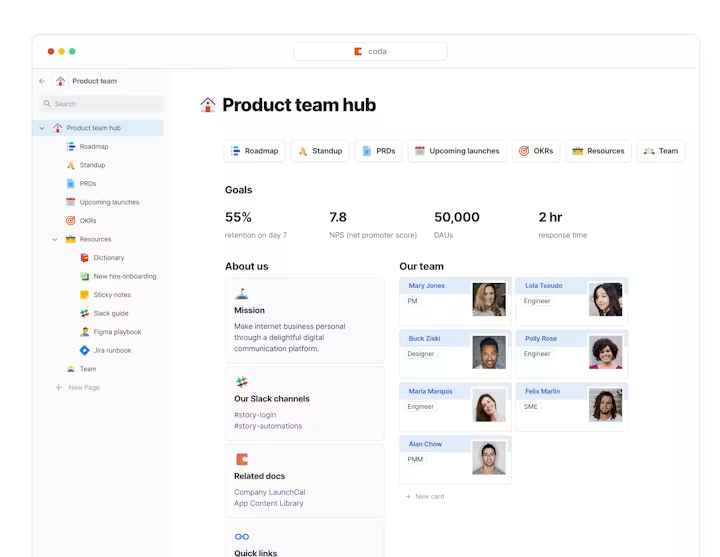
Coda blends documents, databases, spreadsheets and applications into a single AI-powered collaboration workspace. With Coda AI, teams can automate content creation, summarize information, analyze data and build custom workflows without relying on multiple disconnected tools.

Its flexibility makes it particularly attractive for organizations that want highly customizable AI-powered collaboration environments tailored to their unique processes.

⭐ Key AI Features

  • 🤖 Coda AI assistant
  • ✍️ AI writing and editing
  • 📄 Automated document generation
  • 📊 Data analysis assistance
  • ⚡ Workflow automation
  • 🧠 Knowledge management support
  • 🔗 Integration with external tools

💼 Best For

  • Startups
  • Product teams
  • Operations teams
  • Knowledge workers
  • Cross-functional teams
  • Organizations seeking flexible AI-powered collaboration platforms

✅ Pros

  • Highly customizable
  • Combines docs, spreadsheets and apps
  • Strong AI-powered content generation
  • Flexible workflow creation
  • Excellent collaboration capabilities

❌ Cons

  • Learning curve for advanced setups
  • Complex documents can become difficult to maintain
  • Smaller ecosystem than some competitors

💰 Pricing

  • Free
  • Pro
  • Team
  • Enterprise

🎯 Final Verdict

Coda is an excellent AI-powered collaboration platform for teams seeking flexibility, customization and powerful document-centric workflows. It enables organizations to build tailored collaboration systems powered by AI without relying on multiple separate tools.

15. Reclaim.ai

🔎Overview

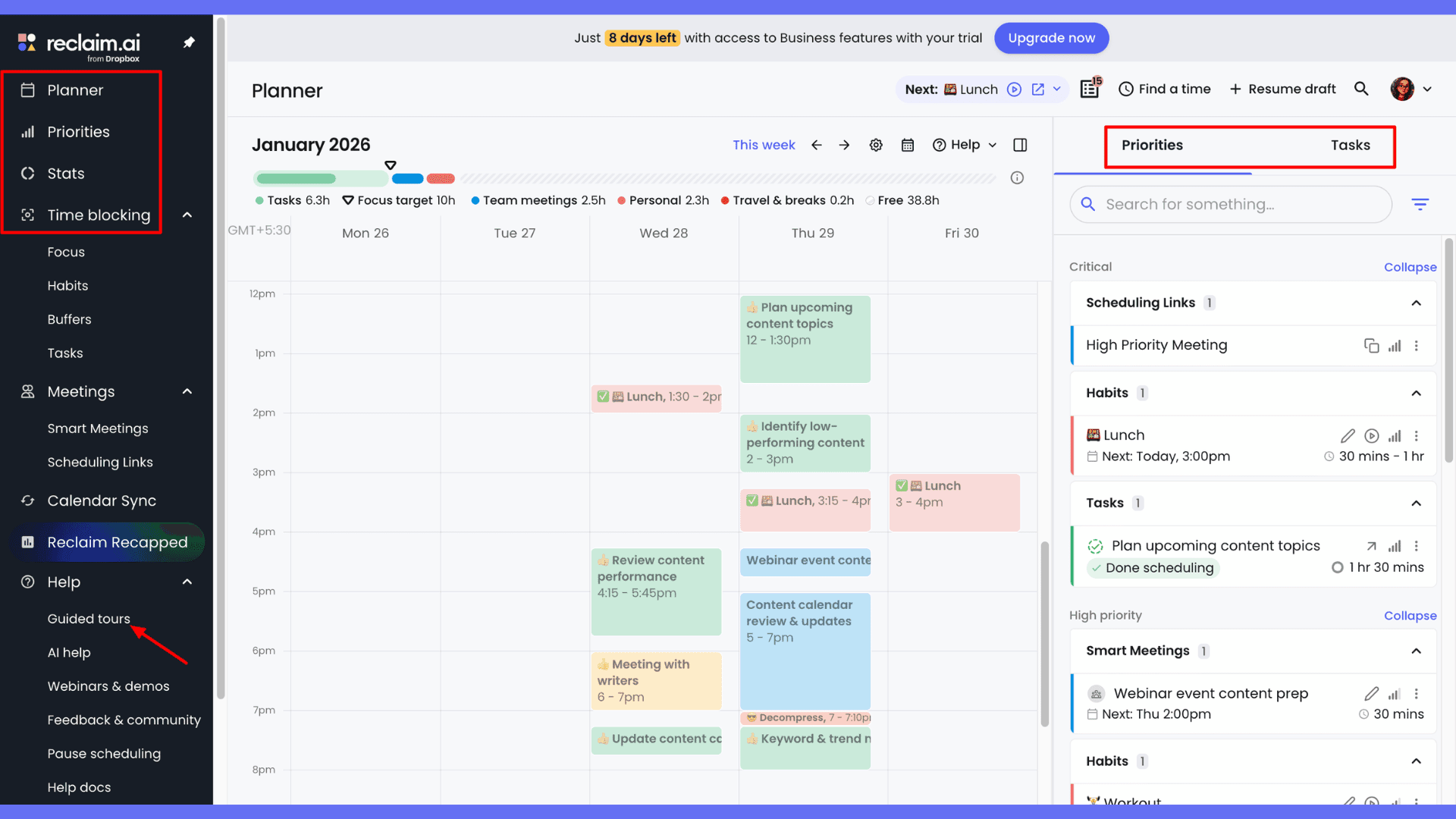
Reclaim.ai specializes in one of the biggest workplace challenges: time management within AI-powered collaboration environments. Powered by AI, the platform automatically schedules tasks, meetings, focus time and personal commitments to optimize productivity and reduce calendar chaos.

Rather than simply managing calendars, Reclaim acts as an AI-powered collaboration scheduling assistant that actively protects productive work time while ensuring priorities remain aligned across teams and individuals.

⭐ Key AI Features

  • 🤖 AI scheduling assistant
  • 📅 Intelligent calendar management
  • 🎯 Automatic task scheduling
  • ⏰ Focus time protection
  • 📊 Productivity analytics
  • 🔄 Dynamic schedule optimization
  • 👥 Team scheduling coordination

💼 Best For

  • Busy professionals
  • Executives
  • Remote teams
  • Knowledge workers
  • Organizations managing complex schedules
  • Teams seeking AI-powered productivity optimization

✅ Pros

  • Excellent AI-powered time management capabilities
  • Reduces scheduling conflicts
  • Protects deep work time
  • Easy integration with calendars
  • Strong automation features

❌ Cons

  • Focused primarily on scheduling
  • Not a full AI-powered collaboration platform
  • Limited knowledge management capabilities

💰 Pricing

  • Free
  • Starter
  • Business
  • Enterprise

🎯 Final Verdict

Reclaim.ai is one of the most effective AI-powered scheduling tools available, significantly improving productivity by optimizing time allocation within modern AI-powered collaboration workflows.

16. monday.com

🔎Overview

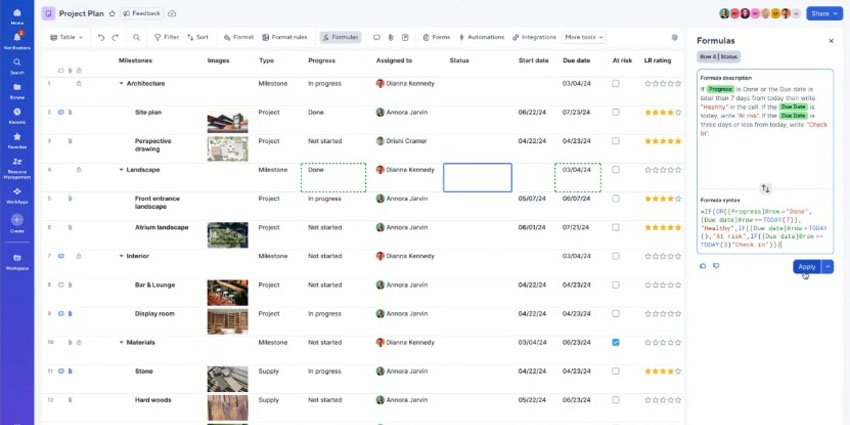
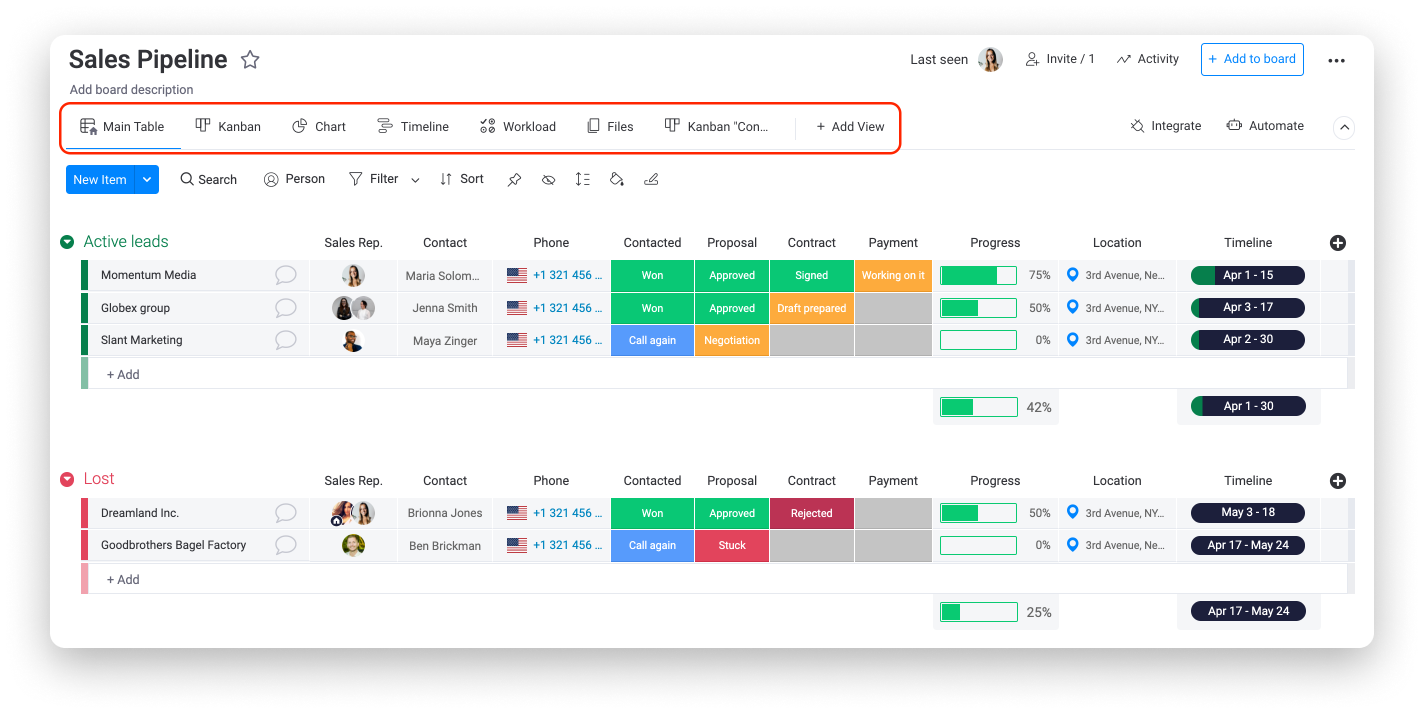
Monday.com combines project management, workflow automation, CRM and AI-powered collaboration capabilities within a highly visual and customizable platform. Its AI assistant helps organizations automate repetitive work, generate content, build workflows and optimize operations across teams.

The platform’s low-code approach makes advanced AI-powered collaboration and automation accessible to both technical and non-technical users.

⭐ Key AI Features

  • 🤖 Monday AI Assistant
  • ⚡ Workflow automation
  • 📝 Content generation
  • 📊 Automated summaries
  • 🧮 AI formula generation
  • 🎯 Project insights
  • 📈 Resource management support
  • 🔄 Smart task creation

💼 Best For

  • Operations teams
  • Marketing teams
  • Sales organizations
  • Growing businesses
  • Cross-functional projects
  • Teams seeking AI-powered collaboration and automation

✅ Pros

  • Highly customizable
  • User-friendly visual interface
  • Strong automation capabilities
  • Flexible deployment across departments
  • Excellent scalability

❌ Cons

  • Advanced features can increase costs
  • Some workflows require configuration
  • Less robust knowledge management functionality

💰 Pricing

  • Free
  • Basic
  • Standard
  • Pro
  • Enterprise

🎯 Final Verdict

Monday.com is a versatile AI-powered collaboration platform that combines flexibility, automation and ease of use, enabling organizations to manage work more intelligently across departments.

17. Figma

🔎Overview

Figma has revolutionized collaborative design by enabling teams to create, prototype and iterate together in real time within an AI-powered collaboration environment. With the introduction of AI-powered design assistance, Figma now helps teams accelerate ideation, automate repetitive design tasks and improve collaboration between designers, developers and stakeholders.

Its browser-based architecture has made it a standard platform for modern product and design teams practicing AI-powered collaboration.

⭐ Key AI Features

  • 🤖 AI design assistance
  • 🎨 Automated UI generation
  • 📝 AI-powered content suggestions
  • 🖼️ Image generation and editing
  • ⚡ Rapid prototyping support
  • 👥 Real-time collaborative design
  • 🔄 Design system assistance

💼 Best For

  • Product design teams
  • UX/UI designers
  • Product managers
  • Design agencies
  • Software companies
  • Teams engaged in AI-powered creative collaboration

✅ Pros

  • Industry-leading collaborative design platform
  • Real-time teamwork capabilities
  • Strong prototyping features
  • Excellent developer handoff
  • Growing AI feature set

❌ Cons

  • Primarily focused on design workflows
  • Less useful outside creative teams
  • Advanced capabilities may require premium plans

💰 Pricing

  • Starter
  • Professional
  • Organization
  • Enterprise

🎯 Final Verdict

Figma remains the gold standard for AI-powered collaborative design and continues to strengthen its position through AI-enhanced creative assistance and real-time teamwork capabilities.

18. Loom

🔎Overview

Loom has transformed asynchronous communication by enabling employees to record, share and collaborate through video messaging within modern AI-powered collaboration workflows. Its AI capabilities make video communication more searchable, actionable and accessible by automatically generating summaries, transcripts and key insights.

For distributed teams, Loom reduces unnecessary meetings while strengthening AI-powered collaboration through clearer asynchronous communication.

⭐ Key AI Features

  •  🤖 AI meeting and video summaries
  • 📝 Automatic transcription
  • 📚 AI-generated video chapters
  • 🔍 Searchable video content
  • ⚡ Smart highlights
  • 🌐 Translation support
  • 🎯 Action item extraction

💼 Best For

  • Remote teams
  • Hybrid organizations
  • Customer success teams
  • Training and onboarding
  • Internal communications
  • Teams relying on AI-powered asynchronous collaboration

✅ Pros

  • Reduces meeting overload
  • Easy video creation and sharing
  • Excellent asynchronous collaboration support
  • Strong AI summarization features
  • Improves knowledge transfer

❌ Cons

  • Focused mainly on video communication
  • Not a full AI-powered collaboration platform
  • Advanced AI features may require premium plans

💰 Pricing

  • Starter
  • Business
  • Business + AI
  • Enterprise

🎯 Final Verdict

Loom is one of the best AI-powered tools for asynchronous collaboration, helping teams communicate more effectively while reducing the need for live meetings and improving overall knowledge sharing in distributed work environments.

👑 Top AI-Powered Collaboration Tools for Hybrid and Enterprise Teams

Hybrid work has fundamentally changed how organizations operate. Employees now collaborate across offices, homes, coworking spaces and different time zones, making seamless communication, knowledge sharing and workflow coordination more important than ever.

As a result, businesses are increasingly adopting AI-powered collaboration platforms that not only connect teams but also automate routine work, centralize knowledge, improve decision-making and enhance employee engagement across the entire organization.

Today’s leading AI-powered collaboration platforms go far beyond messaging and video conferencing. They combine AI assistants, workflow automation, enterprise search, project management, knowledge management and intelligent analytics to create more connected and productive digital workplaces.

For hybrid organizations, the challenge is no longer simply choosing a collaboration tool, it is selecting an AI-powered collaboration platform that can serve as the foundation for teamwork, communication and productivity at scale.

🌍 What Makes a Great AI-Powered Collaboration Platform for Hybrid Work?

The most effective AI-powered collaboration solutions typically offer:

  • 🤖 AI-powered assistants and automation
  • 💬 Real-time communication and collaboration
  • 📚 Knowledge management and enterprise search
  • 📊 Project and workflow management
  • 🌐 Support for distributed and multilingual teams
  • 🔒 Enterprise-grade security and governance
  • ⚡ Workflow automation and intelligent recommendations
  • 👥 Employee engagement and community-building features
  • ☁️ Cloud, hybrid, or on-premise deployment flexibility

While each platform specializes in different areas, some provide broader AI-powered collaboration capabilities than others. Platforms such as eXo Platform, Slack, Google Workspace, Microsoft Loop and Notion focus on creating centralized AI-powered collaboration environments, while tools like Zoom Workplace, Loom and Miro excel in specific aspects of communication, creativity and teamwork.

📊 Comparison Matrix: Top 18 AI-Powered Collaboration Platforms

PlatformPrimary FocusKey AI StrengthBest ForDeployment
eXo PlatformAI-Powered Digital WorkplaceContext-aware AI across workplace servicesEnterprises & regulated industriesOn-Premise, Private Cloud, SaaS
SlackAI-Powered Communication PlatformAI summaries and workflow automationDistributed teamsSaaS
Google WorkspaceAI-Powered Productivity SuiteGemini-powered content creationCloud-first organizationsSaaS
Microsoft LoopAI-Powered Collaborative WorkspacesAI co-creation within Microsoft 365Enterprise Microsoft usersSaaS
AsanaAI-Powered Project ManagementAI risk detection and workflow optimizationProject-driven teamsSaaS
NotionAI-Powered Knowledge ManagementAI workspace search and documentationKnowledge-intensive organizationsSaaS
ClickUp BrainAI-Powered Productivity PlatformAI agents and intelligent executionOperations teamsSaaS
Atlassian RovoAI-Powered Enterprise SearchTechnical knowledge discovery and AI agentsSoftware and IT teamsSaaS
Zoom WorkplaceAI-Powered Communication PlatformAI meeting assistants and summariesHybrid workforcesSaaS
TrelloAI-Powered Visual Project ManagementAI task organization and automationSmall and agile teamsSaaS
AirtableAI-Powered Collaborative DatabasesAI-powered data managementOperations and marketing teamsSaaS
MiroAI-Powered Visual Collaboration PlatformAI brainstorming and workshop creationProduct and innovation teamsSaaS
SmartsheetAI-Powered Work Management PlatformAI reporting and portfolio insightsEnterprise PMOsSaaS
CodaAI-Powered Collaborative DocumentsAI-assisted content and workflow creationCross-functional teamsSaaS
Reclaim.aiAI-Powered Scheduling PlatformIntelligent scheduling automationKnowledge workersSaaS
Monday.comAI-Powered Work OSAI workflow automation and board optimizationGrowing businessesSaaS
FigmaAI-Powered Design Collaboration PlatformAI-powered design assistanceProduct and design teamsSaaS
LoomAI-Powered Video Collaboration PlatformAI-generated summaries and transcriptsRemote teamsSaaS

🏆 Best AI-Powered Collaboration Platforms by Category

CategoryRecommended Platform
🥇 Best Overall AI-Powered Digital WorkplaceeXo Platform
💬 Best AI-Powered Team CommunicationSlack
📄 Best AI-Powered Productivity SuiteGoogle Workspace
🏢 Best Microsoft Ecosystem Collaboration PlatformMicrosoft Loop
📋 Best AI-Powered Project ManagementAsana
📚 Best AI-Powered Knowledge ManagementNotion
⚡ Best AI-Powered Productivity AutomationClickUp Brain
🔍 Best AI-Powered Enterprise SearchAtlassian Rovo
🎥 Best AI-Powered Virtual CollaborationZoom Workplace
📌 Best AI-Powered Visual Task ManagementTrello
🗂️ Best AI-Powered Database CollaborationAirtable
🎨 Best AI-Powered Visual BrainstormingMiro
📈 Best AI-Powered Enterprise Work ManagementSmartsheet
📑 Best AI-Powered Collaborative DocumentsCoda
⏰ Best AI-Powered Scheduling AutomationReclaim.ai
🔄 Best AI-Powered Workflow AutomationMonday.com
🎨 Best AI-Powered Design CollaborationFigma
🎬 Best AI-Powered Asynchronous CommunicationLoom

🥇 Why eXo Platform Leads for Hybrid Enterprises

While every platform on this list excels in a specific area, few offer a truly unified AI-powered collaboration platform experience. Most organizations still rely on multiple disconnected tools for messaging, document management, project tracking, knowledge sharing, employee engagement and workflow automation.

This is where eXo Platform differentiates itself. Rather than focusing on a single function, it combines communication, AI-powered collaboration, social networking, knowledge management, employee engagement, intranet capabilities and workflow automation into a single integrated digital workplace ecosystem.

Its permission-aware AI architecture, open-source foundation, multi-LLM flexibility and deployment options (cloud, private cloud, or on-premise) make it particularly attractive for enterprises seeking greater control over their data, stronger governance and long-term digital sovereignty.

For organizations navigating hybrid work, digital transformation and the growing adoption of AI-powered collaboration platforms, eXo Platform offers one of the most comprehensive and future-ready solutions available.

🎯 Final Thoughts

The AI-powered collaboration market is evolving rapidly and organizations now have access to an impressive range of platforms designed to improve teamwork, automate processes and unlock organizational knowledge.

The best choice ultimately depends on business priorities, existing technology stack, security requirements and collaboration culture.

Whether you need a complete AI-powered digital workplace, an intelligent project management platform, a powerful communication hub, or an AI-driven knowledge management solution, the platforms featured in this list represent some of the most innovative collaboration technologies available today.

As AI continues to reshape the future of work, organizations that embrace collaborative intelligence and AI-powered collaboration platforms will be better positioned to innovate faster, work smarter and remain competitive in an increasingly digital world. 🚀🤖

🤔 How to Choose the Best AI-Powered Collaboration Tools for Your Remote Team

Choosing the right AI-powered collaboration platform goes beyond feature comparisons or marketing claims. The real decision is about how deeply the system fits into your workflows, how intelligently it understands your work context and how securely it manages your data. Today, the most effective teams evaluate tools through a blend of traditional software criteria and new AI-native capabilities.

1. Workflow Fit: Integration vs. Unified AI-Powered Collaboration Experience

A key decision is whether you want an AI layer on top of your existing stack or a fully unified AI-powered collaboration environment.

Best-of-breed integration approach:

Tools like Slack and Zoom work well when paired with AI features that enhance communication and meetings without replacing your current ecosystem. This approach is flexible and modular.

Unified collaboration suites:

Platforms like Atlassian or eXo Platform aim to consolidate communication, documentation and project workflows into a single AI-powered collaboration environment where AI has deeper access to organizational context.

The trade-off is clear: flexibility versus deep contextual intelligence.

2. Contextual Awareness: The Difference Between AI That Talks and AI That Understands

Not all AI-powered collaboration tools are equally aware of your work context.

  • Low-context AI: Generic responses without awareness of your files, projects, or workflows
  • Context-aware AI: Systems that can reference your actual workspace, such as “Based on yesterday’s project brief…”

The more context the AI can securely access, the more it becomes a real collaborator inside your AI-powered collaboration platform rather than just a text generator.

3. AI Capability Level: Generative vs. Agentic AI Systems

Modern AI-powered collaboration platforms are increasingly evaluated based on what the AI can do, not just what it can write.

  • Generative AI: Produces text, summaries, or suggestions
  • Agentic AI: Executes actions such as creating tasks, updating workflows, scheduling meetings, or triggering automations

If the system only generates content, it acts like a “smart editor.”
 If it can execute across tools, it becomes an operational partner inside an AI-powered collaboration ecosystem.

4. Data Governance and Security: The Core Enterprise Requirement

As AI becomes embedded in daily workflows, governance becomes a primary decision factor for any AI-powered collaboration platform.

Key questions include:

  • Does the AI use your data to train external models?
  • Can internal permissions be strictly enforced?
  • Is the platform compliant with regulations like GDPR?
  • Can it be deployed on-premise for sensitive environments?

Platforms such as eXo Platform and Atlassian are often evaluated strongly in this area due to their emphasis on enterprise control and governance.

5. Scalability and Architecture: Future-Proofing Your AI Collaboration Stack

A strong AI-powered collaboration platform should scale with organizational complexity.

Key considerations:

  • Can it handle enterprise-scale collaboration securely?
  • Does it support extensibility or plugin ecosystems?
  • Can it evolve as workflows change?

Advanced platforms increasingly offer open AI integration layers or multi-model flexibility, helping organizations avoid dependency on a single AI provider.

6. Knowledge Management and Consolidation

Remote teams depend heavily on structured knowledge systems within their AI-powered collaboration environment.

Look for platforms that:

  • Centralize documents, chats and projects
  • Provide intelligent enterprise search
  • Maintain relationships between tasks, discussions and files

Unified systems like eXo Platform emphasize consolidation, reducing fragmentation and improving long-term organizational knowledge retention.

7. Employee Engagement and Collaboration Culture

Beyond productivity, AI-powered collaboration tools influence team dynamics and workplace culture.

Strong platforms often include:

  • Recognition systems
  • Community spaces
  • Social collaboration features
  • AI-assisted summaries that reduce communication overload

These features help maintain engagement in distributed and hybrid teams.

8. Decision Checklist: What Matters Most Today

When comparing AI-powered collaboration platforms, prioritize:

  • Contextual Awareness: Does the AI understand your work environment?
  • Agentic Capability: Can it execute tasks, not just generate content?
  • Data Sovereignty: Who controls your data?
  • Permission Control: Are access rights enforced across AI interactions?
  • Architecture Flexibility: Can it evolve with new AI models?
  • Consolidation: Does it reduce tool fragmentation?
  • Integration Strategy: Is it an overlay or a full AI-powered collaboration suite?

👀 Final Perspective

The best AI-powered collaboration platform is no longer defined by standalone features. It is defined by how well it connects intelligence, communication and execution inside a secure, scalable and context-aware environment.

Organizations that prioritize contextual awareness, agentic AI capabilities and strong data governance will be better positioned to build resilient AI-powered collaboration ecosystems and future-ready digital workplaces.

💭 Final Thoughts: The Future of AI-Powered Collaboration Platforms

AI-powered collaboration platforms are no longer just productivity enhancers, they are becoming the connective tissue of modern organizations. Across project management, communication, knowledge sharing and employee engagement, these platforms are fundamentally reshaping how teams work, make decisions and stay aligned in increasingly distributed environments.

From lightweight communication hubs to fully integrated digital workplaces, the 18 platforms explored in this article reflect a clear evolution: collaboration is shifting from simple coordination to intelligent orchestration powered by AI.

Some tools excel in focused areas, like real-time communication or structured task tracking, while others aim to unify the entire digital workplace under a single AI-powered collaboration ecosystem.

On one end of the spectrum, platforms such as Slack and Zoom continue to dominate fast, flexible communication and meetings, increasingly enhanced by AI-driven summaries, automation and intelligent assistance. Meanwhile, tools like Atlassian strengthen structured execution, helping teams manage complex workflows, projects and technical documentation at scale.

Yet the broader shift is clear: organizations are moving away from fragmented toolchains toward unified, AI-native collaboration environments where context, data and execution converge.

Among these solutions, eXo Platform stands out for its holistic approach to the digital workplace. Rather than treating AI as an add-on feature, it embeds intelligence directly into the core of AI-powered collaboration, connecting communication, knowledge management, social engagement and enterprise workflows within a single secure ecosystem.

This unified design allows AI to operate with deep contextual awareness, making collaboration not only more automated, but significantly more meaningful and aligned with organizational goals.

The real transformation happening in 2026 is not about choosing between humans and AI, it is about enabling humans to orchestrate AI seamlessly within their daily work. The most advanced AI-powered collaboration platforms are those that move beyond simple chat interfaces and evolve into active collaborators embedded directly into business processes.

While many solutions offer strong point capabilities, eXo Platform represents a more complete vision of the future enterprise: a secure, contextual and socially driven digital workplace where AI enhances both productivity and engagement at every level of the organization.

As AI collaboration continues to mature, organizations that adopt intelligent, unified AI-powered collaboration platforms today will define the competitive landscape of tomorrow.

To experience this next generation of digital workplace firsthand, explore eXo Platform, try the try the demo, discover its collaborative hubs and see how it can transform the way your organization works.

FREE DATASHEET
eXo Platform : The AI-Augmented,
Open-Source Digital Workplace Platform

Download the eXo Platform Datasheet and discover all the features and benefits

book-datasheet-7
cta-rectangle-rose
FREE DATASHEET

Download the eXo Platform Datasheet and discover all the features and benefits

FAQs

You will find here Frequently Asked Questions about AI-Powered Collaboration Platforms with all the answers in one place.

Collaboration is “the situation of two or more people working together to create or achieve the same thing”.


See the full definition of collaboration

AI-powered collaboration refers to the integration of artificial intelligence into modern workplace environments to improve how teams communicate, collaborate, manage projects and make decisions.


See the full definition of AI-powered collaboration

AI-powered collaboration offers businesses a wide range of benefits, from improving productivity and communication to automating workflows and enhancing employee experience.

 
  1. Increase productivity and operational efficiency
  2. Improve knowledge management
  3. Enhance communication and team alignment
  4. Enable faster and more informed decision-making
  5. Improve employee experience and engagement
  6. Automate workflows and streamline business processes
  7. Strengthen security, governance and context awareness
  8. Gain a competitive advantage
 

Find out the benefits of AI-powered collaboration for businesses

AI agents are transforming the modern collaborative workspace by automating tasks, coordinating workflows and connecting teams, systems and information.

 
  • Automate everyday workplace workflows
  • Coordinate tasks, meetings and follow-ups
  • Connect teams, systems and information
  • Support hybrid and distributed teams
  • Turn workplace platforms into systems of action
  • Centralize knowledge and preserve workplace context
  • Improve productivity and reduce operational effort
 

Find out how AI agents power the modern collaborative workspace

Here are some definitions of digital workplace:

 
  • Team collaboration
  • Cross-departmental and interdisciplinary collaboration
  • Community collaboration
  • Strategic partnerships and alliances
  • Supply chain collaboration
 

Find out the different types of collaboration in business

In order to effectively find the right type of collaboration for your business, you have to follow a strategic approach and answer three common yet critical questions: Where are we? Where do we want to be? And how to get there?


Find out How to choose the best type of collaboration

At the internal level, businesses try to encourage and seek to incorporate different forms of collaboration in the workplace to lay the foundations for teams to be able to work together with an aim to achieve higher levels of success.


Externally, businesses look to engage in collaborative actions to benefit from others’ expertise, to gather the opinions of their customer base and to get customers and other stakeholders more involved in the development of products and services.


Find out why collaboration is important
Here are some of the benefits of collaboration in the workplace:

 
  1. Foster innovation and creativity
  2. Better problem solving
  3. Effectively handle times of crises
  4. Engage and align teams
  5. Increase motivation
  6. Attract talents
   

Find out the benefits of collaboration in the workplace

5/5 - (1 vote)
I am a Digital Marketing specialist specialized in SEO at eXo Platform. Passionate about new technologies and Digital Marketing. With 10 years' experience, I support companies in their digital communication strategies and implement the tools necessary for their success. My approach combines the use of different traffic acquisition levers and an optimization of the user experience to convert visitors into customers. After various digital experiences in communication agencies as well as in B2B company, I have a wide range of skills and I am able to manage the digital marketing strategy of small and medium-sized companies.
Related posts
  • All
  • eXo
  • Digital workplace
  • Employee engagement
  • Open source
  • Future of work
  • Internal communication
  • Collaboration
  • News
  • intranet
  • workplace
  • Knowledge management
  • Employee experience
  • Employee productivity
  • onboarding
  • Employee recognition
  • Change management
  • Cartoon
  • Digital transformation
  • Infographic
  • Remote work
  • Industry trends
  • Product News
  • Thought leadership
  • Tips & Tricks
  • Tutorial
  • Uncategorized
Leave a Reply

( Your e-mail address will not be published)

guest
0 Comments
Commentaires en ligne
Afficher tous les commentaires

I am a Digital Marketing specialist specialized in SEO at eXo Platform. Passionate about new technologies and Digital Marketing. With 10 years' experience, I support companies in their digital communication strategies and implement the tools necessary for their success. My approach combines the use of different traffic acquisition levers and an optimization of the user experience to convert visitors into customers. After various digital experiences in communication agencies as well as in B2B company, I have a wide range of skills and I am able to manage the digital marketing strategy of small and medium-sized companies.